
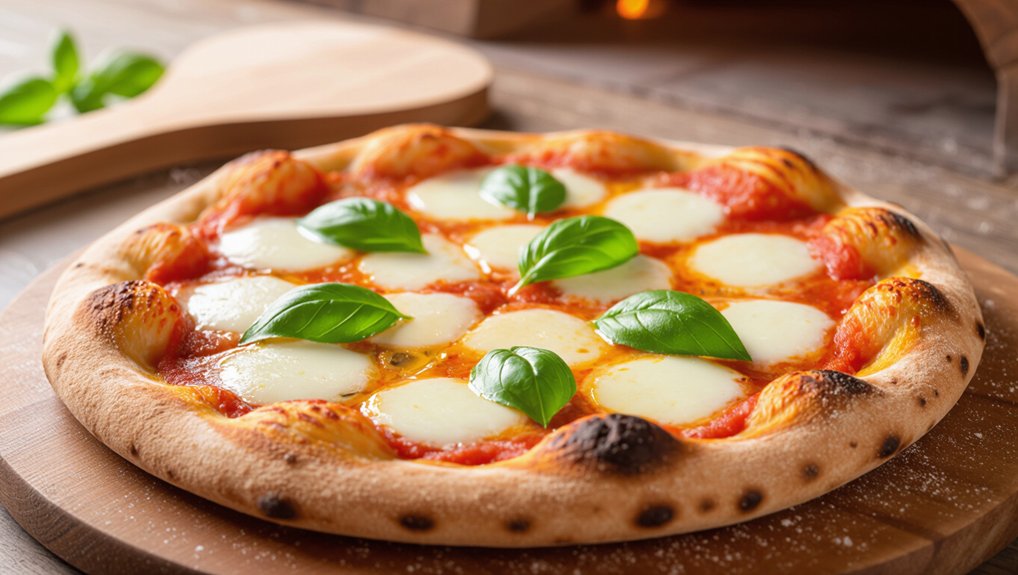
When you want to impress with a homemade Margherita pizza, achieving that golden crust is key. You’ll need high-quality ingredients and the right techniques to make it shine. It starts with the dough and ends with the perfect bake. But there are nuances to consider, like using a pizza stone and avoiding overworked dough. Curious about how to master these details and elevate your pizza game? Let’s explore what makes Margherita pizza so special.
What Is Margherita Pizza?
When you think of classic Italian cuisine, Margherita pizza often comes to mind as a true staple. This iconic dish features a thin, crispy crust topped with a simple yet flavorful combination of ingredients.
It’s characterized by its vibrant red tomatoes, fresh green basil, and creamy white mozzarella cheese, symbolizing the colors of the Italian flag. Originating from Naples, Margherita pizza embodies the essence of Italian cooking—fresh, high-quality ingredients and simplicity.
The balance of flavors creates a delightful experience, making it a favorite among pizza lovers worldwide. Whether you enjoy it at a pizzeria or make it at home, Margherita pizza captures the heart of Italy in every bite, inviting you to savor its rich culinary heritage.
Essential Pizza Components
To make a great Margherita pizza, you need to focus on a few essential components.
These ingredients bring the dish to life and make it truly delicious. Here’s what you’ll want to gather:
- Fresh mozzarella cheese
- Fresh basil leaves
- High-quality olive oil
- San Marzano tomatoes
- Pizza dough
Fresh Mozzarella Cheese
Fresh mozzarella cheese is a star ingredient in any Margherita pizza. Its creamy texture and mild flavor elevate the dish, creating a perfect balance with the tangy sauce and fresh toppings.
When selecting your mozzarella, keep these tips in mind:
- Opt for high-quality: Look for cheese made from whole milk for the best flavor.
- Use it fresh: Fresh mozzarella offers a softer texture and richer taste than pre-packaged varieties.
- Drain well: Make sure to remove excess moisture to prevent a soggy pizza.
- Tear, don’t slice: Tearing the cheese into pieces distributes it better and enhances the texture.
- Add it last: Place the mozzarella on top of your toppings to achieve that perfect melt.
Enjoy the deliciousness!
Fresh Basil Leaves
Basil leaves are a crucial component that transforms a Margherita pizza into a culinary delight. Their fresh, aromatic flavor elevates the dish, balancing the richness of the mozzarella and the tanginess of the tomato sauce.
When you’re prepping your pizza, consider these tips for using basil effectively:
- Choose fresh: Opt for vibrant, bright green leaves for the best flavor.
- Add at the right time: Sprinkle basil on after baking to maintain its freshness and aroma.
- Experiment with amounts: Adjust the quantity to suit your taste—more for a bolder flavor, less for a subtle hint.
- Combine with olive oil: Drizzle olive oil over the basil for extra richness.
- Store properly: Keep leftover basil in water to prolong its freshness.
Enjoy your delicious pizza!
Detailed Cooking Instructions
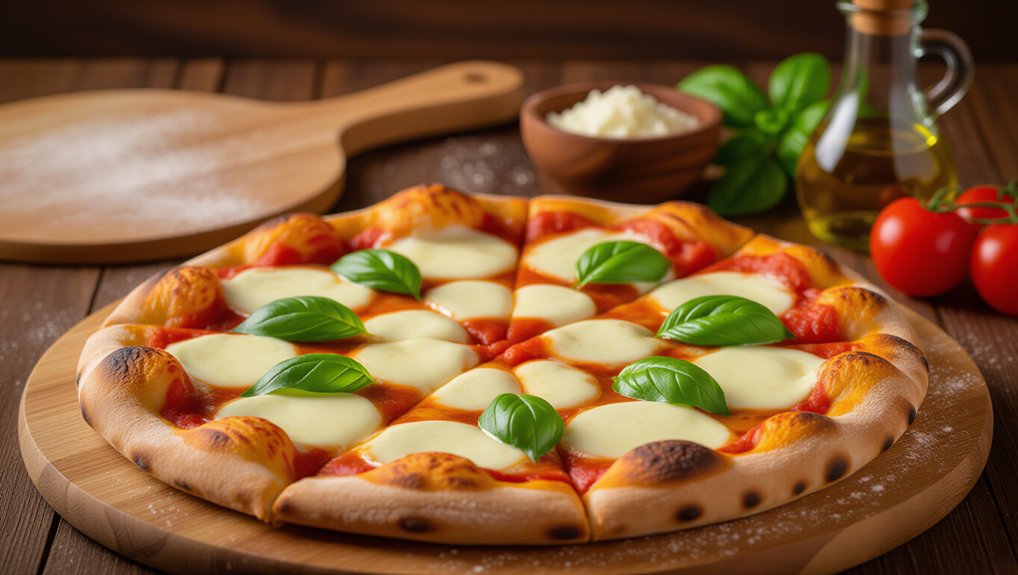
To make the perfect Margherita pizza, you’ll need to pay attention to a few key steps.
First, let your dough rest properly to develop flavor and texture.
Then, bake at a high temperature for that crispy crust, and don’t forget to garnish with fresh basil for a burst of aroma.
Dough Resting Time
While you might be eager to dive into making your Margherita pizza, giving the dough adequate resting time is crucial for achieving that perfect texture. This step allows the gluten to relax, making your dough easier to shape and resulting in a light, airy crust.
Here’s what to keep in mind during the resting period:
- Timing: Let the dough rest for at least 1 hour at room temperature.
- Cover: Keep it covered with a damp cloth to prevent drying out.
- Warmth: Find a warm spot, as warmth helps the dough rise.
- Patience: Resist the temptation to rush; good pizza takes time!
- Check: Look for the dough to double in size before using.
Enjoy the process!
Baking at High Temperature
Once your dough has rested and is ready, preheat your oven to its highest setting, ideally around 500°F (260°C), to achieve that authentic pizzeria-quality crust. A hot oven is key to getting a beautifully golden crust.
Here’s how to make the most of your high-temperature baking:
- Use a pizza stone or baking steel for even heat distribution.
- Roll out your dough thinly for a crispier texture.
- Don’t overload on toppings; less is more for balance.
- Bake your pizza for about 8-10 minutes, keeping an eye on the crust.
- Rotate the pizza halfway through for even cooking.
With these tips, you’ll be on your way to a delicious Margherita pizza that’s sure to impress!
Garnish With Fresh Basil
Baking your Margherita pizza at high temperatures creates a perfect base, but the finishing touch makes all the difference.
Fresh basil adds a vibrant flavor and aroma that elevates your pizza to the next level. Here’s how to garnish it perfectly:
- Use whole leaves for a bold presentation.
- Tear the basil by hand to release its oils.
- Add basil after baking to keep it fresh and bright.
- Experiment with the placement; arrange it in a fan shape or scatter it randomly.
- For added flavor, drizzle a little olive oil over the basil.
Ingredient List
Margherita Pizza Recipe
Create a delicious Margherita pizza with fresh ingredients that impresses every time!
Ingredients
- High-quality pizza dough (preferably made with bread flour)
- Fresh mozzarella cheese
- San Marzano tomatoes (or homemade tomato sauce)
- Fresh basil leaves
- Extra virgin olive oil
- Sea salt
Instructions
- Preheat your oven to the highest setting.
- Roll out the pizza dough on a floured surface to your desired thickness.
- Spread a thin layer of tomato sauce over the dough.
- Evenly distribute slices of fresh mozzarella cheese on top.
- Sprinkle sea salt and drizzle extra virgin olive oil.
- Bake in the preheated oven for about 10 minutes, or until the crust is golden.
- Once out of the oven, add fresh basil leaves for garnish.
Use a Pizza Stone
Using a pizza stone can transform your Margherita pizza into a restaurant-quality masterpiece. You’ll want to consider its benefits, how to preheat it for optimal results, and some cleaning tips to keep it in great shape.
Here’s what you should know:
- Enhances crust crispiness
- Retains heat for even cooking
- Mimics a traditional pizza oven
- Requires preheating for best results
- Easy to clean with simple maintenance
Benefits Of Pizza Stones
When it comes to achieving that perfect, crispy crust, a pizza stone is your best friend. These stones absorb heat and distribute it evenly, preventing soggy bottoms and ensuring your pizza cooks uniformly.
By retaining high temperatures, they create a professional-quality bake that mimics a traditional pizza oven. Plus, using a pizza stone helps enhance flavor, as it can absorb moisture, allowing for a more intense, delicious crust.
You’ll also find that they’re versatile; you can use them for baking bread or pastries too. Easy to clean and durable, pizza stones are a worthwhile investment for any home chef.
Preheating For Best Results
To achieve the best results with your Margherita pizza, preheating your pizza stone is essential.
Start by placing the stone in your oven while it preheats to the highest temperature, usually around 475°F to 500°F. Let it heat for at least 30 minutes; this ensures the stone absorbs enough heat to create that golden crust you crave.
When you’re ready to bake, carefully transfer your pizza onto the hot stone using a pizza peel. This direct contact with the stone will help cook the bottom evenly, giving you that perfect crispy texture.
Cleaning And Maintenance Tips
Although pizza stones can enhance your baking experience, they require proper cleaning and maintenance to ensure longevity. After each use, let your stone cool completely.
Once it’s cool, scrape off any food debris with a spatula or brush. Avoid using soap, as it can absorb into the stone and affect future pizzas. Instead, wipe it down with a damp cloth if needed.
For tougher stains, sprinkle some coarse salt on the stone and scrub gently with a damp sponge.
Always air dry your stone completely before storing it to prevent moisture buildup. Lastly, avoid soaking it in water or placing it in the dishwasher.
With these simple tips, you’ll keep your pizza stone in prime condition for delicious Margherita pizzas!
Caloric Breakdown Per Slice
A typical Margherita pizza slice contains around 200 to 300 calories, depending on the crust thickness and toppings. If you’re tracking your calorie intake, this breakdown helps you make informed choices. The primary contributors to the calorie count are the dough, cheese, and sauce.
Here’s a quick overview:
| Component | Calories per Slice | Notes |
|---|---|---|
| Dough | 100-150 | Varies by thickness |
| Cheese | 70-120 | Type and amount matter |
| Tomato Sauce | 30-50 | Usually low in calories |
Overworking the Dough
Overworking the dough can ruin your Margherita pizza before it even hits the oven. When you knead too much, you develop excess gluten, leading to a tough crust instead of the light, airy texture you want.
Here are some signs you might be overworking your dough:
- It feels too elastic and resists stretching.
- It becomes shiny or overly smooth.
- It springs back quickly when pressed.
- You notice a tough texture after shaping.
- It takes longer to rise, if at all.
To achieve that perfect golden crust, mix just until combined and let the dough rest.
This way, you’ll have a delightful pizza that’s both crispy and chewy, ready to impress everyone at the table!
Toppings: Prosciutto and Arugula
When you’re ready to elevate your Margherita pizza, consider adding prosciutto and arugula for a fresh twist.
A drizzle of balsamic can enhance the flavors, while sun-dried tomatoes add a rich depth.
These toppings not only complement the classic ingredients but also create a delightful balance.
Add a Drizzle of Balsamic
Drizzling balsamic reduction over your Margherita pizza elevates it to a whole new level. This sweet and tangy addition beautifully complements the rich flavors of prosciutto and arugula.
You’ll find that it enhances the overall experience, making each bite unforgettable. Here’s why you should definitely add that drizzle:
- Flavor Balance: The acidity cuts through the richness of the cheese.
- Visual Appeal: A glossy finish makes your pizza look gourmet.
- Texture Contrast: The syrupy balsamic adds a delightful texture.
- Freshness Boost: It brightens up the pizza with a fresh taste.
- Versatility: Works well with other toppings if you mix it up later.
Add Sun-Dried Tomatoes
Adding sun-dried tomatoes to your Margherita pizza introduces a burst of intense flavor that beautifully complements the fresh prosciutto and peppery arugula.
These flavorful gems not only enhance your pizza but also bring a delightful texture. Here’s why you’ll love adding them:
- Rich Umami: They add a savory depth that elevates every bite.
- Vibrant Color: Their deep red hue adds visual appeal.
- Balanced Sweetness: They provide a hint of sweetness that contrasts nicely with salty prosciutto.
- Easy to Use: Just chop and sprinkle them on before baking.
- Versatile Pairing: They work well with other toppings too!
Common Baking Mistakes
When you’re baking Margherita pizzas, a few common mistakes can ruin your efforts.
Overworking the dough, using the wrong oven temperature, and skipping the preheat step are all things you should watch out for.
Let’s break these down to help you achieve that perfect crust every time.
Overworking The Dough
While it might seem tempting to knead your pizza dough for an extended period, overworking it can lead to a tough texture that’s far from ideal. When you knead too much, you develop the gluten excessively, which makes the dough elastic but less tender.
Instead of a light, airy crust, you might end up with something chewy and dense, ruining your Margherita pizza experience. Aim for just enough kneading to bring the ingredients together and develop a smooth surface.
Once you’ve achieved that, let the dough rest. This resting period allows the gluten to relax, resulting in a soft, manageable dough that yields a perfect golden crust.
Keep it simple, and you’ll enjoy a delightful pizza every time.
Incorrect Oven Temperature
Getting the oven temperature just right is crucial for achieving that perfect Margherita pizza.
If your oven’s too hot, the crust might char before the cheese melts, leading to an uneven bake. On the other hand, if it’s not hot enough, you’ll end up with a soggy crust that lacks that golden crunch you crave.
Aim for around 475°F (245°C), which mimics the intense heat of a wood-fired oven. Use an oven thermometer to ensure accuracy, as many home ovens can be off by quite a bit.
Remember, a consistent temperature allows the dough to rise properly and the flavors to meld beautifully. Keep an eye on your pizza during baking to adjust if necessary.
Happy baking!
Skipping The Preheat Step
If you skip the preheat step, you’re setting yourself up for disappointment. A properly preheated oven ensures even cooking and helps achieve that golden crust you crave.
When you place your Margherita pizza in a cold oven, the dough can become soggy, leading to a lackluster texture. Plus, it won’t rise properly, ruining your pizza’s signature fluffiness.
Take the time to preheat your oven to the right temperature—usually around 475°F (245°C) for pizza. This heat is crucial for getting that perfect char on the crust and melting the cheese beautifully.
Perfect Your Dough Technique
The foundation of a great Margherita pizza lies in perfecting your dough technique. Start with high-quality flour; 00 flour is ideal for achieving that chewy texture.
Measure your ingredients accurately and mix them until combined, but don’t overwork the dough. Let it rest for at least an hour to develop gluten.
When you shape the dough, use your hands instead of a rolling pin to maintain air bubbles, which contribute to a light crust. Aim for a thickness of about a quarter-inch.
After shaping, allow the dough to rise again briefly; this step enhances the flavor. Finally, don’t forget to stretch it gently on a floured surface.
Follow these steps, and you’ll create a pizza base that’s golden and delicious.
Frequently Asked Questions
Can I Use Gluten-Free Flour for the Dough?
Yes, you can use gluten-free flour for the dough. Just remember, gluten-free options may require adjustments in hydration and additional binders. Experiment a bit to achieve that perfect texture and flavor you’re aiming for!
How Long Can I Store Leftover Pizza?
You can store leftover pizza in the fridge for up to four days. Just make sure it’s wrapped tightly or in an airtight container to keep it fresh and tasty for your next meal!
What Type of Cheese Works Best for Margherita Pizza?
Fresh mozzarella works best for Margherita pizza. It melts beautifully, creating a creamy texture that complements the tomatoes and basil. Make sure to use high-quality cheese for the best flavor and authentic experience. Enjoy!
Can I Freeze the Pizza Dough?
Yes, you can freeze pizza dough! Just wrap it tightly in plastic wrap and place it in an airtight container. When you’re ready to use it, thaw it in the fridge overnight. Enjoy your pizza!
What Wine Pairs Well With Margherita Pizza?
A crisp white wine like Pinot Grigio or a light red like Chianti pairs perfectly with Margherita pizza. Their acidity complements the tomato and balances the mozzarella’s creaminess, enhancing your dining experience. Enjoy the flavors!
Conclusion
Now that you know how to make golden crust Margherita pizzas, it’s time to put your skills to the test! Remember the key steps: high-quality dough, the right oven temperature, and fresh ingredients. Don’t be afraid to experiment with toppings like prosciutto and arugula to elevate your pizza game. With practice, you’ll perfect your technique and impress everyone with your delicious creations. So, gather your ingredients and get ready to enjoy a slice of homemade heaven!