
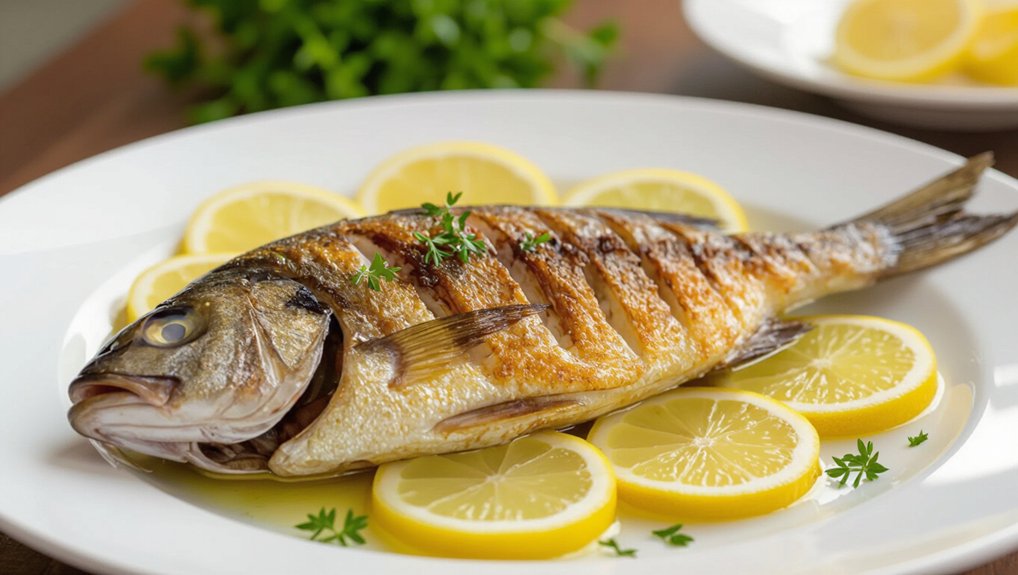
When you think of a perfect summer dish, crispy fried whole fish often comes to mind. Its golden crunch paired with fresh citrus is hard to resist. You might wonder how to achieve that ideal texture and flavor balance. By using the right seasonings and techniques, you can create a dish that’s both impressive and delicious. Let’s explore the essential steps to elevate your cooking game.
What Is Crispy Fish?
Crispy fish is a culinary delight that tantalizes the taste buds with its crunchy exterior and tender, flaky inside. When you bite into it, you experience a satisfying crunch that gives way to the moist, flavorful meat of the fish.
This dish can be prepared using various fish types, each bringing its unique flavor and texture to the table. The right cooking method, typically deep-frying or pan-frying, ensures the fish retains its juiciness while achieving that perfect golden-brown crust.
Whether you enjoy it as a main course or a snack, crispy fish is versatile and pairs beautifully with a range of sauces and sides. Embrace this dish for its delightful combination of textures and flavors that never disappoints.
Essential Seasoning Blends
To elevate your crispy fried whole fish, you need the right seasoning blends.
These key components can transform your dish from ordinary to extraordinary.
Let’s look at some essential flavors you can’t miss:
- Sea salt and black pepper
- Paprika and cayenne
- Fresh herbs like parsley and dill
- Garlic powder and onion powder
Key Components for Flavor
Flavor is the heart of any great fried whole fish, and the right seasoning blends can elevate your dish to new heights. To create that irresistible taste, consider these essential components:
- Sea Salt: Enhances the natural flavors and draws moisture from the fish.
- Smoked Paprika: Adds a delightful smokiness and rich color, making your dish visually appealing.
- Garlic Powder: Offers a savory depth that pairs perfectly with the fish’s lightness.
- Cayenne Pepper: Introduces a kick of heat that balances the dish, adding excitement with every bite.
Mix these seasonings together, and don’t hesitate to adjust based on your personal taste.
With these key components, your fried whole fish will burst with flavor!
Fresh Herbs and Spices
While seasoning blends can elevate your fried whole fish, fresh herbs and spices truly bring it to life. They add layers of flavor that make each bite unforgettable.
Here are four must-have herbs and spices to enhance your dish:
- Cilantro – Bright and zesty, it complements the fish beautifully.
- Garlic – Adds depth and a savory kick that can’t be beaten.
- Chili Powder – Offers a warm, spicy note that balances the dish.
- Lemon Zest – Provides a fresh, citrusy burst, enhancing the overall flavor.
Incorporating these fresh ingredients not only boosts taste but also elevates the presentation.
Detailed Cooking Instructions
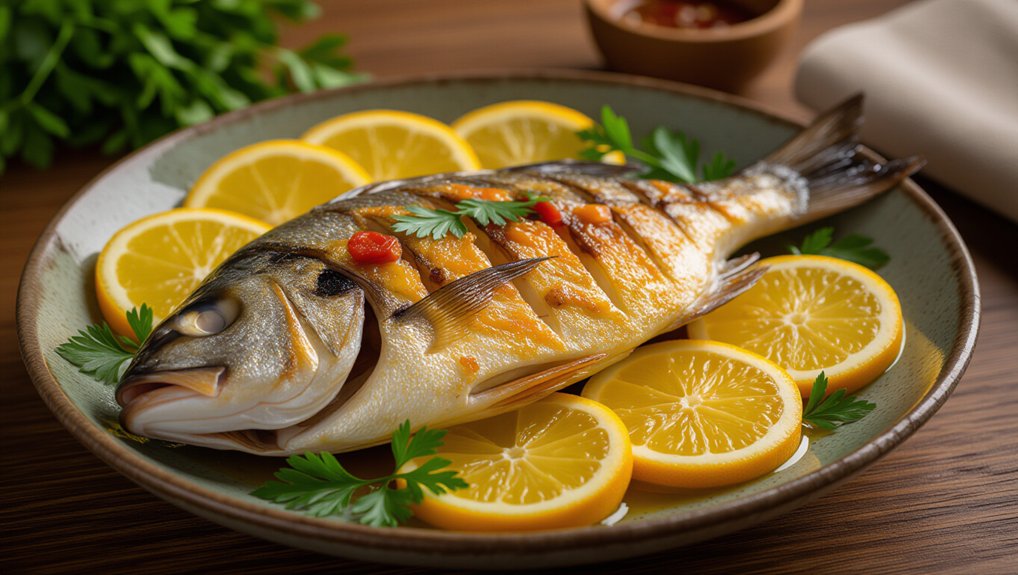
When you’re ready to cook your crispy fried whole fish, start by cleaning and seasoning it to enhance the flavors.
Next, fry it until it’s golden brown for that perfect crunch.
Finally, don’t forget to garnish with fresh citrus wedges for a zesty finish.
Fish Cleaning and Seasoning
Cleaning and seasoning your fish is crucial for achieving that perfect crispy texture. Start by removing the scales with a fish scaler or the back of a knife. Rinse the fish under cold water, ensuring you get rid of any remaining blood or debris.
Next, make a few diagonal slashes on each side to allow the seasoning to penetrate deeply.
Here’s how to season it:
- Salt: Generously sprinkle salt inside and out to enhance flavor.
- Pepper: Add freshly cracked black pepper for a bit of heat.
- Citrus Zest: Grate some lemon or lime zest for a fresh twist.
- Herbs: Rub in fresh herbs like parsley or cilantro for extra aroma.
Let it sit for a few minutes to absorb all those delicious flavors!
Fry Until Golden Brown
Heat a generous amount of oil in a deep skillet or frying pan over medium-high heat until it shimmers.
Carefully lower the fish into the hot oil, ensuring it’s fully submerged for even cooking. Fry the fish until it’s golden brown and crispy, about 4-5 minutes per side. Keep an eye on it to prevent burning.
Here’s what to look for:
- Bubbling Oil: If the oil isn’t bubbling around the fish, it’s not hot enough.
- Color: Aim for a rich golden hue; this indicates a crispy exterior.
- Texture: A gently poked fish should feel firm yet tender.
- Internal Temperature: Ensure the fish reaches 145°F for safe consumption.
Enjoy the process!
Garnish With Citrus Wedges
Once your fish is perfectly fried to a golden crisp, it’s time to elevate the dish with some vibrant citrus wedges. These not only add a pop of color but also enhance the flavor profile beautifully.
Here’s how to do it:
- Choose Your Citrus: Opt for a mix of lemon, lime, and orange for a balanced zing.
- Cut into Wedges: Slice the citrus into wedges, ensuring they’re easy to squeeze and grab.
- Arrange Artistically: Place the wedges around the fish on the serving platter for an eye-catching presentation.
- Serve with a Smile: Encourage guests to squeeze the wedges over their fish, adding that fresh, zesty kick!
This simple garnish will take your dish from great to unforgettable!
Cooking Time and Temperature
Crispy Fried Whole Fish
Achieve restaurant-quality crispy fried fish with this simple recipe.
Ingredients
- 1 whole fish (cleaned and scaled)
- Oil for frying
- Salt and pepper to taste
- Optional: your choice of spices or herbs
Instructions
- Preheat your oil to 350°F (175°C).
- Season the fish with salt, pepper, and any other spices.
- Carefully place the fish in the hot oil.
- Fry for 5 to 7 minutes on each side, depending on size.
- Look for a deep golden brown color for doneness.
- Check the internal temperature; it should reach at least 145°F (63°C).
- Remove the fish and let it drain on paper towels.
Adjust cooking time based on the size of the fish for perfect results.
Use High-Smoke Point Oil
When frying whole fish, the type of oil you choose plays a crucial role in achieving that perfect crispy texture. High-smoke point oils not only enhance flavor but also help maintain temperature control during cooking.
Here are some key points to consider:
- Benefits of high-smoke oils
- Ideal oil choices
- Temperature control tips
- How to avoid smoking oil
Benefits Of High-Smoke Oils
Using high-smoke point oils is essential for achieving that perfect crispy fried whole fish. These oils can withstand higher temperatures without breaking down, which means you get a better fry.
When you heat oils with low smoke points, they can burn, imparting a bitter flavor to your fish and ruining that desirable crunch. High-smoke oils also help maintain the fish’s moisture, ensuring it stays tender inside while developing a golden crust outside.
Plus, they create less smoke in your kitchen, making the frying process more pleasant. By choosing the right oil, you’re not just enhancing the flavor and texture; you’re also ensuring a cleaner, more efficient cooking experience that’ll impress everyone at your table.
Ideal Oil Choices
Choosing the right oil can make all the difference in frying whole fish. You’ll want to opt for oils with a high smoke point, like canola, peanut, or grapeseed oil.
These oils can handle the heat without breaking down, ensuring your fish gets that perfect golden crunch. Avoid oils like olive oil or butter, as they can burn quickly at high temperatures, leading to off-flavors.
When you use the right oil, it not only enhances the taste but also creates a crispy texture that’s hard to resist. Plus, using high-smoke point oils helps you achieve even cooking, so your fish is tender and juicy inside.
Temperature Control Tips
High-smoke point oils not only enhance flavor but also play a vital role in temperature control. When frying your whole fish, aim for oils like canola, grapeseed, or peanut oil, which can withstand high heat without breaking down.
This stability prevents the oil from smoking and imparting a bitter taste to your dish.
Before adding the fish, heat your oil to around 350°F (175°C). Use a thermometer to ensure accuracy; too low and your fish will absorb excess oil, too high and it could burn.
Once the fish is in the oil, maintain that temperature for a crispy exterior. Adjust the heat as needed, and always let the oil return to the right temperature between batches.
Enjoy your perfectly fried fish!
Caloric Content per Serving
A typical serving of crispy fried whole fish contains around 350 to 500 calories, depending on the size and cooking method. When you’re indulging in this dish, it’s good to be aware of the caloric content so you can make informed choices. Here’s a quick breakdown of calories based on different types of fish and serving sizes:
| Fish Type | Calories per Serving |
|---|---|
| Tilapia | 350 |
| Snapper | 400 |
| Trout | 450 |
| Bass | 500 |
| Mackerel | 480 |
Overcrowding the Frying Pan
When frying whole fish, it’s crucial to avoid overcrowding the frying pan. If you toss in too many fish at once, you’ll end up with soggy, greasy results instead of that desired crispy texture.
Here’s why you should keep the space in mind:
- Temperature Drop: Adding too much at once lowers the oil temperature, leading to uneven cooking.
- Steam Build-Up: Overcrowding traps steam, preventing the fish from frying properly.
- Difficult Flipping: It’s harder to turn fish if they’re packed tightly, risking breaks and uneven cooking.
- Longer Cooking Time: More fish means longer frying times, which can dry out your catch.
Keep your fish spaced out for that perfect golden crunch!
Herb-Infused Dipping Sauces
When you’re ready to elevate your crispy fried whole fish, whipping up some herb-infused dipping sauces is a must.
Try a spicy mango salsa for a fruity kick or a garlic-lime aioli for a creamy, zesty twist.
These sauces not only enhance the flavor but also add a refreshing touch to your meal.
Spicy Mango Salsa Variation
To elevate your crispy fried whole fish, consider whipping up a spicy mango salsa variation that adds both a burst of flavor and a refreshing contrast.
This salsa not only complements the fish beautifully but also brings a vibrant touch to your plate. Here’s what you’ll need:
- Diced ripe mango – for sweetness and texture.
- Chopped red onion – to add a bit of bite.
- Finely chopped jalapeño – for that spicy kick.
- Fresh cilantro and lime juice – to brighten everything up.
Mix these ingredients together, adjusting the spice level to your taste.
Serve this zesty salsa alongside your fish for a delightful pairing that’ll impress your guests and keep them coming back for more!
Garlic-Lime Aioli Variation
Looking for a way to elevate your crispy fried whole fish? Try this zesty garlic-lime aioli variation! It’s creamy, refreshing, and perfectly complements the crunch of your fish. Here’s how to whip it up:
- Ingredients: Gather mayonnaise, fresh garlic, lime juice, and zest.
- Mix It Up: In a bowl, combine 1 cup of mayonnaise, 2 minced garlic cloves, the juice of 1 lime, and a teaspoon of lime zest.
- Season: Add salt and pepper to taste, and feel free to toss in fresh herbs like cilantro or parsley for an extra kick.
- Serve: Dip your fish into this vibrant sauce for a delightful burst of flavor that’ll impress everyone at your table!
Common Cooking Concerns
When frying whole fish, you want to tackle a few common concerns to ensure success.
Choosing the right fish, achieving that perfect crispiness, and finding flavorful marinade options can make all the difference.
Let’s explore these key points to elevate your frying game.
Proper Fish Selection
Choosing the right fish is crucial for achieving that perfect crispy fried whole fish. Look for fresh, firm fish like snapper, trout, or tilapia.
These varieties not only hold their shape well during frying but also have a mild flavor that allows your spices and seasoning to shine. Check for bright, clear eyes, shiny skin, and a fresh ocean scent—these are signs of freshness.
Avoid fish with a strong, fishy odor or dull appearance. If possible, buy whole fish from a trusted fishmonger. They can help you select the best catch for your dish.
Achieving Perfect Crispiness
To achieve that perfect crispiness for your fried whole fish, it’s essential to master a few key techniques.
First, ensure your fish is completely dry before cooking. Pat it down with paper towels to remove excess moisture, which can lead to sogginess.
Next, use a light coating of flour or cornstarch, as these create a delicate crust that crisps up beautifully.
Heat your oil to the right temperature—around 350°F (175°C)—to ensure immediate sizzle upon contact.
Fry in small batches to avoid overcrowding, which can lower the oil temperature.
Finally, let the fish rest on a wire rack after frying, allowing air to circulate and keeping the skin crunchy.
These steps will elevate your dish to crispy perfection!
Flavorful Marinade Options
After achieving that perfect crispiness, the next step is to infuse your whole fish with bold flavors through marinades.
You can start with a zesty citrus marinade, mixing fresh lemon or lime juice with garlic, olive oil, and a pinch of salt. If you crave something spicier, try a chili-garlic blend for a fiery kick.
For a more herbal twist, combine fresh herbs like parsley, dill, or cilantro with yogurt or sour cream for creaminess.
Don’t forget to let your fish marinate for at least 30 minutes; this allows the flavors to penetrate deeply.
Experiment with different combinations to find your favorite, and you’ll create a dish that’s not just crispy but bursting with taste!
Perfect for Summer Gatherings
As the sun shines brightly and the days grow longer, nothing beats gathering with friends and family over a platter of crispy fried whole fish. This dish isn’t just delicious; it’s a showstopper that sparks conversations and laughter.
Picture everyone digging in, sharing stories while savoring the golden crunch and zesty flavors. You can easily prepare multiple fish, making it a crowd-pleaser that caters to everyone’s taste.
Pair it with fresh salads and refreshing drinks to complete the experience. The vibrant presentation and delightful aroma will create an inviting atmosphere, perfect for summer gatherings.
Frequently Asked Questions
What Type of Fish Is Best for Frying Whole?
For frying whole, choose firm fish like snapper, trout, or tilapia. Their sturdy flesh holds up well during cooking, ensuring a delicious, crispy exterior while maintaining juicy, flavorful meat inside. You won’t be disappointed!
Can I Use Frozen Fish Instead of Fresh?
Yes, you can use frozen fish instead of fresh. Just ensure it’s fully thawed and patted dry before frying. This’ll help you achieve that crispy texture you’re aiming for in your dish.
How Do I Know When the Fish Is Cooked?
You’ll know the fish is cooked when it flakes easily with a fork and its flesh turns opaque. If you’re using a thermometer, aim for an internal temperature of 145°F for perfect doneness.
What Sides Pair Well With Crispy Fried Fish?
Coleslaw, tartar sauce, and lemon wedges enhance crispy fried fish perfectly. You might also enjoy serving it with fries, a fresh salad, or grilled vegetables for a balanced and delicious meal experience.
Can I Prepare the Fish in Advance?
Yes, you can prepare the fish in advance. Just clean and season it, then refrigerate. Fry it right before serving for that perfect crunch. This way, you’ll enjoy fresh, delicious fish without last-minute stress.
Conclusion
Now you’re all set to impress your guests with crispy fried whole fish! With that golden crunch and refreshing citrus twist, it’s sure to be a hit at any summer gathering. Just remember to follow the cooking tips for perfect results, and don’t shy away from experimenting with different seasoning blends or dipping sauces. Enjoy every bite, and relish in the compliments that come your way! Happy frying!