
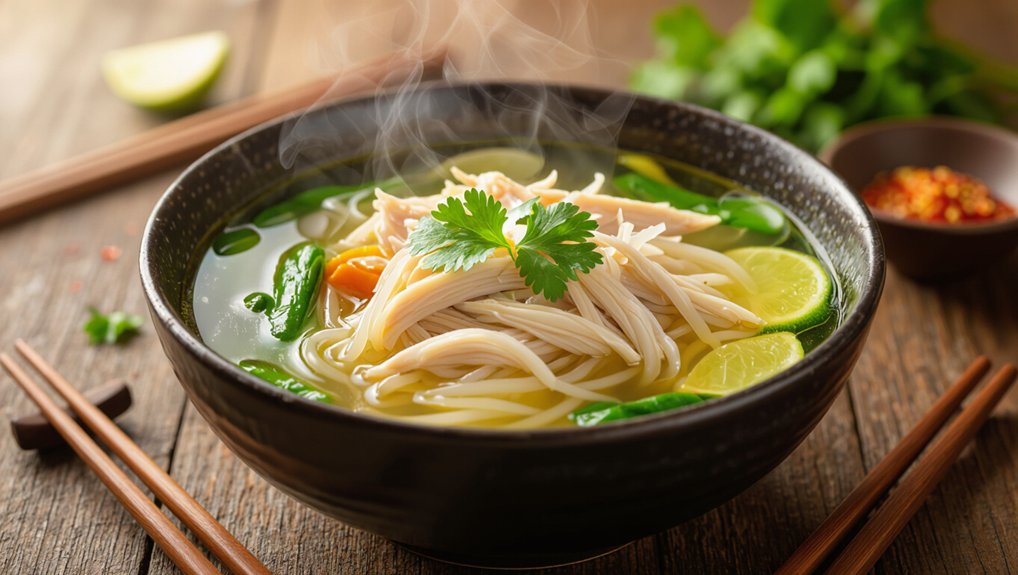
When you want to create a comforting bowl of Chicken Sotanghon Soup, it’s all about the details. You’ll need to focus on the right aromatics and the perfect broth. As you simmer the chicken, let those flavors meld together. But there are a few common pitfalls you might face. Knowing how to avoid them will elevate your soup. Ready to uncover the secrets behind this nourishing dish?
What Is Sotanghon Noodle Soup?
Sotanghon noodle soup, often a comforting favorite in Filipino cuisine, features thin glass noodles made from mung beans. You’ll love its delicate texture and ability to absorb flavors.
Typically, the broth is rich and savory, often enhanced with chicken, which adds depth. As you prepare the dish, you’ll notice how the noodles become silky, making each spoonful satisfying.
This soup is perfect for chilly days or when you need a pick-me-up. Whether you’re enjoying it for lunch or dinner, it warms the soul.
You might also find it served during special occasions, symbolizing warmth and hospitality. With its simple ingredients and heartwarming qualities, sotanghon noodle soup is a true culinary gem that you’ll want to share with family and friends.
Essential Aromatics
To elevate your Chicken Sotanghon Soup, you’ll want to focus on essential aromatics that pack a flavor punch.
These ingredients not only enhance the taste but also create a comforting aroma that draws everyone in.
Let’s explore some key components that’ll make your soup unforgettable.
- Garlic
- Onions
- Ginger
- Lemongrass
- Bay leaves
Key Components for Flavor
When crafting a delicious chicken sotanghon soup, the key components for flavor hinge on essential aromatics that elevate the dish.
These ingredients not only enhance the taste but also create a warm, comforting aroma that fills your kitchen.
Here are five must-have aromatics to include:
- Onions: They provide a sweet and savory base.
- Garlic: Adds depth and a fragrant punch.
- Ginger: Offers a warm, slightly spicy note that brightens the soup.
- Carrots: They contribute sweetness and texture.
- Celery: Brings a fresh, earthy flavor that balances the richness.
Herbs and Spices Boost Flavor
Building on the rich flavors from your aromatics, incorporating the right herbs and spices can take your chicken sotanghon soup to the next level.
These essential ingredients not only enhance taste but also bring warmth and depth to your dish.
Consider adding:
- Fresh Ginger: Adds warmth and a hint of spice.
- Garlic: Deepens the savory flavor profile.
- Bay Leaves: Infuses a subtle earthiness.
- Black Pepper: Provides a mild kick.
- Parsley or Cilantro: Adds freshness and brightness.
Experiment with these to find your perfect balance.
A sprinkle here and a dash there can transform your soup into a comforting bowl that warms both heart and soul.
Don’t be afraid to adjust based on your personal taste!
Cooking Instructions for Soup
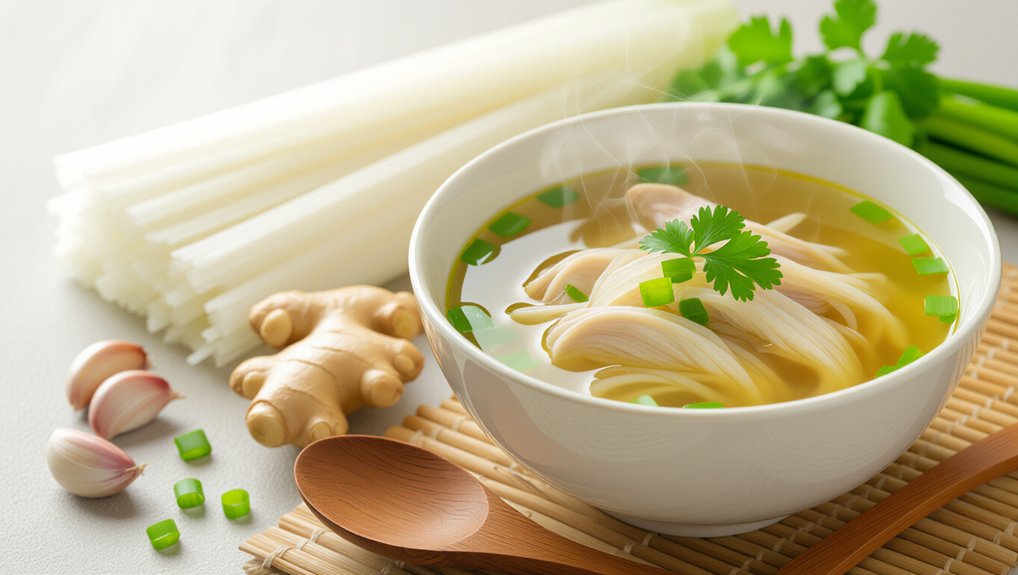
Now that you’ve gathered your essential aromatics, it’s time to move on to the cooking process.
Start by simmering the chicken until it’s tender and flavorful.
Don’t forget to finish off your soup with a sprinkle of fresh cilantro for that perfect touch!
Ingredient Gathering Steps
Gathering the right ingredients is essential for making a delicious Chicken Sotanghon Soup. To create this comforting dish, you’ll need to ensure you have everything ready before you start cooking.
Here’s a quick list of the key ingredients you’ll want to gather:
- Chicken (preferably bone-in for richer flavor)
- Sotanghon noodles (glass noodles, also called mung bean noodles)
- Garlic (minced for that aromatic base)
- Onion (sliced to add sweetness)
- Carrots and celery (for added texture and nutrition)
Once you’ve got these ingredients, you’re well on your way to crafting a heartwarming soup.
Make sure to check your pantry for any additional spices or herbs you might like to enhance the flavor!
Simmer Until Chicken Is Tender
With your ingredients ready, it’s time to bring them together in a simmering pot. Start by adding your chicken and enough water to cover it completely. Bring it to a gentle boil, then reduce the heat to a low simmer.
You’ll want to let it cook until the chicken is tender, which usually takes about 30-40 minutes. Keep an eye on the pot and skim off any foam that rises to the surface. This helps keep your soup clear and flavorful.
- Use bone-in chicken for richer flavor
- Season with salt and pepper for depth
- Add aromatics like garlic and onion
- Stir occasionally to prevent sticking
- Check for doneness with a fork
Once tender, you’re ready for the next step!
Garnish With Fresh Cilantro
Finish off your Chicken Sotanghon Soup by garnishing it with fresh cilantro. This vibrant herb not only enhances the dish’s flavor but also adds a pop of color. Here’s how to do it right:
- Choose fresh, bright green leaves for the best flavor.
- Rinse and dry the cilantro thoroughly to remove any dirt.
- Chop finely or leave the leaves whole based on your preference.
- Sprinkle generously on top just before serving to maintain freshness.
- Pair with lime wedges for an extra zesty kick!
Adding cilantro not only elevates the presentation but also complements the soup’s savory notes beautifully.
Enjoy the burst of freshness and enjoy your comforting bowl of Chicken Sotanghon Soup!
Cooking Instructions Summary
Chicken Sotanghon Soup
Warm up with a comforting bowl of Chicken Sotanghon Soup, perfect for chilly days or whenever you crave a cozy meal!
Ingredients
- 2 cups shredded chicken
- 100g sotanghon noodles
- 1 medium onion, chopped
- 4 cloves garlic, minced
- 1-inch piece ginger, sliced
- 4 cups chicken broth
- 1 cup mixed vegetables (carrots, cabbage, etc.)
- Salt and pepper to taste
- Fresh cilantro for garnish
Instructions
- Chop your vegetables and soak the sotanghon noodles in warm water until softened.
- In a pot, sauté garlic, onion, and ginger until fragrant.
- Add the shredded chicken and cook until it’s no longer pink.
- Pour in your chicken broth and bring it to a boil.
- Once boiling, add the soaked noodles and vegetables, letting everything simmer until the noodles are tender.
- Season with salt and pepper to taste.
- Serve hot, garnished with fresh cilantro.
Use Homemade Broth for Depth
Using homemade broth in your Chicken Sotanghon Soup can really elevate the dish, giving it a rich and comforting flavor.
You’ll notice how much deeper the taste gets compared to store-bought options.
Let’s explore the benefits and techniques for making your own broth!
- Enhanced flavor profiles
- Healthier ingredients
- Cost-effective preparation
- Customizable to your taste
- Simple techniques for broth-making
Benefits Of Homemade Broth
While store-bought broth can be convenient, nothing compares to the rich flavor and nutritional benefits of homemade broth. When you make it yourself, you control the ingredients, ensuring no preservatives or artificial additives. This means you’re getting a broth packed with nutrients, vitamins, and minerals that store-bought versions often lack.
Plus, the simmering process extracts collagen from bones, which can support joint health and improve skin elasticity.
Homemade broth also allows you to customize flavors to your liking, whether you prefer a hint of garlic, a touch of herbs, or added vegetables.
Using homemade broth not only enhances the taste of your chicken sotanghon soup but also serves as a nourishing base, making your meal truly comforting and wholesome.
Simple Broth-Making Techniques
Homemade broth elevates your chicken sotanghon soup by providing a depth of flavor that’s hard to replicate.
To make a simple yet rich broth, start by simmering chicken bones or a whole chicken in water. Add aromatics like onion, garlic, and ginger for warmth. Toss in some carrots and celery for sweetness and depth.
Let everything simmer for at least an hour; the longer, the better. Skim off any impurities that rise to the surface for a clear broth.
Once it’s ready, strain out the solids and season with salt to taste. You can even freeze leftovers for future use, ensuring you always have that flavorful base on hand when you crave a comforting bowl of sotanghon soup.
Flavor Enhancements And Variations
To truly elevate your chicken sotanghon soup, incorporating flavor enhancements and variations is essential.
Start with homemade broth; it adds depth and richness that store-bought options can’t match. You can simmer chicken bones, aromatics, and herbs for hours, extracting every bit of flavor.
Next, consider adding fresh herbs like cilantro or green onions just before serving for a burst of brightness. A splash of soy sauce or fish sauce can deepen the umami notes, while a squeeze of calamansi or lime adds a refreshing zing.
For a twist, try adding mushrooms, bok choy, or even some chili for heat.
These simple enhancements make your soup not just a meal but a comforting experience that warms the soul.
Caloric Content per Serving
Understanding the caloric content per serving of Chicken Sotanghon Soup is essential if you’re mindful of your dietary intake. This comforting dish can be both nutritious and satisfying, but knowing the specifics helps you stay on track with your goals.
Here’s a breakdown of the caloric content for a standard serving:
| Ingredient | Quantity | Calories |
|---|---|---|
| Chicken (cooked) | 100g | 165 |
| Sotanghon Noodles | 50g | 180 |
| Vegetables (mixed) | 100g | 50 |
| Broth | 1 cup | 15 |
| Total | – | 410 |
Overcooking the Noodles
Noodles are the heart of Chicken Sotanghon Soup, and overcooking them can ruin the dish’s texture. If you let them sit in hot broth for too long, they’ll turn mushy and lose their delightful chewiness.
To ensure you get it right, keep these tips in mind:
- Cook noodles separately: This prevents them from soaking up too much broth.
- Timing is key: Add noodles just a few minutes before serving.
- Use a timer: Set it to avoid distractions and overcooking.
- Taste test: Check for doneness; they should be al dente.
- Rinse with cold water: If you’re prepping ahead, this halts cooking and keeps them firm.
Follow these steps, and you’ll enjoy the perfect texture in your soup!
Add Lemon for Brightness
Adding lemon to your Chicken Sotanghon Soup brings a refreshing brightness that elevates the dish.
To amp up the nutritional value, consider tossing in some spinach; it’s an easy way to get more greens.
If you want an extra protein boost, adding tofu can make your soup even heartier.
Add Spinach for Extra Nutrition
While cooking your Chicken Sotanghon Soup, consider incorporating fresh spinach to boost its nutritional value. Spinach not only adds vibrant color but also enhances the soup’s health benefits. It’s rich in vitamins and minerals, making your dish even more comforting.
- Loaded with vitamins A, C, and K
- Contains iron for energy support
- Packed with antioxidants for overall health
- Low in calories, making it a guilt-free addition
- Provides dietary fiber for better digestion
Simply stir in a handful of spinach just before serving. It wilts quickly, absorbing the delicious flavors of your soup while keeping its nutritional goodness intact.
This small addition can make a big difference in your meal’s health profile!
Add Tofu for Protein Boost
To enhance your Chicken Sotanghon Soup, consider incorporating tofu for an extra protein boost. Tofu not only enriches the dish but also adds a delightful texture that complements the chicken and noodles.
Here’s why you should add tofu:
- Versatile Flavor: Tofu absorbs the broth’s flavors beautifully.
- Healthy Protein: It’s a great source of plant-based protein.
- Creamy Texture: Adds a smooth, satisfying mouthfeel.
- Low-Calorie Option: Keeps your soup hearty without extra calories.
- Nutrient-Rich: Packed with essential vitamins and minerals.
Simply cube the tofu and add it during the last few minutes of cooking. This way, it’ll warm through without losing its shape.
Enjoy the added nourishment in every comforting spoonful!
Common Cooking Mistakes
When making Chicken Sotanghon Soup, it’s easy to make a few common mistakes that can affect the dish’s flavor and texture.
You might overcook the noodles, skip the flavorful broth, or neglect ingredient prep, all of which can lead to a less satisfying soup.
Let’s explore these pitfalls and how to avoid them for the best results.
Overcooking The Noodles
Overcooking the noodles can easily turn your Chicken Sotanghon Soup from a delightful dish into a mushy mess. To prevent this, pay close attention to cooking times.
Start by soaking the sotanghon noodles in warm water for about 15 minutes to soften them. When you add them to your boiling broth, stir gently and keep an eye on them. They typically only need a few minutes to become tender.
Once they’re cooked, remove the pot from heat immediately. If you let them sit in the hot broth, they’ll continue to cook and lose their texture.
Skipping Flavorful Broth
While you might be tempted to cut corners, skipping a flavorful broth can seriously compromise your Chicken Sotanghon Soup. The broth is the soul of this dish, infusing every spoonful with rich taste.
Instead of relying on plain water or store-bought broth, take the time to simmer chicken with aromatics like onion, garlic, and ginger. This process not only enhances the flavor but also creates a comforting base that warms the soul.
Remember, the depth of flavor in your broth sets the stage for the entire dish. If you rush this step, you’ll end up with a bland soup that doesn’t do justice to its comforting reputation.
Invest in your broth, and you’ll elevate your Chicken Sotanghon Soup to a whole new level.
Neglecting Ingredient Prep
A flavorful broth lays the foundation for your Chicken Sotanghon Soup, but neglecting ingredient prep can undermine all that effort.
If you don’t chop your vegetables uniformly or forget to soak the sotanghon noodles, you’ll end up with uneven textures and flavors.
Take a moment to measure and prepare everything before you start cooking. This not only streamlines your process but also ensures each ingredient shines in the final dish.
Make sure to have your garlic, onions, and chicken ready to go. You’ll avoid scrambling at the last minute and can focus on perfecting that delicious broth.
Serve With Crusty Bread
How can you elevate your Chicken Sotanghon Soup experience? Pair it with crusty bread.
The contrast of the warm, savory soup and the crunchy texture of fresh bread creates a delightful harmony. As you dip the bread into the rich broth, you’ll enjoy each bite even more.
Choose a loaf with a hearty crust—like a baguette or sourdough. Its robust flavor complements the subtle notes of the chicken and noodles.
Plus, you can use the bread to scoop up any remaining ingredients, ensuring every last bit is savored.
Frequently Asked Questions
Can I Use Other Types of Noodles Instead of Sotanghon?
Yes, you can use other types of noodles instead of sotanghon. Rice vermicelli or even egg noodles work well. Just adjust cooking times to ensure they’re tender and absorb the flavors of the soup. Enjoy!
How Do I Store Leftover Chicken Sotanghon Soup?
You can store leftover chicken sotanghon soup in an airtight container in the fridge for up to three days. If freezing, use a freezer-safe container, and it’ll last for about three months.
What Toppings Can Enhance Chicken Sotanghon Soup?
You can enhance chicken sotanghon soup with fresh herbs like cilantro or green onions, crispy garlic, a squeeze of lime, or chili flakes for heat. These toppings add flavor and texture, making your soup even more delicious.
Is Chicken Sotanghon Soup Gluten-Free?
Yes, chicken sotanghon soup can be gluten-free. Just ensure you use gluten-free soy sauce and check the ingredients of any added toppings. Enjoy a comforting bowl without worrying about gluten. You’ll love it!
Can I Make Chicken Sotanghon Soup in Advance?
Yes, you can make chicken sotanghon soup in advance. Just prepare it, let it cool, and store it in an airtight container in the fridge. Reheat before serving for the best flavor and texture.
Conclusion
Now that you’ve mastered making Chicken Sotanghon Soup, you can enjoy a warm, comforting bowl any time. Remember to use fresh ingredients for the best flavor and avoid overcooking those delicate noodles. A splash of lemon can really brighten up the dish, too! Don’t forget to serve it with some crusty bread for a complete meal. With these tips in hand, you’re all set to impress your family and friends with your delicious soup!