
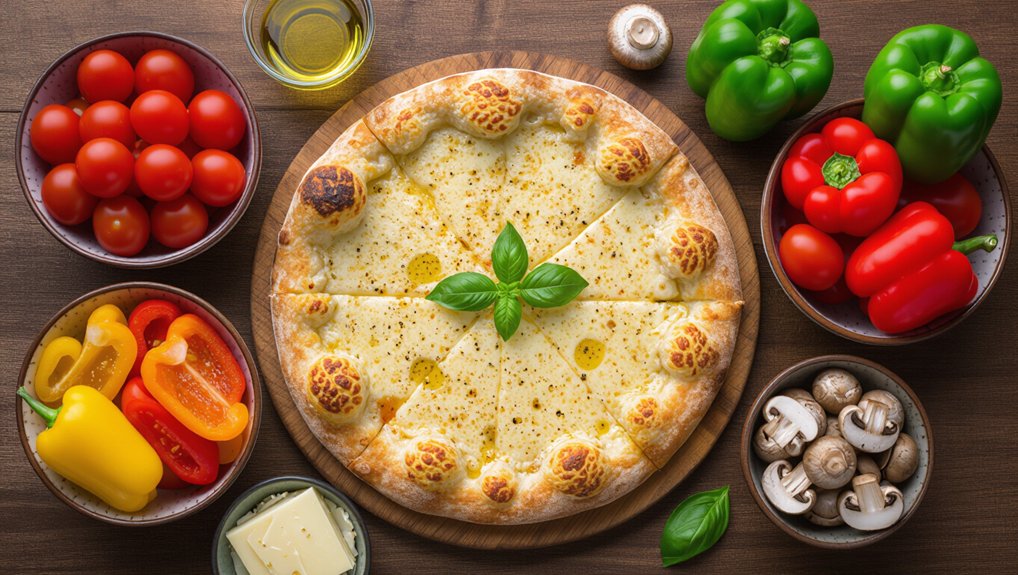
Making Sal’s Vegetarian Pizza is a straightforward process that can elevate your pizza night. You’ll start with a flavorful dough and fresh ingredients, ensuring the best taste. Choosing the right vegetables and cheese is crucial. Plus, there are common pitfalls to avoid that can affect your crust’s texture. Ready to discover the steps that make this pizza truly exceptional? Let’s explore the details.
What Is Vegetarian Pizza?
Vegetarian pizza is a delicious alternative that skips meat while packing in flavor. Instead of traditional toppings, you can load your pie with vibrant vegetables like bell peppers, onions, mushrooms, and olives.
These ingredients not only add color but also provide essential nutrients and textures. You might also consider using a variety of cheeses, like mozzarella or feta, to enhance the richness.
Don’t forget about sauces; a classic tomato base or a creamy pesto can elevate your pizza experience.
The beauty of vegetarian pizza lies in its versatility—you can mix and match toppings to suit your taste.
Whether you’re hosting a gathering or enjoying a quiet night in, this pizza is sure to satisfy everyone’s cravings.
Fresh Basil Leaves
Fresh basil leaves can elevate your vegetarian pizza to a whole new level.
They not only add a burst of flavor but also pair beautifully with key vegetables and cheese.
Here are some extra toppings you might consider to complement the basil:
- Sliced tomatoes
- Grilled zucchini
- Olives
Key Vegetables and Cheese
When crafting a delicious vegetarian pizza, the right combination of key vegetables and cheese can elevate your dish to new heights. Fresh, vibrant ingredients not only enhance flavor but also bring a colorful appeal to your pizza.
Here are three essential ingredients to consider:
- Bell Peppers: Their sweetness and crunch add a delightful texture, balancing the pizza’s richness.
- Spinach: This nutrient-packed green offers a mild taste and vibrant color, making it a perfect base layer.
- Mozzarella Cheese: Creamy and melty, mozzarella binds everything together while providing a classic flavor that complements your veggies beautifully.
Extra Toppings Choices
After setting a solid foundation with key vegetables and mozzarella, you can take your vegetarian pizza to the next level with extra toppings. One of the best choices is fresh basil leaves. They add a fragrant aroma and vibrant flavor that perfectly complements your pizza.
Here are some other great topping ideas to consider:
- Sliced Olives: Black or green, they add a briny kick.
- Roasted Red Peppers: Their sweetness brings a nice contrast to the savory elements.
- Artichoke Hearts: These tender bites introduce a unique texture and flavor.
Feel free to mix and match these toppings based on your preferences. Each one brings its own twist, making your vegetarian pizza even more delicious!
Enjoy customizing your pie!
Detailed Cooking Instructions
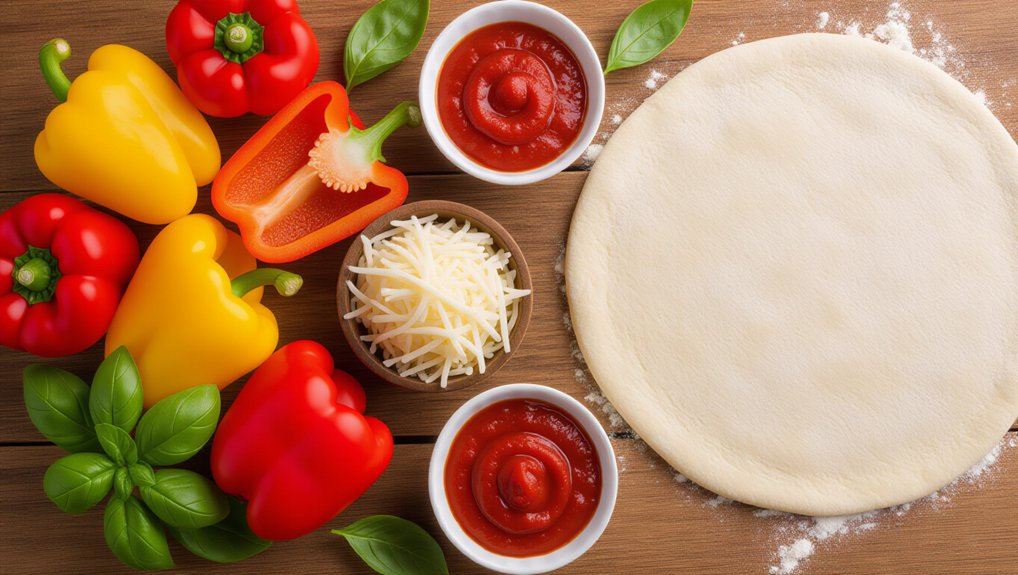
To create a delicious vegetarian pizza, you’ll want to start by chopping your vegetables finely for even cooking.
Next, sauté them until they’re tender and bursting with flavor.
Finally, don’t forget to garnish with a drizzle of olive oil for that perfect finish.
Chop Vegetables Finely
Chop your vegetables finely to enhance their flavor and texture on the pizza. The smaller pieces will cook evenly and blend beautifully with the cheese and sauce. Here’s how to get started:
- Select Your Veggies: Choose a mix of bell peppers, onions, and mushrooms for a vibrant topping.
- Use a Sharp Knife: A sharp knife makes the process easier and safer. Hold the vegetable securely, cutting off ends before slicing.
- Chop with Care: Aim for uniform pieces, about a quarter-inch in size. This ensures even cooking and a harmonious flavor profile.
Sauté Vegetables Until Tender
Once your vegetables are chopped, it’s time to sauté them until they’re tender and flavorful. This step enhances their taste and texture, making your pizza delicious.
Here’s how to do it:
- Heat the Pan: Add a couple of tablespoons of olive oil to a skillet over medium heat. Let it warm up for a minute.
- Add Vegetables: Toss in your chopped vegetables. Bell peppers, mushrooms, and onions work great together. Stir them occasionally to ensure even cooking.
- Season and Cook: Sprinkle with salt and pepper. Sauté for about 5-7 minutes, or until they’re soft and slightly caramelized, releasing their natural sweetness.
Once done, your veggies are ready to add a burst of flavor to your pizza!
Garnish With Olive Oil Drizzle
A simple drizzle of olive oil can elevate your vegetarian pizza to new heights. This finishing touch not only adds flavor but also enhances the overall presentation.
Here’s how to do it perfectly:
- Choose Quality Olive Oil: Opt for extra virgin olive oil for its rich flavor and health benefits.
- Drizzle Strategically: Use a small spoon or a bottle with a nozzle to drizzle the oil evenly across the pizza. Focus on the crust and the toppings.
- Add Seasoning: For extra flair, sprinkle some sea salt or crushed red pepper over the olive oil before serving.
This simple step transforms your pizza into a gourmet dish, enhancing both its taste and visual appeal.
Enjoy your creation!
Ingredient List
Delicious Vegetarian Pizza
Create a mouthwatering vegetarian pizza that everyone will love with fresh ingredients and vibrant flavors!
Ingredients:
- Fresh pizza dough base
- Vibrant tomato sauce
- Bell peppers (sliced)
- Mushrooms (sliced)
- Red onions (sliced)
- Spinach
- Fresh basil or oregano
- Salt and pepper to taste
- Shredded mozzarella cheese
- Parmesan cheese (optional)
Instructions:
- Preheat your oven according to the pizza dough instructions.
- Roll out your pizza dough on a floured surface and place it on a pizza stone or baking sheet.
- Spread the vibrant tomato sauce evenly over the dough.
- Arrange the colorful vegetables on top, starting with bell peppers, followed by mushrooms, red onions, and spinach.
- Sprinkle fresh herbs, salt, and pepper over the toppings.
- Generously add shredded mozzarella cheese and a sprinkle of parmesan if desired.
- Bake in the preheated oven for the time specified on the dough package, or until the cheese is bubbly and golden.
- Remove from the oven, let it cool slightly, then slice and serve.
Use Fresh Mozzarella Cheese
When it comes to your vegetarian pizza, using fresh mozzarella cheese can make all the difference.
You’ll want to consider its quality, how it melts, and how to store it for maximum freshness.
Here are three key points to keep in mind:
- Cheese Quality Matters
- Melting Characteristics Explained
- Storage Tips For Freshness
Cheese Quality Matters
Using fresh mozzarella cheese can elevate your vegetarian pizza to a whole new level. It’s not just about taste; quality cheese enhances texture and freshness.
When you choose high-quality mozzarella, you get a creamy, rich flavor that complements your veggies perfectly. Look for cheese that’s stored in water or whey, as this keeps it moist and flavorful.
Avoid pre-shredded options; they often contain additives that affect taste and texture. Opt for a ball of mozzarella and slice or tear it yourself for the best results.
Fresh cheese not only melts beautifully but also creates a delightful stretch that makes every bite satisfying. Remember, the right cheese can turn an ordinary pizza into something extraordinary.
Melting Characteristics Explained
Fresh mozzarella cheese not only enhances flavor but also boasts unique melting characteristics that can transform your vegetarian pizza. When you heat it, the cheese softens and becomes wonderfully gooey, creating that perfect stretch that everyone loves.
Unlike pre-shredded cheeses, fresh mozzarella melts evenly, resulting in a smooth, creamy texture. As it bakes, watch for the cheese to bubble and turn golden, signaling it’s reached its peak.
The moisture content in fresh mozzarella adds a delightful richness, but be mindful: too much moisture can make your pizza soggy. To achieve the ideal balance, consider patting the cheese dry before using it. This way, your pizza will have that delicious, melty topping without compromising the crust’s integrity.
Storage Tips For Freshness
To keep your fresh mozzarella cheese at its best, store it in the refrigerator as soon as you bring it home.
Place it in its original packaging or transfer it to an airtight container to prevent moisture loss. If you’ve opened it, make sure to submerge the cheese in its brine or water to maintain that creamy texture.
Try to consume it within a week for optimal freshness. If you notice any off smells or sliminess, it’s best to discard it.
For longer storage, consider freezing the cheese, but keep in mind that this may alter its texture. When you’re ready to use it, thaw it in the fridge overnight for the best results.
Enjoy your pizza!
Caloric Breakdown Per Slice
Understanding the caloric breakdown per slice of vegetarian pizza is essential for making informed dietary choices. Each ingredient contributes to the total calories, helping you monitor your intake. Here’s a quick overview of the caloric content for a typical slice:
| Ingredient | Calories per Slice | Notes |
|---|---|---|
| Whole Wheat Crust | 120 | Higher in fiber |
| Tomato Sauce | 30 | Low in calories |
| Mozzarella Cheese | 85 | Can be reduced |
| Bell Peppers | 15 | Low-calorie topping |
| Olive Oil | 40 | Healthy fat source |
With this breakdown, you can enjoy Sal’s vegetarian pizza while keeping your dietary goals in check. Adjust ingredients as needed to fit your preferences!
Overloading With Toppings
When it comes to vegetarian pizza, striking the right balance with toppings is key. Overloading your pizza can lead to a soggy crust and a muddled flavor profile. Instead, focus on a few well-chosen ingredients that complement each other.
Here are three topping tips to keep in mind:
- Choose a Base: Start with a classic tomato sauce or a rich pesto to create a strong foundation.
- Layer Wisely: Opt for a mix of vegetables like bell peppers, mushrooms, and spinach that cook evenly and enhance flavor without overwhelming the pizza.
- Finish with Cheese: Add just the right amount of mozzarella or a dairy-free alternative to bind your toppings without drowning them.
Keep it simple, and your pizza will shine!
Herbed Olive Oil Drizzle
To elevate your vegetarian pizza, a herbed olive oil drizzle adds a burst of flavor.
Consider mixing in spicy jalapeño slices and roasted red pepper strips for an extra kick.
This simple addition can transform your pizza from ordinary to extraordinary.
Spicy Jalapeño Slices
Spicy jalapeño slices can elevate your vegetarian pizza, adding a zesty kick that complements the other flavors beautifully. Here’s how to prepare these fiery toppings:
- Choose Fresh Jalapeños: Select firm, vibrant green jalapeños. Fresh ones pack more flavor and heat.
- Slice with Care: Use a sharp knife to cut the jalapeños into thin, even slices. This ensures they cook evenly on the pizza.
- Adjust the Heat: For a milder flavor, remove the seeds and membranes. If you crave more spice, keep them intact.
Once you’ve got your jalapeños ready, sprinkle them generously over your pizza before baking.
The heat will meld perfectly with the herbed olive oil drizzle, creating a mouthwatering experience you won’t forget!
Roasted Red Pepper Strips
Add vibrant roasted red pepper strips to your vegetarian pizza for a sweet, smoky flavor that balances the heat of jalapeños beautifully.
These strips not only enhance the taste but also add a pop of color, making your pizza visually appealing.
Here’s how to prepare them with an herbed olive oil drizzle:
- Roast the Peppers: Place whole red peppers under the broiler until charred. Let them cool, then peel off the skin and slice into strips.
- Make the Drizzle: Mix olive oil with your favorite herbs—like basil, oregano, and thyme—for an aromatic touch.
- Combine: Drizzle the herbed olive oil over the roasted pepper strips before adding them to your pizza.
This simple addition elevates your dish to a whole new level!
Common Pizza Baking Mistakes
When baking your vegetarian pizza, it’s easy to make a few common mistakes.
Overbaking the crust, skipping the preheat, and uneven topping distribution can ruin your efforts.
Let’s explore how to avoid these pitfalls and achieve the perfect pie.
Overbaking The Crust
Overbaking the crust is one of the most common mistakes that can ruin your vegetarian pizza. When you leave it in the oven too long, it can become dry and overly hard, leading to a disappointing bite.
To avoid this, keep a close eye on your pizza as it bakes. The perfect crust should be golden brown and slightly crisp, but not burnt.
Consider using a timer to help you track the baking time, and check on it a few minutes before the suggested time. If you notice the edges darkening too quickly, you might need to rotate the pizza or lower the temperature.
Skipping The Preheat
Even though it might seem tempting to skip the preheat, doing so can lead to a disappointing pizza experience. When you toss your pizza into an unheated oven, you miss out on that perfect crust texture.
A properly preheated oven ensures the bottom of the pizza cooks evenly, giving you that desired crispiness. Without it, the dough can end up soggy or undercooked, ruining your hard work.
Plus, the cheese won’t melt and bubble just right, leaving you with an unappetizing look. So, take the time to preheat your oven to the right temperature before baking.
Your patience will pay off with a delicious, golden-brown crust that makes your vegetarian toppings shine. Don’t rush this crucial step!
Incorrect Topping Distribution
A perfectly preheated oven sets the stage for your pizza, but the way you distribute your toppings can make or break the final result. When you pile all your toppings in one spot, you risk uneven cooking and soggy spots. Instead, spread them out evenly across the dough.
Start with a thin layer of sauce, then sprinkle cheese and veggies uniformly. Remember to consider weight; heavier toppings should go on top to prevent them from sinking into the sauce.
Also, leave a bit of space around the edges for that perfect crust. If you’re using delicate ingredients like fresh basil, add them at the end to keep them vibrant.
Balance is key for that delicious, well-cooked vegetarian pizza you crave!
Perfect Crust Texture Achieved
While creating the perfect vegetarian pizza, achieving the ideal crust texture is essential for a satisfying bite.
Start with high-quality flour; bread flour works best for that chewy texture. Mix your dough until it’s elastic, then let it rise until it doubles in size—this helps develop flavor.
When shaping your crust, don’t overwork it; gently stretch it to maintain air pockets. Preheat your oven to the highest setting, ideally with a pizza stone inside for even heat.
Bake your pizza until the crust turns golden brown and crispy. If you prefer a softer crust, you can brush it lightly with olive oil before baking.
This technique ensures your pizza is both delicious and perfectly textured. Enjoy!
Frequently Asked Questions
Can I Use Gluten-Free Dough for This Pizza?
Yes, you can use gluten-free dough for this pizza. Just ensure it’s good quality and follows the instructions for baking. Your toppings will still shine, and you’ll enjoy a delicious, satisfying meal.
How Long Can Leftovers Be Stored in the Fridge?
You can store leftovers in the fridge for about three to four days. Just make sure you keep them in an airtight container to maintain freshness and prevent any unwanted odors from mingling. Enjoy your meal!
What Vegetables Pair Well With Vegetarian Pizza?
Bell peppers, mushrooms, spinach, and olives pair wonderfully with vegetarian pizza. You’ll love adding zucchini, artichokes, or red onions for extra flavor. Mix and match to create your perfect slice that satisfies every craving!
Can I Freeze the Pizza After Baking?
Yes, you can freeze the pizza after baking. Just let it cool completely, wrap it tightly in plastic wrap or aluminum foil, then store it in an airtight container. It’ll stay fresh for up to three months.
What Dipping Sauces Complement Vegetarian Pizza?
You can enhance your vegetarian pizza with dipping sauces like garlic ranch, marinara, or zesty pesto. A tangy balsamic glaze also adds a nice touch, making each bite even more enjoyable and flavorful.
Conclusion
Now that you know how to make Sal’s Vegetarian Pizza, it’s time to enjoy your delicious creation! Remember to experiment with different veggies and toppings to find your perfect combination. Don’t forget the herbed olive oil drizzle for an extra burst of flavor. With a little practice, you’ll master that perfect crust texture and avoid common baking mistakes. So, gather your ingredients, fire up the oven, and indulge in a slice of homemade goodness!