
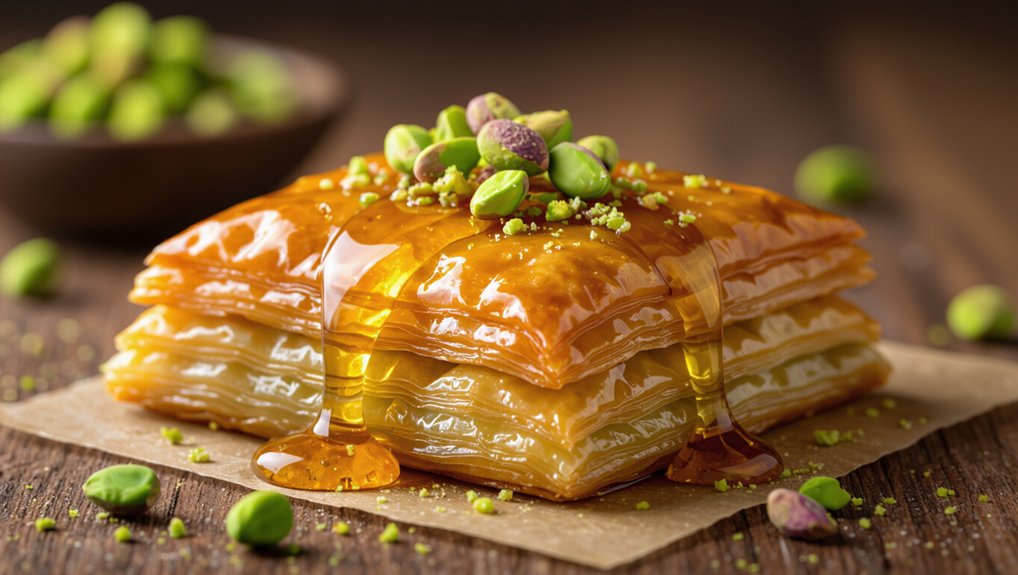
Making pistachio baklava with a honey glaze and crunchy layers is a rewarding endeavor. You’ll layer phyllo dough with melted butter, creating that signature texture. The filling, a blend of pistachios and spices, adds a delightful crunch. But it’s the honey syrup that ties everything together. As you prepare, a few key techniques can elevate your baklava from good to exceptional. Ready to uncover those secrets?
What Is Baklava Texture?
Baklava’s texture is a delightful contrast that makes it so irresistible. You experience a crunch when biting into the layers of phyllo pastry, which are thin and flaky. This crispiness perfectly complements the rich, chewy filling made from nuts, often pistachios in this case.
As you chew, the layers melt together, creating a harmonious blend of flavors and sensations. The honey syrup adds a sticky sweetness, enhancing the overall mouthfeel. With each bite, you’ll notice how the textures play off each other, making baklava not just a dessert, but an experience.
The balance of airy, crunchy layers against the dense, nutty filling keeps you coming back for more, ensuring that every slice is a satisfying treat.
Essential Baklava Components
To create a mouthwatering pistachio baklava, you’ll need to focus on a few essential components that elevate its flavor.
Pay attention to these key elements:
- Rich, buttery phyllo dough
- Fresh, chopped pistachios
- Sweet syrup, preferably honey-based
- Flavorful spices like cinnamon or cardamom
These ingredients will ensure your baklava stands out with vibrant taste and texture.
Key Flavor Elements
While crafting the perfect pistachio baklava, you’ll find that key flavor elements play a crucial role in elevating this beloved dessert.
Focusing on these components will ensure your baklava stands out:
- Pistachios: Their rich, nutty flavor is essential, adding depth and texture.
- Phyllo Dough: The layers should be buttery and crisp, creating a delightful crunch.
- Honey Syrup: A sweet, sticky glaze enhances the baklava’s overall sweetness and moisture.
- Butter: Using high-quality melted butter between layers brings richness and golden color.
Flavorful Spice Enhancements
Incorporating spices into your pistachio baklava can elevate its flavor profile even further. A few well-chosen spices can enhance the nuttiness of the pistachios and create a more complex taste.
Here are some flavorful spice enhancements to consider:
- Cinnamon: Adds warmth and sweetness, balancing the richness of the nuts.
- Cardamom: Offers a unique floral note that complements the baklava’s sweetness.
- Nutmeg: Introduces a hint of earthiness, deepening the overall flavor.
- Cloves: Provides a bold, aromatic kick that enhances the baklava’s exotic appeal.
Layering the Phyllo Dough
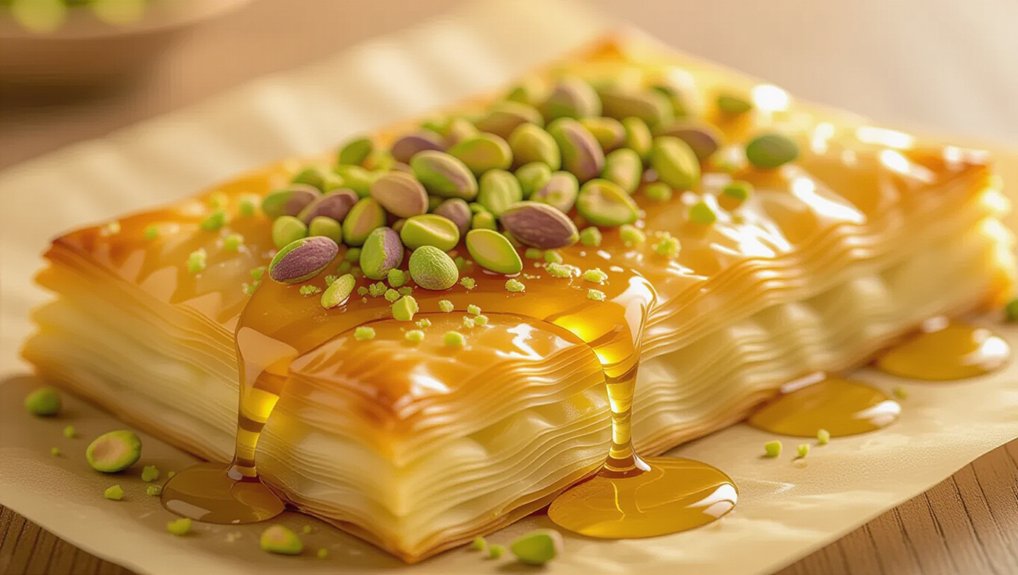
When you’re ready to layer the phyllo dough, make sure it’s fully thawed for optimal texture.
You’ll bake your masterpiece at 350°F, ensuring that each layer crisps to perfection.
Don’t forget to garnish with crushed pistachios for that extra touch of flavor and crunch!
Phyllo Dough Thawing Time
Thawing phyllo dough is a crucial step before you start layering it for your pistachio baklava. If you don’t do it right, your dough can become brittle and hard to work with. Here’s how to make the process smooth:
- Refrigerator Method: Place the sealed package in the fridge overnight for a slow and even thaw.
- Countertop Method: Leave the dough at room temperature for about 2-3 hours until it’s pliable.
- Quick Thaw: If you’re short on time, you can microwave it on low for 10-15 seconds, but watch closely to prevent cooking.
- Cover with Damp Cloth: As you work, keep the sheets covered to prevent them from drying out.
With properly thawed phyllo, your baklava will turn out beautifully!
Baking at 350°F
To achieve the perfect pistachio baklava, layering phyllo dough correctly is essential, especially since you’re baking it at 350°F.
Start by preparing your workspace to ensure a smooth process. Here’s how to layer the dough effectively:
- Unroll the Phyllo: Carefully separate the sheets, keeping them covered with a damp towel to prevent drying out.
- Brush with Butter: Use melted butter to lightly brush each layer, ensuring a golden, flaky texture.
- Layering Technique: Stack at least 8 sheets for a sturdy base before adding your pistachio filling.
- Top Layers: Finish with an additional 4-6 sheets, brushing each one generously with butter to lock in moisture.
This method guarantees those delightful, crunchy layers you crave in every bite.
Garnish With Crushed Pistachios
Sprinkle crushed pistachios generously over the layered phyllo before baking to enhance both flavor and presentation. This simple step elevates your baklava, adding a delightful crunch and vibrant color.
Here’s how to do it right:
- Choose Quality Nuts: Use fresh, shelled pistachios for the best flavor and texture.
- Crush Evenly: Use a food processor or a rolling pin to crush the nuts into a coarse texture, avoiding fine powder.
- Layer Strategically: Distribute the crushed pistachios evenly across every few layers of phyllo, ensuring each bite has that nutty goodness.
- Reserve Some for Topping: Keep a handful of crushed pistachios aside for garnishing once the baklava is baked and glazed.
This will give your baklava an irresistible finish!
Ingredient List and Measurements
Pistachio Baklava Recipe
Delight in the layers of crunchy phyllo and sweet, nutty pistachios in this classic dessert.
Ingredients:
- 1 package of phyllo dough (16 ounces)
- 2 cups shelled, unsalted pistachios
- 1 cup granulated sugar
- 1 cup honey
- 1 teaspoon vanilla extract
- A sprinkle of cinnamon
- 1 cup unsalted butter, melted
- 1 additional cup of honey (for glaze)
Instructions:
- Preheat your oven to 350°F (175°C).
- Prepare a large baking dish by greasing it with some melted butter.
- Layer half of the phyllo dough sheets in the dish, brushing each sheet with melted butter.
- Combine the pistachios, sugar, vanilla, and cinnamon in a bowl.
- Spread the pistachio mixture evenly over the phyllo layers.
- Layer the remaining phyllo sheets, again brushing with melted butter between sheets.
- Cut the baklava into diamond shapes with a sharp knife.
- Bake for 45 minutes until golden brown.
- While baking, prepare the glaze by heating the additional honey in a saucepan.
- Once the baklava is done, pour the hot honey glaze over the baklava.
- Allow to cool before serving.
Use Chilled Butter Generously
Using chilled butter generously is key to achieving that perfect baklava texture. It not only enhances flakiness but also ensures a rich flavor throughout.
Here’s why you should focus on this technique:
- Chilled butter creates steam, which helps layers puff up.
- A generous application prevents dryness in the pastry.
- It adds a rich, buttery flavor to each bite.
- Maintaining chill keeps the butter from melting before baking.
Importance Of Chilled Butter
Chilled butter plays a crucial role in achieving the perfect texture for your pistachio baklava. When you use chilled butter, it creates those delightful, flaky layers that everyone loves.
The cold temperature prevents the butter from melting too quickly, allowing it to stay in small bits within the dough. This is what gives your baklava that irresistible crunch.
If you skip this step, you might end up with a dense, chewy texture instead of the light, airy layers you’re aiming for.
So, keep your butter in the fridge until you’re ready to use it. This simple tip can make a world of difference in your baklava, ensuring it’s as delicious and visually appealing as possible.
Enjoy the process!
Generous Application Techniques
The key to achieving those beautifully flaky layers in your pistachio baklava lies in how you apply the chilled butter. Don’t be shy—use a generous amount. Melt your butter and let it cool slightly, then grab a pastry brush.
Start by brushing a thin layer of butter on your phyllo dough, making sure each sheet gets a good coating. This not only adds flavor but also ensures that each layer separates beautifully during baking.
As you stack the sheets, don’t skimp on the butter; a thorough application is crucial. If you’re feeling adventurous, you can even drizzle some melted butter between layers for extra richness.
This technique sets the foundation for stunning, crunchy baklava that you’ll love to serve.
Impact On Flakiness
While you’re layering phyllo dough, keep in mind that the butter you use plays a crucial role in the flakiness of your baklava. Chilled butter is your best friend here; it creates those delicate, crunchy layers you crave.
When you spread the butter, use it generously and ensure it’s evenly distributed. This helps the layers separate during baking, allowing steam to create more air pockets.
If the butter’s too warm or melted, you risk losing that wonderful texture, leading to a dense final product. So, don’t skimp on the butter or rush the process.
Take your time, and make sure each layer gets the love it deserves for that perfect, flaky baklava you’ll be proud to serve!
Caloric Content per Serving
A single serving of pistachio baklava typically contains around 300 to 400 calories, depending on the size and specific ingredients used. If you’re mindful of your caloric intake, it’s good to know how each component contributes to the total. Here’s a quick breakdown:
| Ingredient | Calories per Serving | Notes |
|---|---|---|
| Phyllo dough | 100-150 | Light but calorie-dense |
| Pistachios | 120-160 | Nutrient-rich crunch |
| Butter | 50-100 | Adds richness |
| Honey syrup | 60-90 | Sweetens and glazes |
Keep in mind that the total can vary significantly based on how much butter and syrup you use. Enjoying baklava in moderation can still satisfy your sweet tooth!
Overbaking the Layers
Overbaking the layers can ruin your pistachio baklava, making it dry and tough instead of flaky and tender.
To avoid this common mistake, follow these tips:
- Watch the Time: Bake for the recommended time but keep an eye on it towards the end.
- Check the Color: Look for a golden-brown hue; if it’s too dark, it’s likely overbaked.
- Test the Texture: Gently press a layer; it should feel crisp but not hard.
- Rotate the Pan: Halfway through baking, rotate the pan for even cooking.
Nutty Chocolate Drizzle Option
If you’re looking to elevate your pistachio baklava, consider adding a nutty chocolate drizzle.
You can swap the traditional honey-infused syrup for a richer flavor or infuse cardamom for an aromatic twist.
Let’s explore these delicious options to enhance your baklava experience!
Honey-Infused Syrup Alternative
While traditional baklava often features a honey-infused syrup, you can elevate your dessert with a nutty chocolate drizzle that adds a rich, decadent twist.
This alternative not only complements the pistachios but also introduces a delightful complexity to each bite. Here’s how to create your nutty chocolate drizzle:
- Melt dark chocolate: Choose high-quality dark chocolate for a deep flavor.
- Add nut butter: Stir in your favorite nut butter, like almond or hazelnut, for creaminess.
- Incorporate a sweetener: Use maple syrup or agave to balance the richness.
- Drizzle generously: Once combined, pour the mixture over your baklava and let it set.
This chocolate drizzle will transform your baklava into an indulgent treat!
Nutty Cardamom Infusion Option
To elevate your pistachio baklava, consider infusing it with nutty cardamom for a warm, aromatic twist. This delightful addition not only enhances flavor but also adds an exotic touch.
Here’s how to incorporate cardamom seamlessly:
- Choose Quality Cardamom: Opt for whole pods or freshly ground cardamom for the best flavor.
- Infuse the Nuts: Toast pistachios with cardamom before layering them in your baklava for a fragrant crunch.
- Flavor the Syrup: Add crushed cardamom pods to your honey syrup while it simmers, allowing the flavors to meld beautifully.
- Garnish: Sprinkle a little ground cardamom on top before serving to impress your guests visually and aromatically.
This nutty infusion transforms your baklava into a memorable treat. Enjoy!
Common Baklava Baking Issues
When making baklava, you might run into a few common issues that can affect its texture and flavor.
Overbaking can lead to a dry, crunchy result, while sogginess makes it less enjoyable.
You may also notice problems with layer separation or uneven filling distribution, which can impact the overall experience.
Overbaking and Sogginess
Overbaking your baklava can turn it into a dry, crumbly mess rather than the flaky, tender treat you desire. To avoid this, keep a close eye on your baklava as it bakes. The perfect color is a golden brown; if it starts to darken too quickly, lower the oven temperature.
Remember, every oven is different, so adjust your baking time as needed.
On the flip side, underbaking can lead to sogginess. That’s often due to excess moisture from the filling or syrup. To prevent this, make sure your nuts are fresh and well-drained before mixing.
Also, allow the syrup to cool slightly before pouring it over the hot baklava. This balance will give you the perfect texture you crave.
Layer Separation Problems
Baking baklava isn’t just about achieving the right color and texture; layer separation can also pose a challenge. If you notice your layers separating during baking, it might be due to insufficient butter between them. Make sure you’re generously brushing melted butter on each layer of phyllo dough.
Another issue could be the humidity in your kitchen; too much moisture can cause layers to stick together instead of creating that delightful crunch. For best results, ensure your phyllo is completely thawed before use.
If you find layers coming apart after baking, handle the baklava gently when cutting. This helps maintain its structure and keeps those precious layers intact.
With attention to these details, you’ll achieve that perfect baklava experience!
Filling Distribution Issues
Filling distribution can make or break your baklava, so it’s crucial to get it right. If you don’t spread the pistachio filling evenly, some layers might end up dry while others are overloaded, affecting the overall texture and flavor.
To avoid this, measure your filling carefully and layer it evenly across the phyllo sheets. Use a spatula to ensure it reaches the edges, preventing clumps in specific areas.
When you slice the baklava before baking, make sure each piece has a fair share of filling. This way, every bite will deliver that perfect crunch and rich taste.
Take your time, and don’t rush—proper filling distribution is key to achieving that delicious baklava everyone will love!
Perfect Your Phyllo Technique
Mastering phyllo dough is crucial for creating the perfect pistachio baklava. Start by thawing your phyllo overnight in the refrigerator.
When you’re ready to work, lay out the sheets on a clean surface, covering them with a damp cloth to prevent drying. Always handle the dough gently, as it tears easily.
Brush each layer with melted butter or oil; this adds flavor and helps achieve that delightful crunch. Don’t skimp on layers—aim for at least eight for a sturdy base.
When you reach the filling, keep layering until you’ve built a solid structure. Finally, cut your baklava before baking; this helps it cook evenly.
With practice, you’ll master that flaky texture that makes baklava irresistible!
Frequently Asked Questions
Can I Use Nuts Other Than Pistachios?
Yes, you can definitely use other nuts! Walnuts, almonds, or hazelnuts work great in baklava. Just chop them finely, and follow your usual recipe for a delicious twist on the classic dessert. Enjoy experimenting!
How Long Does Baklava Stay Fresh?
Baklava stays fresh for about one week at room temperature if stored in an airtight container. If you refrigerate it, it can last up to two weeks, but the texture may change slightly.
Can I Freeze Baklava for Later Use?
Yes, you can freeze baklava for later use. Just wrap it tightly in plastic wrap or aluminum foil, then place it in an airtight container. When you’re ready, thaw it in the refrigerator before serving.
What’s the Best Way to Store Baklava?
To store baklava, keep it in an airtight container at room temperature. This prevents it from getting soggy. If you need to store it longer, refrigerate and reheat slightly before serving for best results.
Is Baklava Traditionally Served Warm or Cold?
Baklava’s traditionally served at room temperature, but you can enjoy it warm or cold based on your preference. Just let it sit for a bit after baking to enhance the flavors and textures.
Conclusion
Now that you know how to make pistachio baklava with that irresistible honey glaze, it’s time to enjoy your delicious creation! Remember to let it rest for the best flavor before serving. Whether you stick to the classic recipe or try the nutty chocolate drizzle, your friends and family will be impressed. So roll up your sleeves, get baking, and savor each crunchy, sweet layer. Happy baking!