
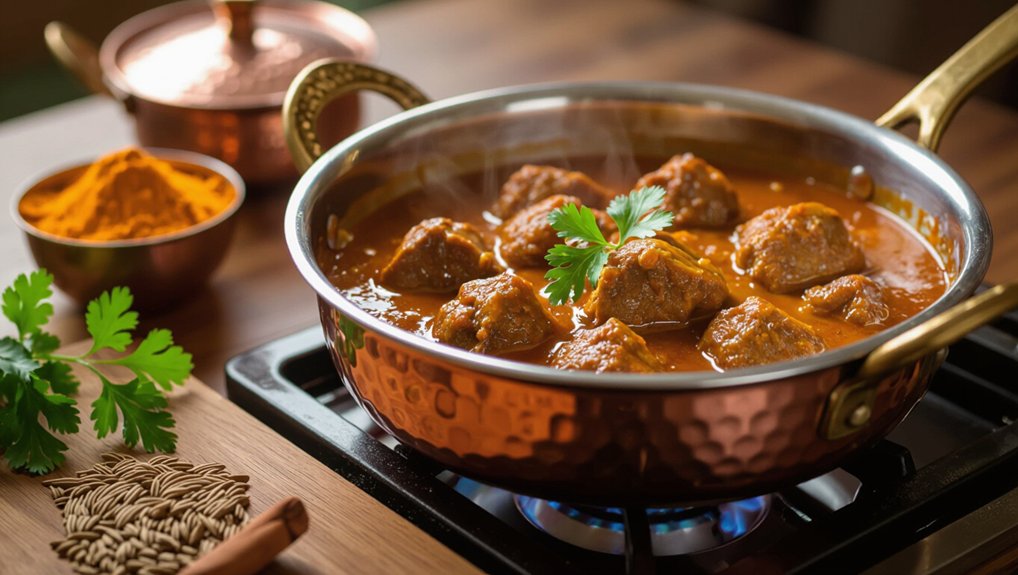
When you’re ready to make Lamb Madras Curry, you’ll find it’s more than just a recipe; it’s an experience. You’ll start with marinating your lamb for deeper flavor and then move on to sautéing onions, garlic, and ginger. The real magic happens when you blend your spices and simmer the lamb in creamy coconut milk. Curious about the essential spices and common pitfalls? Let’s explore the key steps to perfecting this dish.
What Is Madras Curry?
Madras curry, often known for its rich and spicy profile, originated from the southern region of India.
This dish showcases a beautiful blend of flavors that come together to create a tantalizing experience. You’ll find it typically features tender meat, often lamb, simmered in a fragrant sauce.
The heat level can vary, but it generally packs a punch, making it a favorite for spice lovers. The sauce is usually thick and full-bodied, coating the meat perfectly.
It’s commonly served with rice or bread, allowing you to savor every last drop.
Whether you’re cooking for yourself or impressing guests, Madras curry offers a wonderful taste of Indian cuisine that’s both comforting and exhilarating.
Get ready to dive into this culinary adventure!
Essential Spices Blend
When you’re crafting your Lamb Madras Curry, the spice blend is essential for building flavor. Here are three key elements to consider:
- Key Protein Choice: Lamb is traditional, but you could also use beef or chicken for a twist.
- Extra Vegetables: Adding potatoes or spinach can enhance the dish’s texture and nutrition.
- Nuts: Cashews or almonds can give a delightful crunch and richness to your curry.
Key Protein Choice
For a delicious Lamb Madras curry, your choice of protein is crucial, and lamb stands out with its rich flavor and tenderness. It absorbs the spices beautifully, enhancing the dish’s overall taste.
When selecting your lamb, consider these three key points:
- Cut of Lamb: Opt for shoulder or leg cuts; they’re ideal for slow cooking and become incredibly tender.
- Quality: Fresh, grass-fed lamb offers a more robust flavor profile compared to conventional options.
- Marbling: Look for a good amount of fat; it adds depth and richness to your curry as it cooks.
With the right lamb, your Madras curry will be both hearty and satisfying, making each bite a delightful experience.
Enjoy cooking!
Extra Vegetables or Nuts
To elevate your Lamb Madras curry, incorporating extra vegetables or nuts can add both texture and flavor.
These additions not only enhance the dish but also contribute to its nutritional value. Here are some options to consider:
- Spinach: Stir in fresh spinach towards the end of cooking for a pop of color and a nutrient boost.
- Cauliflower: Add cauliflower florets for a hearty bite that absorbs the rich spices beautifully.
- Cashews: Toss in roasted cashews for a delightful crunch and a hint of creaminess.
Experimenting with these ingredients won’t only enrich your curry but also make it uniquely yours.
Enjoy the process and savor each delicious bite!
Cooking Instructions Breakdown
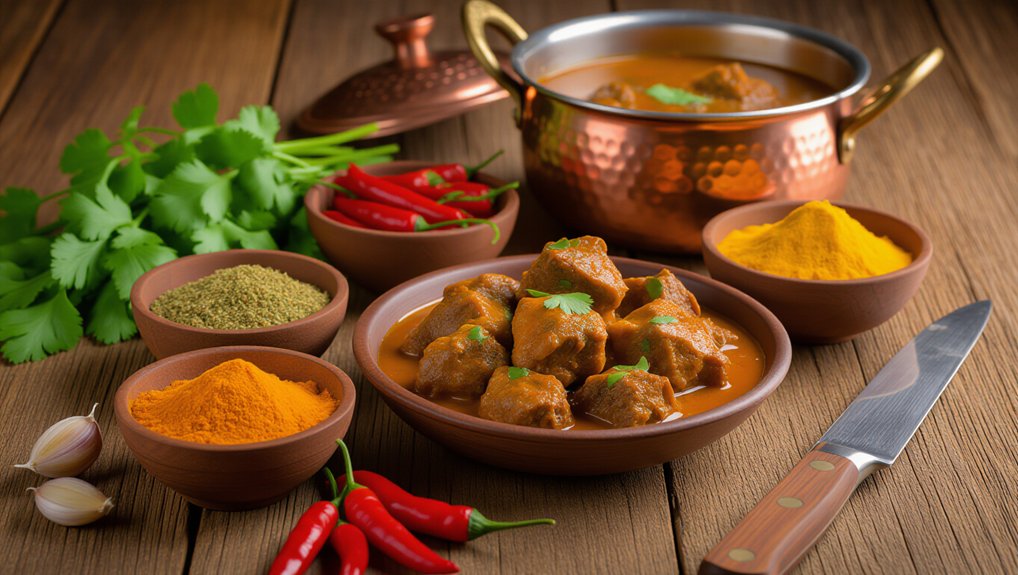
Now that you’ve gathered your spices, it’s time to get hands-on with the cooking process.
Start by chopping and marinating your ingredients, then sauté those onions until they’re golden and fragrant.
Finally, don’t forget to garnish your dish with fresh cilantro for that perfect finishing touch!
Ingredient Chopping and Marinating
Begin by gathering all your ingredients and prepping them for the marinade. Start with the lamb, cutting it into bite-sized pieces.
Next, chop your aromatics and spices to infuse maximum flavor. Here’s what you need to focus on:
- Garlic and Ginger: Finely mince about 4 cloves of garlic and a thumb-sized piece of ginger. This combination will add depth to your dish.
- Spices: Measure out your spices—cumin, coriander, and turmeric. Toast them lightly for an extra kick.
- Yogurt: Whisk together about a cup of yogurt with your chopped aromatics and spices, creating a rich marinade.
Once everything is chopped and combined, let the lamb marinate for at least an hour, allowing those flavors to meld beautifully.
Sautéing Onions Until Golden
Sautéing onions until golden is crucial for building the rich flavor base of your lamb Madras curry. This step enhances the sweetness and adds depth to your dish. Here’s how to do it perfectly:
- Heat Oil: Start by heating a generous amount of oil in a heavy-bottomed pan over medium heat. You want enough oil to coat the onions well.
- Add Onions: Once the oil’s hot, toss in your chopped onions. Stir them occasionally to ensure even cooking.
- Cook Until Golden: Keep an eye on the onions, cooking them for about 10-15 minutes until they turn a beautiful golden brown. This caramelization is key to achieving a robust flavor.
Now you’re ready for the next steps in your curry!
Garnish With Fresh Cilantro
Garnishing with fresh cilantro adds a burst of color and flavor to your lamb Madras curry. It enhances the dish’s vibrant presentation and elevates the overall taste. Here’s how to do it right:
- Chop the Cilantro: Use fresh cilantro leaves, and chop them roughly. This releases their aromatic oils and boosts the flavor.
- Sprinkle Generously: Once your curry is ready, sprinkle a handful of chopped cilantro over the top. This not only looks appealing but also adds a fresh, herbal note.
- Serve Immediately: Serve your lamb Madras curry right after garnishing. The cilantro will stay bright and fragrant, making every bite delightful.
Enjoy the extra zest that fresh cilantro brings to your delicious creation!
Cooking Time and Servings
Lamb Madras Curry Recipe
Indulge in the rich and fragrant flavors of this delicious Lamb Madras Curry, perfect for sharing with loved ones.
Ingredients
- 500g lamb, cut into bite-sized pieces
- 2 onions, chopped
- 4 garlic cloves, minced
- 2 inches ginger, minced
- 2 tablespoons curry powder
- 1 can coconut milk
- 2 tablespoons vegetable oil
- Salt, to taste
- Fresh cilantro, for garnish
Instructions
- Prep all ingredients by cutting the lamb, and chopping the onions, garlic, and ginger.
- In a large pot, heat the vegetable oil over medium heat and brown the lamb and onions for about 20 minutes.
- Add the minced garlic, ginger, and curry powder, stirring for a few minutes until fragrant.
- Pour in the coconut milk, season with salt, and bring to a simmer.
- Let the curry simmer for at least 1 hour to allow the flavors to meld and the meat to become tender.
- Serve hot, garnished with fresh cilantro, alongside rice or naan.
Use Fresh Spices Only
Using fresh spices makes all the difference in your Lamb Madras Curry. To get the best flavor, focus on these key points:
- Importance of Freshness: Fresh spices pack more punch and aroma.
- Spice Storage Tips: Keep them in airtight containers away from light and heat.
- Grinding Your Spices: Grind them right before use for maximum flavor impact.
Importance Of Freshness
Freshness is key to unlocking the full flavor potential of your Lamb Madras Curry. When you use fresh spices, you’re not just enhancing the taste; you’re transforming the dish. Ground spices lose their potency over time, diminishing the aromatic qualities that are essential for a vibrant curry.
By opting for whole spices and grinding them just before cooking, you release essential oils and flavors that pack a punch. Fresh ingredients, like ginger and garlic, also contribute to a balanced, rich profile that dried versions can’t match.
Spice Storage Tips
To ensure your spices stay fresh and flavorful for your Lamb Madras Curry, proper storage is essential. Start by keeping spices in airtight containers to prevent moisture and air exposure, which can lead to loss of potency.
Glass jars work well, but make sure they’re dark or stored in a cool, dark place to protect against light. Avoid keeping spices above the stove or near heat sources, as this can degrade their quality.
Label your containers with purchase dates, so you know when to replace them. Finally, buy whole spices when possible and only grind them as needed; this preserves their flavor and aroma.
Following these tips will elevate your curry and keep your dishes vibrant and delicious!
Grinding Your Spices
While you’re preparing your Lamb Madras Curry, grinding your spices just before use can significantly enhance the flavor. Freshly ground spices release essential oils and aromas that elevate your dish.
Start with whole spices like cumin, coriander, and cardamom. Use a spice grinder or mortar and pestle to achieve a fine texture. If you can, grind only what you need for the recipe; this ensures maximum freshness.
Avoid pre-ground spices whenever possible, as they lose potency over time. To get the best results, toast the spices lightly in a dry pan before grinding. This step intensifies their flavors, making your curry rich and aromatic.
Trust me, the difference will be delicious! Enjoy the vibrant taste of your homemade Lamb Madras Curry.
Caloric Content per Serving
When you indulge in a serving of lamb Madras curry, you’re enjoying a rich blend of flavors, but it’s essential to consider its caloric content. A typical serving packs a punch in terms of calories, primarily due to the lamb and coconut milk used. Here’s a quick breakdown of the caloric content per serving:
| Ingredient | Calories |
|---|---|
| Lamb (100g) | 250 |
| Coconut Milk (100ml) | 200 |
| Spices (mixed) | 50 |
| Onion (50g) | 20 |
| Rice (150g) | 210 |
In total, you’re looking at about 730 calories per serving. Keeping this in mind can help you balance your meal while savoring every bite of this delicious dish.
Overcooking the Lamb
Overcooking the lamb can turn your mouthwatering Madras curry into a tough, chewy disappointment. To keep your lamb tender and flavorful, pay attention to cooking times and temperatures. Here’s how to avoid overcooking:
- Choose the Right Cut: Opt for cuts like shoulder or shank, which become tender when cooked properly.
- Monitor Cooking Time: Aim for simmering the lamb for about 1.5 to 2 hours. Check for tenderness periodically.
- Use a Meat Thermometer: Cook the lamb until it reaches an internal temperature of around 145°F (63°C) for medium.
Coconut Milk for Creaminess
Coconut milk adds a rich creaminess to your Lamb Madras, enhancing its flavor.
To elevate this dish even further, consider topping it with roasted cashews for a delightful crunch. A touch of spicy tamarind paste can also balance the richness, giving your curry an exciting twist.
Add Roasted Cashews Topping
To elevate your Lamb Madras Curry, consider adding a handful of roasted cashews for a delightful crunch.
These nuts not only enhance the dish’s texture but also bring a subtle richness that complements the spices beautifully.
Here’s how to incorporate them:
- Toast the Cashews: Lightly roast the cashews in a dry pan over medium heat until golden. This brings out their natural oils and flavors.
- Chop or Leave Whole: Depending on your preference, you can chop the cashews into smaller pieces or leave them whole for a more rustic look.
- Sprinkle Generously: Just before serving, sprinkle the roasted cashews atop your curry, allowing them to provide a satisfying contrast to the creamy coconut milk.
Enjoy the added depth they bring to your dish!
Spicy Tamarind Paste Addition
Adding a touch of spicy tamarind paste can take your Lamb Madras Curry to the next level, balancing the richness of the dish perfectly.
This tangy paste adds depth and complexity, enhancing the flavors in every bite. Here’s how to incorporate it:
- Mix it in early: Stir the tamarind paste into the curry during cooking, allowing it to meld with the spices.
- Adjust to taste: Start with a tablespoon, then taste and add more as needed for that perfect tangy kick.
- Pair with coconut milk: For creaminess, blend in coconut milk after adding the tamarind. This creates a luscious texture that complements the spice.
With these steps, your Lamb Madras Curry will be a memorable dish bursting with flavor!
Common Cooking Mistakes
When making Lamb Madras Curry, you might overlook some key steps that can make or break your dish.
Skipping marination, overcooking the lamb, and ignoring the spice balance are common pitfalls that can lead to disappointing results.
Let’s explore these mistakes so you can achieve a flavorful and tender curry every time.
Skipping Marination Time
While marination may seem like an optional step, skipping it can seriously compromise the flavor and tenderness of your lamb Madras curry.
Marinating the lamb allows the spices to penetrate deeply, enhancing the dish’s overall taste. When you don’t marinate, you’re missing out on that rich, aromatic profile that defines a great curry.
Aim for at least a few hours, or even overnight if you can. This not only tenderizes the meat but also allows the flavors to meld beautifully.
You’ll notice a significant difference in the final dish’s depth and richness. So, don’t rush this crucial step; take the time to marinate your lamb, and your curry will truly shine. Trust me, it’s worth it!
Overcooking the Lamb
Even with a perfect marinade, overcooking the lamb can ruin your Madras curry. When you cook it too long, the lamb becomes tough and chewy, losing its tender texture. Aim for a cooking time that allows the meat to absorb the spices while remaining juicy.
Keep an eye on the heat; high temperatures can dry it out quickly. Instead, opt for a gentle simmer, checking the lamb’s doneness with a fork. It should be tender but not falling apart.
If you’re using a slow cooker, remember that lamb will continue to cook even after you turn it off. Trust your instincts, and don’t hesitate to taste as you go to ensure you’ve nailed that perfect texture.
Ignoring Spice Balance
Ignoring the balance of spices can quickly derail your Lamb Madras curry, leaving you with an unbalanced flavor profile. It’s tempting to throw in every spice you have, but this can overwhelm the dish.
Start with the essentials: cumin, coriander, turmeric, and chili powder. Measure carefully and adjust according to your taste. Remember, spices should complement each other, not compete.
If you find it too spicy, add coconut milk or yogurt to mellow the heat. Conversely, if it lacks kick, a pinch of cayenne can elevate it.
Always taste as you go; this is crucial. A well-balanced curry will have layers of flavor, making each bite a delight. Don’t skip this step—it’s key to a delicious Lamb Madras!
Serve With Basmati Rice
Basmati rice is the perfect companion for lamb Madras curry, enhancing the dish’s rich flavors and spices. Its fluffy texture and nutty aroma provide a wonderful contrast to the bold, spicy sauce.
When you cook the rice, make sure to rinse it thoroughly to remove excess starch. This step helps achieve that light, fluffy consistency you want.
Once the rice is ready, serve it on a large plate, creating a bed for the curry. Spoon the lamb Madras over the rice, allowing the sauce to soak in.
Don’t forget to garnish with fresh cilantro for an extra burst of flavor. This combination not only pleases the palate but also makes for a visually appealing meal.
Enjoy every bite!
Frequently Asked Questions
Can I Use Beef Instead of Lamb for This Curry?
Yes, you can use beef instead of lamb for this curry. Just remember that beef might take longer to cook, so adjust your cooking time accordingly to ensure it becomes tender and flavorful. Enjoy!
How Do I Store Leftover Lamb Madras Curry?
You can store leftover lamb madras curry in an airtight container in the fridge for up to three days. For longer storage, freeze it in individual portions, and it’ll stay good for about three months.
What Is the Best Wine to Pair With Lamb Madras?
You’ll want to pair your lamb madras with a bold red wine, like a Syrah or a Grenache. Their rich flavors complement the spices, enhancing your meal and creating a delightful dining experience. Enjoy!
Can I Make This Curry in a Slow Cooker?
Yes, you can make this curry in a slow cooker! Just brown the lamb and sauté the spices first, then combine everything in the slow cooker. Cook on low for 6-8 hours for tender, flavorful results.
What Are Good Vegetarian Substitutes for Lamb in This Recipe?
You can use chickpeas, lentils, or paneer as great vegetarian substitutes for lamb. Eggplant or mushrooms also add a nice texture. Just adjust cooking times to ensure everything’s cooked perfectly and infused with flavor.
Conclusion
Now that you know how to make Lamb Madras Curry, you’re all set to impress your family and friends. Remember to use fresh spices for the best flavor, and don’t rush the cooking process to ensure tender meat. Pair it with fluffy basmati rice for a perfect meal. With a little practice, you’ll master this aromatic dish, balancing spice and creaminess effortlessly. Enjoy every bite and savor the deliciousness of your homemade curry!