
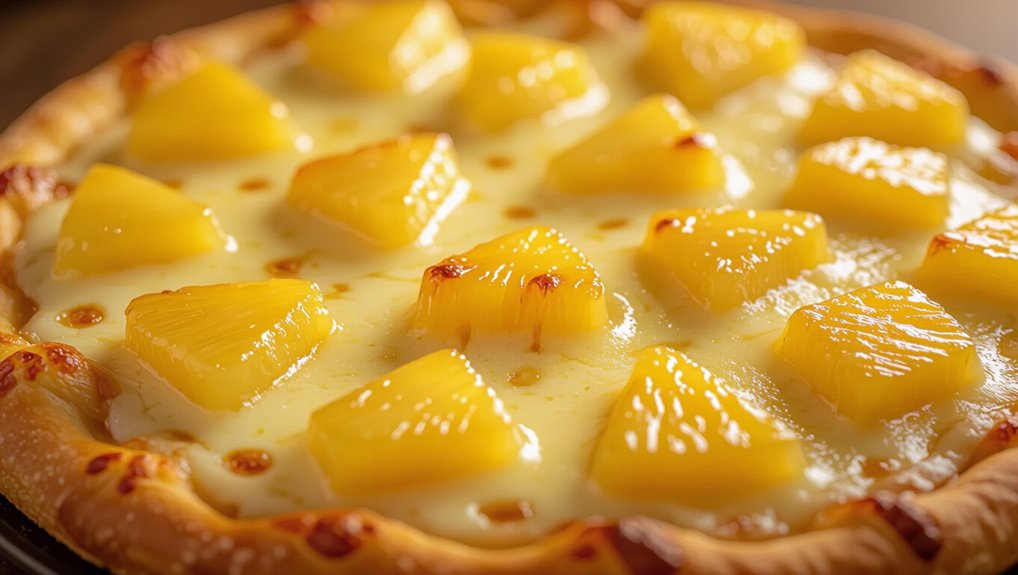
When you think about crafting a pizza with a golden crust, melted mozzarella, and caramelized pineapple, you’re tapping into a balance of flavors that’s both classic and tropical. It starts with a well-prepared dough and the right toppings. But there are nuances to get that perfect bake. What techniques will ensure your crust rises beautifully and your toppings shine? Let’s explore the details that elevate this dish from ordinary to extraordinary.
History of Pineapple Pizza Origins
When you think about pineapple on pizza, you might wonder where this bold combination came from.
The story starts with early pizza innovations and takes a turn with Hawaiian influences that sparked debates among pizza lovers.
Let’s explore how this controversial topping became a staple for some and a point of contention for others.
Early Pizza Innovations
Although many pizza lovers have strong opinions about toppings, the origins of pineapple on pizza trace back to innovative culinary experiments in the mid-20th century.
It all started in 1962 when Sam Panopoulos, a Greek immigrant in Canada, decided to toss some canned pineapple onto a pizza. His choice was bold, blending sweet and savory flavors that surprised diners.
This experiment ignited a wave of creativity in pizza-making, encouraging chefs to explore unconventional toppings. As the trend spread, pineapple became a staple on menus, captivating those who enjoyed its unique taste.
Hawaiian Influence Uncovered
The introduction of pineapple to pizza didn’t just happen in a vacuum; it was influenced by a rich tapestry of Hawaiian culture.
In the 1960s, Sam Panopoulos, a Greek immigrant in Canada, created what we now know as Hawaiian pizza, combining sweet pineapple with savory ham. This creation reflected the eclectic culinary landscape of the time, blending flavors from different cultures.
Hawaii’s tropical climate allowed for abundant pineapple cultivation, making it a natural choice for experimentation. The dish quickly gained popularity, appealing to those seeking a unique taste experience.
As you enjoy your slice, remember that it represents more than just a topping choice; it embodies a fusion of cultural influences that brought pineapple pizza to life.
Controversies and Debates
As debates over pineapple on pizza heat up, you’ll find that opinions are sharply divided. Some claim the combination of sweet pineapple and savory cheese creates a perfect balance, while others argue it’s a culinary crime.
The origins trace back to 1962 when Sam Panopoulos, a Canadian of Greek descent, introduced the topping in his restaurant. He aimed to attract customers with something different. Critics often cite traditional Italian pizza roots, insisting toppings should remain strictly savory.
Yet, supporters champion creativity and evolution in cuisine. Whether you love or loathe this tropical twist, it’s clear that pineapple pizza sparks passionate discussions, showcasing just how personal food preferences can be.
Fresh Mozzarella Cheese
Fresh mozzarella cheese is a game-changer for your pizza, bringing a unique flavor and texture.
Here are three key components to consider:
- Creamy richness that balances sweetness.
- Mild flavor that complements spicy jalapeño slices.
- Freshness that enhances the overall experience.
Let’s explore how these elements come together!
Key Flavor Components
When crafting a golden crust topped with mozzarella and pineapple, fresh mozzarella cheese plays a crucial role in enhancing the overall flavor. Its creamy, soft texture melts beautifully, creating a luscious base that complements the sweetness of the pineapple.
Here are three key flavor components of fresh mozzarella:
- Mildness: The subtle flavor of fresh mozzarella allows the sweet caramelized pineapple to shine without overpowering it.
- Creaminess: This cheese adds a rich, velvety mouthfeel that balances the crust’s crunchiness.
- Freshness: The delicate taste of fresh mozzarella brings a lightness to the dish, making each bite refreshing.
Incorporating fresh mozzarella not only elevates your dish but also creates a harmonious blend of flavors.
Spicy Jalapeño Slices
Adding spicy jalapeño slices to your golden crust topped with mozzarella and pineapple introduces a delightful kick that contrasts beautifully with the sweetness of the fruit.
These vibrant slices not only enhance flavor but also add a burst of color. Here’s how to make them shine:
- Choose fresh jalapeños: Opt for firm, bright green peppers for the best heat and crunch.
- Slice thinly: Cutting the jalapeños into thin rounds allows their spice to infuse the dish without overwhelming it.
- Layer strategically: Place the slices between the mozzarella and pineapple, ensuring every bite gets that perfect balance of heat and sweetness.
Embrace this spicy twist, and watch your golden crust become a flavor-packed sensation!
Cooking Instructions Unveiled
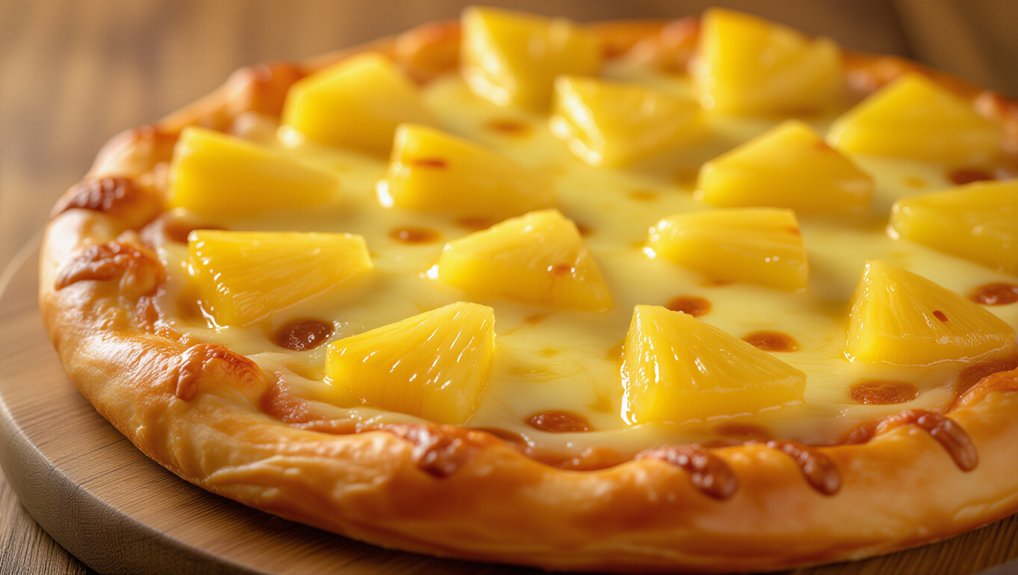
To achieve that perfect golden crust, start by letting your dough rest for 30 minutes.
Preheat your oven to a sizzling 475°F for optimal baking.
Finally, don’t forget to garnish your creation with fresh basil for a burst of flavor!
Dough Resting for 30 Minutes
After you’ve prepared your dough, letting it rest for 30 minutes is crucial for achieving that perfect golden crust. This resting period allows the gluten to relax, making your dough easier to stretch and shape.
Here’s what you should keep in mind during this time:
- Cover the Dough: Use a damp cloth or plastic wrap to prevent it from drying out.
- Choose a Warm Spot: A warm area helps the dough rise slightly, enhancing its texture.
- Don’t Rush: Patience is key—allowing it to rest will pay off with a better crust.
Once the time’s up, you’ll notice a more pliable dough, ready for your delicious toppings. Enjoy the transformation!
Oven Temperature at 475°F
Setting your oven to 475°F is a game-changer for achieving that golden crust. This high temperature allows the mozzarella to melt beautifully while caramelizing the pineapple, creating a delightful contrast in flavors.
Here’s how to get the most out of your oven:
- Preheat your oven for at least 30 minutes. This ensures even heat distribution.
- Use a pizza stone or baking sheet for optimal crispiness. It retains heat and helps achieve that perfect crust.
- Keep an eye on your pizza as it bakes. At this temperature, it can go from perfect to overdone quickly, usually around 10-15 minutes.
Following these steps will elevate your pizza-making game and deliver a crust that’s simply irresistible!
Garnish With Fresh Basil
While your pizza is baking to perfection, fresh basil can transform it from delicious to extraordinary. This aromatic herb adds a vibrant touch that complements the melted mozzarella and caramelized pineapple beautifully.
Here’s how to garnish with basil:
- Choose Fresh Leaves: Select bright green, unblemished leaves for the best flavor and appearance.
- Tear, Don’t Chop: Gently tear the basil leaves by hand. This method releases essential oils without bruising the leaves.
- Add After Baking: Wait until your pizza comes out of the oven to sprinkle the basil on top. This preserves its fresh flavor and color.
Once you’ve added the basil, slice your pizza, serve it up, and enjoy the delightful burst of flavor!
Ingredient List and Measurements
Delicious Golden Crust with Mozzarella and Pineapple
A delightful pizza featuring a crispy crust topped with gooey mozzarella and sweet caramelized pineapple.
Ingredients
- 2 cups all-purpose flour
- 1 teaspoon salt
- 1 teaspoon sugar
- 1 packet (2 ¼ teaspoons) active dry yeast
- ¾ cup warm water
- 1 tablespoon olive oil
- 1 cup shredded mozzarella cheese
- 1 cup fresh pineapple chunks (caramelized)
- A pinch of black pepper
Instructions
- In a mixing bowl, combine the flour, salt, and sugar.
- In a separate bowl, mix the warm water with the yeast and let it sit for about 5 minutes until frothy.
- Add the yeast mixture and olive oil to the flour mixture, then knead until smooth.
- Cover the dough and let it rise in a warm place for about 30 minutes.
- Preheat your oven to 475°F (245°C).
- Roll out the dough on a floured surface and place it on a pizza stone or baking sheet.
- Top with mozzarella cheese and caramelized pineapple chunks, then sprinkle with black pepper.
- Bake for 15-20 minutes or until the crust is golden brown.
Use a Pizza Stone
Using a pizza stone can transform your homemade pizza experience.
Here’s why you shouldn’t skip it:
- It provides even heat distribution.
- It absorbs moisture for a crispier crust.
- It’s easy to maintain with simple cleaning tips.
Get ready to elevate your golden crust game!
Benefits Of Pizza Stones
When you want that perfect golden crust on your pizza, a pizza stone can make all the difference. These stones absorb and retain heat, providing an even cooking surface that mimics a traditional wood-fired oven. This helps your pizza cook more uniformly, allowing the crust to rise and crisp up beautifully.
Using a pizza stone also reduces moisture, preventing a soggy bottom and enhancing that delightful crunch.
Plus, it’s versatile—you can use it for baking bread, pastries, and more! Cleaning is simple too; just scrape off any residue and it’s good to go.
Investing in a pizza stone elevates your homemade pizza experience, ensuring that every slice is as delicious as the last.
Preheating Your Pizza Stone
Preheating your pizza stone is a crucial step that sets the foundation for a perfectly cooked pizza. To achieve that golden crust, place your stone in the oven and preheat it to at least 475°F (245°C).
Allow it to heat for at least 30 minutes; this ensures even heat distribution. While the stone heats, prepare your dough and toppings.
Don’t forget to use a pizza peel to transfer your pizza onto the hot stone easily. If you skip this step, your crust might end up soggy instead of crispy.
Cleaning And Maintenance Tips
While enjoying the delicious results of your pizza stone, it’s essential to keep it in top shape for future baking.
Start by letting the stone cool completely after use; sudden temperature changes can crack it.
To clean, gently scrape off any food residue with a spatula or a brush. Avoid using soap, as it can absorb into the stone and affect flavor.
For tough stains, dampen a cloth and wipe the surface. Rinse with water only if needed, and let it air dry thoroughly before storing.
To maintain its longevity, keep your pizza stone in a dry place, away from moisture.
A well-cared-for stone will enhance your pizza experience every time you bake!
Caloric Breakdown Per Slice
A single slice of your golden crust pizza with mozzarella and pineapple typically packs around 250 to 300 calories. Here’s a quick breakdown to help you understand what’s contributing to those calories.
| Ingredient | Calories per Slice | Percentage of Total |
|---|---|---|
| Mozzarella Cheese | 80 – 100 | 32% – 40% |
| Pineapple | 30 – 50 | 12% – 20% |
| Pizza Dough | 140 – 180 | 56% – 72% |
Overloading With Toppings
Understanding the caloric breakdown of your pizza can help you make smarter choices, especially when it comes to toppings.
Overloading isn’t just about flavor; it’s about balance. Too many toppings can weigh down your pizza and make it soggy.
Here are three tips to keep in mind:
- Choose Wisely: Opt for toppings that complement each other, like caramelized pineapple with tangy feta or spicy jalapeños with sweet bell peppers.
- Layer Thoughtfully: Start with a base of cheese and then add your toppings in moderation to ensure even cooking and flavor distribution.
- Mind the Moisture: Avoid excessive wet toppings, as they can make your crust limp and less enjoyable.
Keep these tips in mind for a well-balanced, delicious pizza!
Tropical Coconut Flakes Addition
Adding tropical coconut flakes can elevate your pizza to a whole new level.
When you layer them with caramelized onions and crispy prosciutto crumbles, you create a perfect balance of flavors and textures.
This combination not only enhances the taste but also adds a delightful crunch to every bite.
Caramelized Onion Layering Technique
While caramelizing onions may seem like a simple task, mastering this technique can elevate your pizza’s flavor profile, especially when paired with tropical coconut flakes.
To achieve that perfect sweetness and depth, follow these steps:
- Heat the Pan: Start with a medium pan and add a bit of oil or butter. Allow it to heat up before adding your sliced onions.
- Add the Onions: Once the pan’s hot, toss in your onions. Stir them occasionally to ensure even cooking and prevent burning.
- Finish with Coconut Flakes: Near the end of caramelization, sprinkle in your tropical coconut flakes. This addition complements the onions’ sweetness and enhances the overall flavor.
With this technique, your pizza will have a unique, mouthwatering twist!
Crispy Prosciutto Crumbles
Crisp up your pizza experience with crispy prosciutto crumbles! These savory bites add an irresistible crunch that complements your golden crust perfectly.
Here’s how to make them even better with tropical coconut flakes:
- Prepare the Prosciutto: Slice your prosciutto thinly, then cut it into small pieces for even crisping.
- Cook to Perfection: In a hot skillet, sauté the prosciutto until it’s golden and crispy, usually about 3-5 minutes.
- Add Coconut Flakes: Toss in unsweetened coconut flakes during the last minute of cooking for a delightful tropical twist.
Sprinkle these crispy prosciutto crumbles over your pizza just before serving, and enjoy the blend of salty and sweet flavors that will elevate your dish!
Common Pizza Preparation Queries
When it comes to making the perfect pizza, you’ve probably got a few questions.
Understanding essential dough tips, choosing the right toppings, and knowing the ideal baking temperature can make all the difference.
Let’s tackle these common queries to elevate your pizza-making game!
Essential Pizza Dough Tips
To achieve the perfect pizza dough, understanding a few key tips can make all the difference.
First, always use high-quality flour; bread flour works best for a chewy texture. Don’t skimp on the yeast—let it activate fully in warm water before mixing.
Knead your dough well; this develops gluten and gives your crust structure. Allow it to rise in a warm place until it’s doubled in size; patience is key here.
When rolling out, keep it slightly thicker at the edges for that classic crust.
Finally, don’t overload your dough with sauce or toppings; a light hand ensures even baking.
Follow these tips, and you’ll create a delicious foundation for your golden crust pizza!
Choosing Toppings Wisely
Once you’ve perfected your pizza dough, the next step is choosing toppings wisely. Start by balancing flavors; think about how sweet caramelized pineapple contrasts with savory mozzarella.
Experiment with textures, too—crispy veggies like bell peppers or onions can add crunch.
Don’t overload your pizza; too many toppings can make it soggy. Instead, pick two or three favorites that complement each other. Fresh herbs, like basil or oregano, can elevate your dish without overwhelming it.
If you’re feeling adventurous, consider unique options like prosciutto or goat cheese. Just remember to keep your audience in mind—classic combinations often win the day.
With the right toppings, your pizza won’t only taste amazing, but it’ll also look appetizing and inviting.
Baking Temperature Insights
Getting the baking temperature right is crucial for achieving that perfect golden crust. Preheat your oven to at least 475°F (245°C) for optimal results. This high temperature encourages the crust to rise quickly, creating a crispy exterior while keeping the inside tender.
If you have a pizza stone, place it in the oven during preheating; this helps maintain consistent heat.
Once your pizza’s assembled, bake it for about 10-12 minutes. Keep an eye on the crust; you want it golden brown, not burnt.
If you’re using a thicker crust, you might need to lower the temperature slightly and extend the baking time. Trust your instincts—every oven is different, so adjust as needed for that golden perfection.
Savor Every Bite’s Sweetness
While you might think of savory flavors when it comes to pizza, the sweetness of pineapple adds an unexpected twist that elevates every bite.
Imagine sinking your teeth into a slice where gooey melted mozzarella meets caramelized pineapple, creating a delightful contrast. The natural sugars in the pineapple caramelize beautifully in the oven, enhancing the flavor and texture.
Each bite bursts with sweetness that balances the rich cheese and crispy crust. As you savor this combination, you’ll notice how the sweetness lingers, inviting you to take another bite.
This harmonious blend transforms your pizza experience, making it not just a meal, but a celebration of flavors.
Frequently Asked Questions
Can I Substitute Mozzarella With Other Cheeses?
Yes, you can substitute mozzarella with other cheeses like provolone, gouda, or fontina. Each offers a unique flavor and texture, so experiment to find your favorite combination that suits your dish perfectly. Enjoy the process!
How Do I Achieve the Perfect Caramelization on Pineapple?
To achieve perfect caramelization on pineapple, slice it thick, use high heat, and add sugar or honey. Cook until golden brown, flipping occasionally. Don’t rush; let it develop that rich, sweet flavor you want.
What Is the Best Type of Pizza Dough to Use?
For the best pizza dough, use a high-protein bread flour. It gives you that chewy texture and golden crust you’re after. Don’t forget to let it rise properly for optimal flavor and consistency!
Can I Make This Recipe Gluten-Free?
Yes, you can make this recipe gluten-free! Just use a high-quality gluten-free pizza dough. Ensure all other ingredients, like cheese and toppings, are also gluten-free to enjoy a delicious, worry-free meal.
How Long Does Leftover Pizza Last in the Fridge?
Leftover pizza lasts about three to four days in the fridge. Just make sure you store it in an airtight container to keep it fresh. If it smells off, don’t eat it!
Conclusion
Now that you’ve mastered the art of creating a golden crust with melted mozzarella and caramelized pineapple, it’s time to enjoy every bite. The sweet and savory flavors will surely delight your taste buds. Don’t be afraid to experiment with additional toppings or even a sprinkle of coconut flakes for that tropical twist. Gather your friends or family, share the pizza, and savor the deliciousness you’ve created. Happy cooking!