
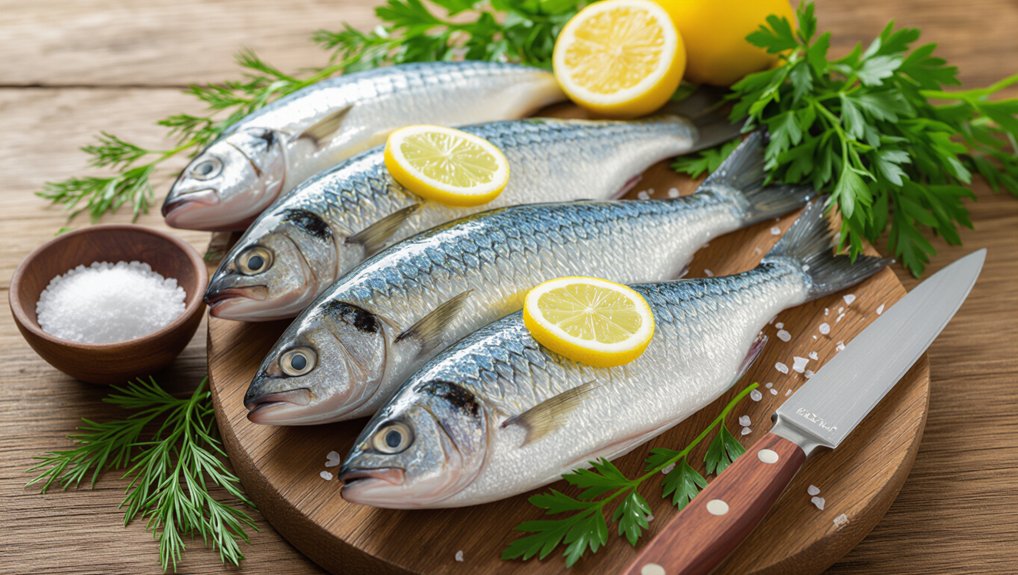
When you’re preparing fresh fish, the process goes beyond just the cooking. It’s about selecting the right fish, understanding the flavors that enhance it, and mastering the techniques that bring it to life. You’ll want to consider fresh herbs and spices, along with a few essential cooking methods. But before you dive into the details, let’s explore some common pitfalls that can derail your culinary efforts.
What Is Fresh Fish Preparation?
When you’re preparing fresh fish, you want to ensure that every step enhances its natural flavors and texture. Start by selecting high-quality fish that’s firm and smells like the ocean, not fishy. Rinse it gently under cold water, then pat it dry with paper towels to remove excess moisture. This helps achieve a crispy skin when cooking.
Next, decide whether you’ll fillet the fish or cook it whole; both methods have their merits. If you’re filleting, use a sharp knife and work carefully along the backbone. Don’t forget to remove any scales or entrails if cooking whole.
Finally, keep the preparation area clean and organized, ensuring all utensils and surfaces are sanitized to maintain freshness and avoid contamination.
Fresh Herbs and Spices
When you’re ready to elevate your fresh fish, fresh herbs and spices are your best friends. They can transform simple fillets into a flavorful masterpiece with just a sprinkle.
Consider using:
- Bright basil for a fresh kick
- Zesty lemon zest for a citrusy boost
- Fragrant dill to enhance the dish’s aroma
Fresh Fish Fillets
Fresh fish fillets offer a delightful canvas for a variety of fresh herbs and spices, enhancing their natural flavors. You can easily elevate your dish by choosing the right combinations, making each bite a culinary experience.
Here are some great options to consider:
- Dill: Its light, grassy flavor pairs beautifully with fish, adding a refreshing twist.
- Cilantro: Use this herb for a vibrant kick; it complements seafood perfectly, especially in Mexican or Asian dishes.
- Paprika: Both sweet and smoked varieties can bring warmth and depth, giving your fillets a rich, flavorful finish.
Experiment with these herbs and spices, and you’ll discover how they can transform your fresh fish into a standout meal.
Enjoy the process and savor the results!
Citrus Zest Enhancements
Citrus zest can truly elevate your fish dish, infusing it with vibrant flavors that brighten each bite. By incorporating fresh zest, you’ll enhance the natural taste of your fish while adding a refreshing twist.
Here are some ways to use citrus zest effectively:
- Lemon Zest: Grate it over grilled salmon for a zesty finish that complements the richness.
- Lime Zest: Mix it into a marinade with garlic and herbs to add a tangy pop to your white fish.
- Orange Zest: Pair it with ginger and soy sauce for a sweet and savory glaze on your fish tacos.
Experimenting with these zests not only enhances flavor but also adds a visually appealing touch to your culinary creations. Enjoy!
Cooking Techniques Overview
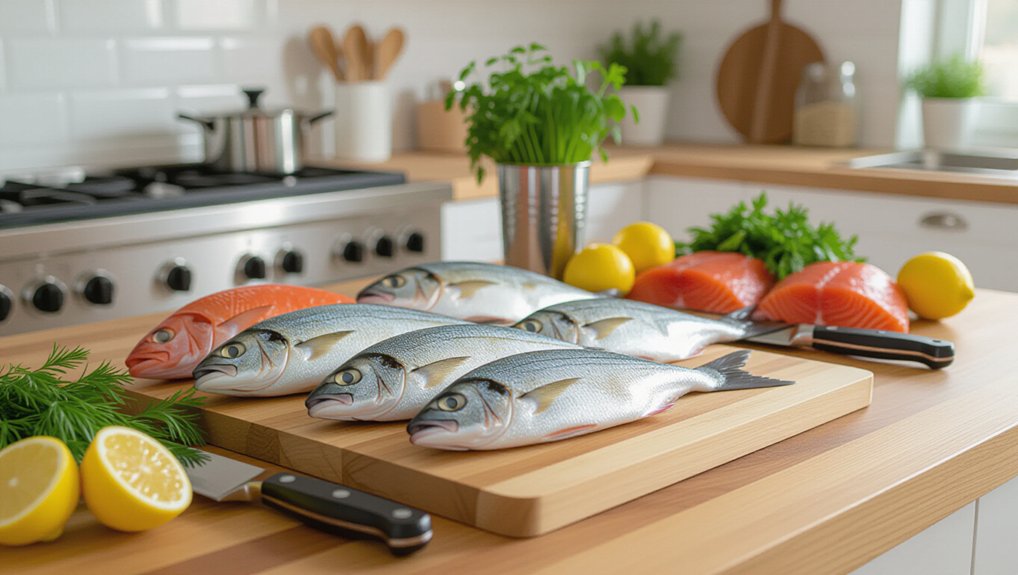
When cooking fresh fish, sourcing quality ingredients is crucial to your success.
You’ll want to master techniques like searing to achieve that crispy skin, and don’t forget to garnish with microgreens for a fresh finish.
Let’s explore these essential cooking methods to elevate your fish dishes.
Ingredient Sourcing Essentials
Sourcing the right ingredients is crucial for preparing delicious fish dishes. Freshness and quality make all the difference, so keep these essentials in mind:
- Local Fish Markets: Explore your local fish markets for the freshest catch. You’ll often find fish that’s been caught and processed the same day.
- Sustainable Sources: Look for certified sustainable seafood to ensure you’re supporting environmentally friendly practices. This not only helps the ocean but also guarantees higher quality.
- Seasonal Availability: Research which fish are in season in your area. Seasonal fish are typically fresher and more flavorful, enhancing your final dish’s taste.
Searing for Crispy Skin
To achieve that irresistible crispy skin on your fish, mastering the searing technique is essential. Here’s how you can do it:
- Preheat your skillet: Use a heavy skillet and let it get hot before adding oil. This creates a great sear.
- Pat the fish dry: Moisture is the enemy of crispiness. Use paper towels to remove excess water from the skin.
- Use the right oil: Choose an oil with a high smoke point, like canola or grapeseed, to withstand the heat without burning.
Once you’ve got these steps down, lay the fish skin-side down in the hot skillet.
Don’t move it around; let it cook until golden brown. Enjoy that crunchy texture!
Garnish With Microgreens
After achieving that perfect crispy skin, it’s time to elevate your dish with a fresh garnish. Microgreens not only add vibrant color but also pack in flavor and nutrients. Here’s how to use them effectively:
- Flavor Boost: Choose varieties like basil or arugula for a peppery kick.
- Visual Appeal: Use a mix of colors—red radish, sunflower, and pea shoots create a stunning contrast.
- Texture Contrast: Their delicate crunch complements the tender fish beautifully.
Sprinkle a handful over your plated fish just before serving.
This simple touch not only enhances the dish’s aesthetic but also brings a fresh, aromatic element that’ll impress your guests.
Enjoy the delightful combination of flavors and textures!
Flavorful Marinade Suggestions
Flavorful Fish Marinade
This marinade transforms fresh fish into a culinary delight, enhancing its natural flavors with a variety of zesty, spicy, and sweet options.
Ingredients
- ¼ cup olive oil
- 2 tablespoons lemon juice
- 2 cloves minced garlic
- Fresh herbs (dill or parsley)
- 2 tablespoons soy sauce (for spicy version)
- 1 tablespoon grated ginger (for spicy version)
- 1 tablespoon sriracha (for spicy version)
- 2 tablespoons honey (for sweet twist)
- 1 tablespoon mustard (for sweet twist)
- Juice of 1 citrus (for sweet twist)
- ¼ cup balsamic vinegar (for Italian flair)
- Fresh basil (for Italian flair)
Instructions
- Choose your marinade based on flavor preference (zesty, spicy, sweet, or Italian).
- In a bowl, combine the ingredients for your selected marinade.
- Place the fish in a resealable bag or shallow dish, and pour the marinade over it.
- Seal the bag or cover the dish and refrigerate for at least 30 minutes.
- Cook the marinated fish as desired (grill, bake, or pan-sear).
Use a Fish Scaler
When you’re getting ready to prepare fresh fish, using a fish scaler makes the process easier and cleaner.
You’ll want to focus on a few key aspects to ensure you get the best results:
- Selecting the right scaler for your fish type
- Mastering proper scaling techniques
- Knowing how to maintain and care for your scaler
These tips will help you achieve perfectly scaled fish every time.
Selecting The Right Scaler
Selecting the right scaler is crucial for efficiently removing scales from your fish. When choosing a scaler, consider its design and material.
A good scaler should have a comfortable grip and a sturdy construction, usually made of stainless steel for durability. Look for one with sharp, angled teeth that can easily lift scales without damaging the fish’s skin.
Some scalers also come with a built-in handle for better leverage and control. If you prefer a more versatile tool, you might opt for a scaler that doubles as a fish knife.
Ultimately, the right scaler will make your fish preparation smoother and quicker, allowing you to enjoy the process as much as the final dish.
Proper Scaling Techniques
To scale your fish effectively, start by holding it firmly on a cutting board, ensuring its head is facing away from you.
Grab your fish scaler and begin at the tail, moving towards the head. Use firm, gentle strokes against the grain of the scales. This technique helps remove the scales without damaging the fish’s skin.
Make sure to hold the fish down securely, as the scales can fly off during the process. Rinse the fish under cold water occasionally to wash away loose scales.
Repeat this process until you’ve removed all the scales, checking for any stubborn spots.
Once you’re done, you’ll have a clean fish ready for your favorite recipes!
Maintenance And Care Tips
Although maintaining your fish scaler might seem minor, it can significantly impact its effectiveness and longevity.
After each use, rinse your scaler under warm water to remove any fish scales or residue. A quick scrub with a soft brush can help dislodge stubborn bits.
Always dry it thoroughly to prevent rusting, especially if it has metal parts. Store your scaler in a dry place, ideally in a protective case, to avoid accidental damage.
Periodically check for any signs of wear or rust; if you notice any, consider replacing it.
Keeping your fish scaler in top shape ensures you’ll always be ready to prep fresh fish efficiently. Regular maintenance saves you time and enhances your culinary experience.
Caloric Breakdown Per Serving
When preparing fresh fish, understanding the caloric breakdown per serving can help you make informed choices. Fish is often a healthy option, but knowing the specifics can aid in meal planning. Here’s a quick overview of the caloric content of some popular fish types:
| Fish Type | Calories (per 100g) | Protein (g) |
|---|---|---|
| Salmon | 206 | 22 |
| Tilapia | 128 | 26 |
| Cod | 105 | 23 |
As you can see, different fish varieties have varying caloric values and protein content. This knowledge allows you to balance your meals effectively, ensuring you’re getting the nutrients you need without exceeding your caloric goals.
Overcooking the Fish
Overcooking fish can ruin its delicate texture and rich flavor, leading to a dry and unappetizing meal. To ensure your fish remains tender and moist, keep an eye on the cooking time.
Here are some signs you might be overcooking:
- Faded color: A vibrant fish fillet loses its luster and becomes dull.
- Flaky texture: While some flakiness is normal, excessive flaking indicates dryness.
- Unpleasant aroma: Overcooked fish emits a strong, off-putting smell that signals it’s gone too far.
To prevent these issues, always use a timer, check the fish’s internal temperature, and trust your instincts.
Herb-Infused Olive Oil Drizzle
To elevate your fresh fish, start with a drizzle of herb-infused olive oil.
Season it with sea salt to enhance the flavors, and think about pairing it with complementary ingredients like lemon or garlic.
This simple addition can transform your dish into an unforgettable experience.
Seasoning With Sea Salt
Season your fresh fish with sea salt for a burst of flavor that enhances its natural taste. This simple step elevates your dish, bringing out the ocean’s essence. Here’s how to do it right:
- Sprinkle evenly: Use a light, even coating of sea salt on both sides of the fish, ensuring every bite has that savory touch.
- Let it rest: Allow the seasoned fish to sit for about 10-15 minutes. This helps the salt penetrate, intensifying the flavor.
- Pair with olive oil: After seasoning, drizzle with your herb-infused olive oil for added richness and aroma.
This combination makes your fresh fish irresistible, highlighting its delicate qualities while adding depth to each mouthful. Enjoy the transformation!
Flavor Pairing Ideas
While fresh fish is delicious on its own, pairing it with an herb-infused olive oil drizzle can elevate its flavor profile significantly.
This simple addition brings out the natural flavors of the fish while adding a delightful aromatic touch. Here are a few ideas for your herb-infused olive oil:
- Basil & Garlic: Fresh basil and minced garlic create a savory blend that complements grilled fish beautifully.
- Lemon Thyme: A zesty mix of lemon zest and thyme adds brightness and refreshes the palate.
- Rosemary & Chili Flakes: The earthy notes of rosemary combined with a hint of heat from chili flakes can enhance heartier fish varieties.
Drizzle any of these combinations over your fish for an unforgettable dining experience!
Common Cooking Mistakes
When cooking fresh fish, it’s easy to make a few common mistakes that can ruin your dish. Overcooking, neglecting seasoning, and ignoring freshness indicators can turn a great meal into a disappointment.
Let’s explore how to avoid these pitfalls and ensure your fish shines.
Overcooking The Fish
Overcooking fish can turn a delicate fillet into a rubbery disappointment. To avoid this, keep a close eye on your cooking time. Fish cooks quickly, so you’ll want to check for doneness early.
A good rule of thumb is to cook it for about 10 minutes per inch of thickness. Use a fork to gently flake the fish; it should be opaque and easily separate. If you notice any signs of dryness, you’ve likely overcooked it.
Remember, you can always put it back on the heat, but once it’s overdone, there’s no going back. Sticking to the right temperatures and timing will help you achieve that perfect, flaky texture every time.
Enjoy the process!
Neglecting Proper Seasoning
Neglecting proper seasoning can turn a perfectly fresh fish into a bland meal. When you skip this crucial step, you miss the chance to enhance the fish’s natural flavors.
Start by using salt; it’s essential for drawing out moisture and intensifying taste. Don’t stop there—experiment with herbs, spices, or citrus to elevate your dish. A sprinkle of fresh dill or a squeeze of lemon can make a world of difference.
Remember to season both sides of the fish and consider marinating for a deeper flavor profile. If you’re grilling or baking, brushing with olive oil and adding a pinch of garlic can also work wonders.
Proper seasoning is the key to transforming your fish from ordinary to extraordinary.
Ignoring Freshness Indicators
Ignoring freshness indicators can lead to disappointing meals and potential health risks.
When you’re choosing fish, look for clear, bright eyes and shiny skin. If the fish smells overly fishy or sour, it’s best to skip it. Fresh fish should have a mild scent, almost like the ocean.
Check the flesh, too; it should be firm and bounce back when pressed. If it feels mushy or leaves an indentation, it’s not fresh.
Always trust your instincts—if something seems off, don’t hesitate to walk away.
Savor the Ocean’s Freshness
Dive into the vibrant flavors of fresh fish, where each bite transports you straight to the ocean.
To truly savor its freshness, choose fish that’s glistening and firm, with a clean, briny scent.
When cooking, keep it simple: a splash of olive oil, a sprinkle of sea salt, and a squeeze of lemon can elevate its natural taste.
Grilling or baking allows the fish’s delicate flavor to shine through, while quick searing seals in moisture.
Pair your dish with seasonal veggies to enhance the oceanic experience.
Remember, freshness is key—serve it immediately and enjoy the symphony of flavors as they dance on your palate.
This is how you embrace the essence of the sea in every meal.
Frequently Asked Questions
How Do I Choose the Best Fresh Fish at the Market?
Look for bright, clear eyes and shiny skin when picking fresh fish. It should smell like the ocean, not fishy. Firm flesh that bounces back when pressed indicates freshness, so trust your senses!
What Are the Benefits of Eating Fresh Fish Regularly?
Eating fresh fish regularly boosts your brain health, supports heart function, and provides essential nutrients like omega-3 fatty acids. It can enhance your mood, improve skin quality, and even help with weight management. Enjoy the benefits!
Can I Freeze Fresh Fish for Later Use?
Yes, you can freeze fresh fish for later use. Just make sure to clean and package it properly to maintain its quality. Thaw it in the refrigerator before cooking for the best results. Enjoy!
What Kitchen Tools Are Essential for Preparing Fresh Fish?
You’ll need a sharp filleting knife, cutting board, fish scaler, tweezers for pin bones, and a thermometer. A good set of kitchen shears and a reliable scale can also make your preparation easier and more efficient.
How Do I Store Leftover Cooked Fish Safely?
To store leftover cooked fish safely, let it cool, then wrap it tightly in plastic wrap or foil. Place it in an airtight container and refrigerate. Consume it within three days for the best quality.
Conclusion
Incorporating fresh fish into your cooking can elevate any meal. By choosing quality fish, using vibrant herbs, and mastering cooking techniques, you’ll savor the ocean’s freshness. Remember to marinate thoughtfully and avoid common mistakes like overcooking. A drizzle of herb-infused olive oil can enhance flavors even more. With these tips, you’re set to create a delicious, nutritious dish that truly highlights the essence of fresh fish. Enjoy your culinary adventure!