
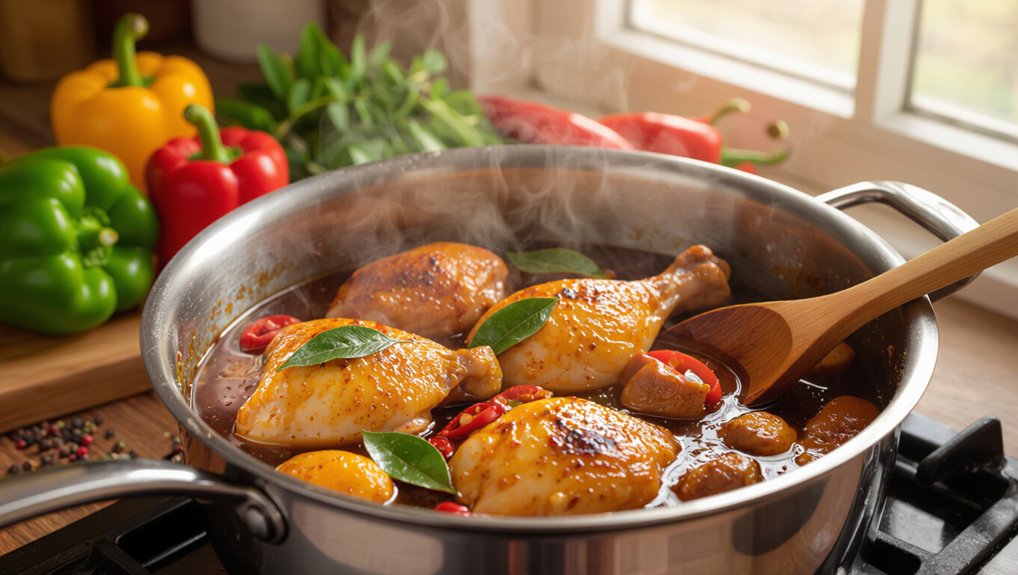
When you want to make Chicken Pork Adobo, it’s essential to understand the balance of flavors that defines this dish. You’ll start with a marinade that combines soy sauce, vinegar, and garlic, creating a rich base. But there’s more to it than just marinating. The cooking technique and ingredients play a crucial role in achieving the perfect taste. Let’s explore those components to ensure your adobo stands out in any meal.
What Is Adobo Sauce?
Adobo sauce is the heart of Filipino cuisine, known for its rich and tangy flavor profile. It combines soy sauce, vinegar, garlic, bay leaves, and peppercorns, creating a delightful balance of savory and sour.
You’ll find that each ingredient plays a crucial role, enhancing the overall taste of your dish. The vinegar provides acidity, while soy sauce adds depth and umami. Garlic infuses a fragrant aroma, and the bay leaves contribute a subtle earthiness.
When you marinate your meat in this sauce, it tenderizes and infuses it with flavor. This versatile sauce isn’t just limited to chicken or pork; you can use it with vegetables or seafood, making it a staple in many Filipino households.
Essential Marinade Components
When you’re preparing Chicken Pork Adobo, the marinade is crucial for building flavor.
You’ll want to focus on these essential components:
- Key Protein Choices (chicken, pork, or a mix)
- Soy Sauce
- Vinegar
- Garlic
These elements work together to create that rich, savory taste you love!
Key Protein Choices
To create a flavorful chicken pork adobo, you need to choose the right proteins that will absorb the marinade’s robust flavors. Here are four key protein choices to consider:
- Chicken Thighs: Their rich, dark meat stays juicy and tender throughout the cooking process.
- Pork Belly: This cut adds a deliciously fatty texture and enhances the overall richness of the dish.
- Chicken Drumsticks: With their bone-in structure, they add extra depth to the flavor as they cook.
- Pork Shoulder: This cut is perfect for slow cooking, becoming incredibly tender while soaking up the marinade.
Selecting the right combination of these proteins ensures your adobo is both satisfying and full of flavor.
Enjoy experimenting!
Flavor Enhancers
Choosing the right proteins sets the stage for a delicious chicken pork adobo, but the magic truly lies in the marinade.
To elevate your flavors, focus on these essential components:
- Soy Sauce: It adds a rich, savory depth that’s fundamental to adobo.
- Vinegar: Choose cane or apple cider vinegar for that tangy kick that balances the dish.
- Garlic: Freshly minced garlic infuses aromatic notes, enhancing the overall flavor profile.
- Bay Leaves: These provide a subtle herbal aroma, tying all the flavors together.
Marinating your proteins in this blend will make a world of difference.
Let it sit for a few hours—or even overnight—for the best results.
Trust me, your taste buds will thank you!
Detailed Cooking Instructions
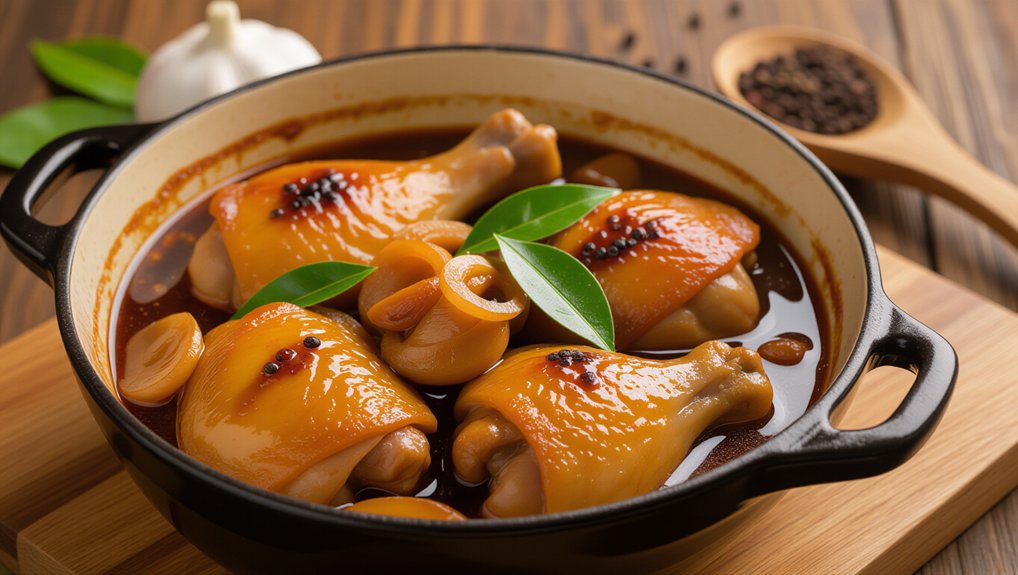
To make your Chicken Pork Adobo truly shine, you’ll want to marinate it overnight for the best flavor.
After marinating, simmer the meat until it’s tender and full of deliciousness.
Don’t forget to garnish with fresh herbs for that perfect finishing touch!
Marinate Overnight for Best Flavor
Marinating your chicken and pork overnight not only deepens the flavors but also tenderizes the meat, making every bite irresistible.
To get the most out of your marinade, follow these simple steps:
- Choose Your Marinade: Use a mix of soy sauce, vinegar, garlic, and bay leaves for an authentic taste.
- Combine Ingredients: In a bowl, whisk together your marinade ingredients until well mixed.
- Add the Meat: Place your chicken and pork in a resealable bag or a covered container and pour the marinade over the top.
- Refrigerate: Let the meat marinate in the fridge overnight, ensuring it absorbs all those delicious flavors.
This extra time allows the spices to work their magic, resulting in a mouthwatering dish you’ll love.
Simmer Until Tender
After letting your chicken and pork marinate overnight, it’s time to cook them to perfection.
Begin by heating a large pot over medium heat. Add your marinated meat along with the marinade.
Here’s how to simmer until tender:
- Bring to a boil: Allow the mixture to reach a gentle boil for about 5 minutes.
- Reduce heat: Lower the heat to a simmer. Cover the pot, letting it cook slowly.
- Check tenderness: After 30 minutes, test the meat with a fork. It should be tender and easy to pull apart.
- Adjust liquid: If the sauce gets too thick, add a bit of water to maintain a rich texture.
Keep an eye on it, and soon you’ll have a delicious adobo!
Garnish With Fresh Herbs
Once your chicken and pork adobo is tender and ready to serve, it’s time to elevate the dish with fresh herbs.
Garnishing not only adds flavor but also brings a pop of color to your plate. Here’s how to do it:
- Chop fresh cilantro: Sprinkle generously over the dish for a vibrant touch.
- Add green onions: Finely slice and scatter them for a mild onion flavor.
- Include bay leaves: Place a couple on top for an aromatic finish.
- Consider a squeeze of lime: It brightens the flavors and adds a refreshing zing.
Serve your adobo hot, garnished beautifully, and watch your guests enjoy every bite!
Cooking Time and Temperature
Perfect Chicken Pork Adobo
A savory and flavorful dish that brings together tender chicken and pork in a rich sauce.
Ingredients
- 1 lb chicken, cut into pieces
- 1 lb pork, cut into pieces
- 1 cup soy sauce
- 1/2 cup vinegar
- 1 head garlic, minced
- 1 onion, sliced
- 2 bay leaves
- 1/2 teaspoon peppercorns
- 1 tablespoon oil
- Salt to taste
Instructions
- Marinate chicken and pork in soy sauce, vinegar, garlic, onion, bay leaves, and peppercorns for at least 30 minutes.
- Heat oil in a pot over medium heat.
- Add marinated meat and cook for 30 to 40 minutes, stirring occasionally, until tender and sauce thickens.
- Adjust heat as necessary; too high may burn the sauce, while too low can make it watery.
- Perform a taste test and adjust seasoning if needed.
- Let sit off the heat for a few minutes to develop flavors before serving.
Use a Heavy Pot
Using a heavy pot can make a big difference in your Chicken Pork Adobo. It helps with heat distribution, which means your dish cooks evenly and reduces cooking time.
Here are some benefits of using a heavy pot:
- Improved heat retention
- Even cooking
- Reduced risk of burning
- Enhanced flavors
Benefits Of Heavy Pots
Heavy pots are often the secret weapon in a kitchen, especially when making dishes like chicken pork adobo. They provide stability and durability, allowing you to cook your ingredients evenly and effectively.
When you use a heavy pot, you’ll notice that it retains heat better, ensuring your dish simmers at the right temperature. This means your flavors meld beautifully, giving you that rich, savory taste you crave.
Plus, heavy pots reduce the risk of scorching your food, letting you focus on perfecting your recipe. They’re also versatile; you can use them for sautéing, braising, or even baking.
Investing in a good heavy pot will elevate your cooking experience and help you create delicious meals every time.
Heat Distribution Efficiency
When you cook with a heavy pot, you’ll experience superior heat distribution that enhances the overall quality of your chicken pork adobo. The thick material retains heat, ensuring that every ingredient cooks evenly.
This consistent temperature helps meld flavors beautifully, allowing the savory notes of soy sauce and vinegar to penetrate the meat thoroughly. You won’t have to worry about hot spots that can scorch your food, which is crucial for achieving that perfect, tender texture.
Plus, using a heavy pot minimizes the chances of burning, letting you focus on seasoning and taste. In short, investing in a good-quality, heavy pot elevates your cooking, making your chicken pork adobo a dish to remember.
Cooking Time Reduction
Although you mightn’t realize it, a heavy pot can significantly cut down your cooking time for chicken pork adobo. These pots, often made from cast iron or enameled materials, retain heat exceptionally well.
As you sear your meat, the even heat distribution speeds up the cooking process, allowing flavors to meld faster.
When you simmer your adobo, a heavy pot keeps the temperature consistent, reducing the need for constant adjustments.
Plus, the weight helps seal in moisture, so your chicken and pork stay tender and juicy without overcooking.
Caloric Content per Serving
Understanding the caloric content per serving of Chicken Pork Adobo is essential for anyone mindful of their dietary intake. This dish combines chicken and pork, which can affect the calorie count. Typically, a serving contains around 400-500 calories, depending on the recipe and portion size. Here’s a breakdown to give you a clearer picture:
| Ingredient | Calories per 100g | Serving Size (g) |
|---|---|---|
| Chicken | 165 | 150 |
| Pork | 250 | 150 |
| Sauce | 90 | 50 |
Overcrowding the Cooking Pot
Overcrowding the cooking pot can lead to uneven cooking and a less flavorful Chicken Pork Adobo. When you cram too much meat into the pot, you risk steaming instead of browning, which affects the overall taste.
To avoid this, keep these tips in mind:
- Cook in Batches: Divide your meat and cook it in smaller portions.
- Use a Larger Pot: If you have a lot of meat, consider using a bigger pot to allow for better heat circulation.
- Stir Frequently: If you must overcrowd, stir the ingredients often to ensure even cooking.
- Monitor Temperature: Keep an eye on the heat level; lower it if things start to steam instead of sear.
Serve With Steamed Rice
When you serve your Chicken Pork Adobo, consider pairing it with steamed rice for the perfect balance.
You can spice things up with a Spicy Chili Adobo option or add a twist with a Sweet Pineapple Adobo.
Either way, the rice will soak up all those delicious flavors!
Spicy Chili Adobo Option
If you’re craving a kick of heat in your Chicken Pork Adobo, the Spicy Chili Adobo option is a perfect choice. Adding chili peppers brings a delightful zing that elevates the dish.
Here’s how to amp up the spice:
- Choose Your Peppers: Use bird’s eye chili for intense heat or jalapeños for a milder kick.
- Prepare the Marinade: Blend the peppers with garlic, soy sauce, and vinegar to create a spicy marinade.
- Incorporate During Cooking: Add the chili mixture early in the cooking process to infuse the flavors.
- Adjust to Taste: Taste as you go, and feel free to add more peppers for extra heat.
Serve your spicy adobo over steamed rice for a flavorful meal that packs a punch!
Sweet Pineapple Adobo Twist
Switching gears from the spicy kick of the previous option, the Sweet Pineapple Adobo Twist brings a delightful contrast to this classic dish. The addition of pineapple not only enhances the flavor but also balances the savory elements.
Here’s how to make it shine:
- Choose ripe pineapple for maximum sweetness and juiciness.
- Marinate your chicken and pork in a mixture of soy sauce, vinegar, and pineapple juice for a few hours.
- Add pineapple chunks during the cooking process to infuse that tropical flavor.
- Serve it over steamed rice to soak up the delicious sauce.
This twist on adobo will surprise your taste buds and impress any guests at the table. Enjoy the blend of sweet and savory!
Common Ingredient Substitutions
When you’re making Chicken Pork Adobo, you mightn’t have every ingredient on hand.
Luckily, there are plenty of substitutes for soy sauce, vinegar, and sweeteners that can still deliver great flavor.
Let’s explore some easy alternatives to keep your dish delicious!
Soy Sauce Alternatives
Soy sauce is a staple in many kitchens, but you don’t have to stick with it if you’re looking for alternatives.
If you want a gluten-free option, try tamari; it offers a similar flavor without the wheat. For a lighter taste, coconut aminos can work wonders, providing a sweet and savory profile.
If you’re up for something unique, consider using liquid aminos, which are derived from soybeans but are less salty.
For a quick DIY solution, mix equal parts water and balsamic vinegar with a pinch of salt. This won’t replicate the exact taste but can add depth to your dish.
Experiment with these substitutes to find what suits your palate best!
Vinegar Variations
If you’re looking to add a tangy kick to your Chicken Pork Adobo, consider experimenting with different types of vinegar.
While traditional recipes often call for cane vinegar, you can try white wine vinegar for a milder taste, or apple cider vinegar for a fruity twist.
If you want something bolder, rice vinegar can add a subtle sweetness. You could even use balsamic vinegar for a rich depth, though it’ll change the dish’s color.
Remember, the acidity level varies, so adjust the amount according to your preference. Start with a smaller quantity, taste, and build up as needed.
Each vinegar brings its own character, allowing you to personalize your adobo experience. Enjoy the exploration!
Sweetener Options
After experimenting with different vinegars, you might want to add a touch of sweetness to balance the flavors in your Chicken Pork Adobo.
Brown sugar is a classic choice, giving your dish a rich, caramel-like flavor. If you’re looking for a healthier alternative, consider using honey or maple syrup; both add a natural sweetness without overpowering the other ingredients.
For a low-calorie option, stevia or agave nectar works well too. Just remember to adjust the quantity, as these sweeteners can be more concentrated.
Taste as you go, so you get the sweetness just right. Whatever you choose, a little sweetness can elevate your adobo, creating a delicious harmony of flavors that everyone will love.
Serve With Pickled Vegetables
What could enhance the rich flavors of Chicken Pork Adobo more than a side of pickled vegetables? The tangy crunch of pickles perfectly balances the dish’s savory and sweet notes.
You can whip up a quick batch using cucumbers, carrots, or radishes. Simply slice your veggies, then soak them in a mixture of vinegar, sugar, and salt for a few hours or overnight. This easy process gives you a refreshing contrast to the hearty adobo.
When you serve your Chicken Pork Adobo, place the pickled vegetables on the side, allowing everyone to enjoy them together. Not only do they add brightness to the plate, but they also elevate each bite, making your meal even more delightful.
Frequently Asked Questions
Can I Use Boneless Chicken for This Recipe?
Yes, you can use boneless chicken for this recipe. It’ll cook faster and absorb flavors well. Just adjust the cooking time to ensure it stays juicy and tender. Enjoy your flavorful dish!
How Long Can Leftovers Be Stored?
You can store leftovers in the fridge for about three to four days. If you want to keep them longer, consider freezing them, which can extend their shelf life to about two to three months.
Is Adobo Sauce Spicy?
Adobo sauce isn’t typically spicy; it leans more toward savory and tangy flavors. If you prefer heat, you can always add chili peppers or hot sauce to customize it to your taste. Enjoy experimenting!
Can I Freeze Chicken Pork Adobo?
Yes, you can freeze chicken pork adobo! Just let it cool completely, then transfer it to an airtight container. When you’re ready to eat, thaw it in the fridge and reheat thoroughly before serving.
What Type of Vinegar Works Best?
For the best flavor, use cane vinegar or rice vinegar in your adobo. They add a nice tang without overpowering the dish. Experiment a bit to find what you enjoy most!
Conclusion
Now that you know how to make Chicken Pork Adobo, it’s time to enjoy this flavorful dish! The combination of marinated meat and rich sauce creates a meal that’s both comforting and satisfying. Don’t forget to serve it with steamed rice for the perfect balance. Feel free to experiment with spices or add a twist, like pineapple or chili, to make it your own. Enjoy your delicious creation and share it with family and friends!