
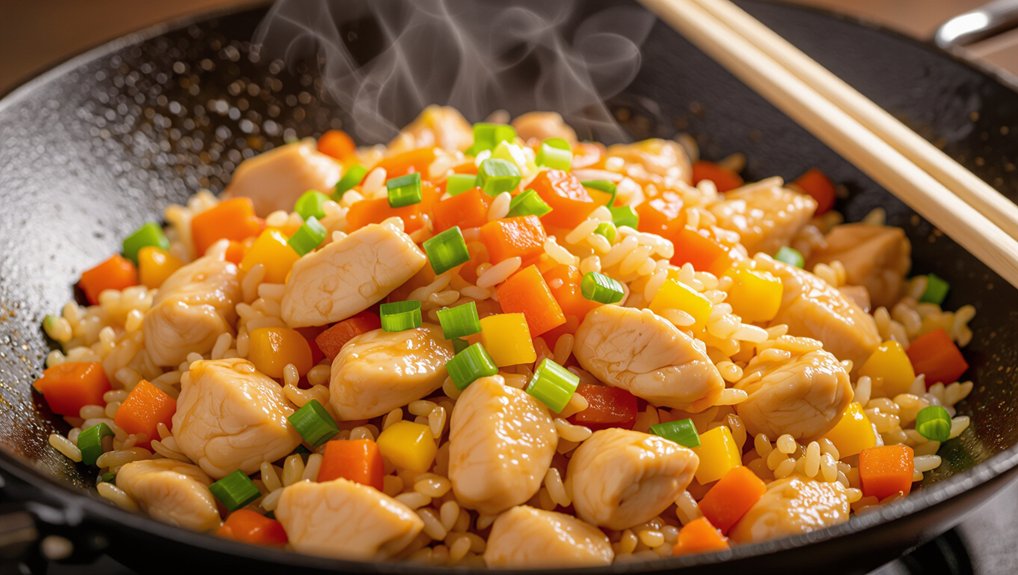
When you want a comforting meal, chicken fried rice is a go-to choice. With its savory flavors and satisfying textures, it’s a dish that can easily be tailored to your taste. The key lies in using day-old rice and fresh ingredients. But there are a few tricks to ensure it turns out perfectly. Curious about the best way to achieve that ideal balance of flavors and textures? Let’s explore the essentials.
What Is Fried Rice?
Fried rice is a delicious and versatile dish that combines cooked rice with various ingredients like vegetables, proteins, and sauces. It’s a fantastic way to use leftover rice, and you can customize it to suit your taste.
You might toss in peas, carrots, or bell peppers for color and crunch. Chicken, shrimp, or tofu can be added for protein, making it a balanced meal.
The beauty of fried rice lies in its simplicity; with just a few ingredients, you can whip up a satisfying dish in minutes. Plus, it’s perfect for any meal—lunch, dinner, or even breakfast!
Embrace your creativity, and don’t hesitate to experiment with different flavors and textures to make it uniquely yours.
Essential Seasoning Elements
When you’re whipping up chicken fried rice, the right ingredients make all the difference.
You’ll want to focus on key protein choices and fresh vegetables to elevate your dish.
Let’s explore the essential elements that bring flavor and texture to your fried rice.
- Chicken breast or thigh
- Shrimp or tofu (for variety)
- Bell peppers
- Green onions
- Carrots
Key Protein Choices
Choosing the right protein can elevate your chicken fried rice from good to great. While chicken is a classic choice, don’t be afraid to mix it up!
Here are some delicious protein options to consider:
- Shrimp: Adds a sweet, briny flavor that complements the rice perfectly.
- Pork: Ground or diced, it brings a rich, savory taste.
- Tofu: A great vegetarian alternative, it absorbs flavors well and adds a nice texture.
- Beef: Offers a hearty option, especially when marinated to enhance its flavor.
- Eggs: Scramble them in for added protein and creaminess.
Experiment with these proteins to find your perfect blend, and watch your chicken fried rice transform into a comforting delight!
Fresh Vegetables Selection
Fresh vegetables play a crucial role in elevating your chicken fried rice, not just for flavor but also for texture and color. Selecting the right mix can turn a good dish into a great one.
Here are some top choices you shouldn’t overlook:
- Carrots: Add a subtle sweetness and crunch.
- Peas: Their pop of color and sweetness balance the dish.
- Bell Peppers: Choose vibrant red or green for a fresh bite.
- Green Onions: They give a sharp, zesty finish.
- Corn: Sweet kernels bring warmth and texture.
Incorporating these fresh veggies won’t only enhance the taste but also provide a nutritious boost, making your chicken fried rice a truly comforting meal.
Cooking Method Breakdown
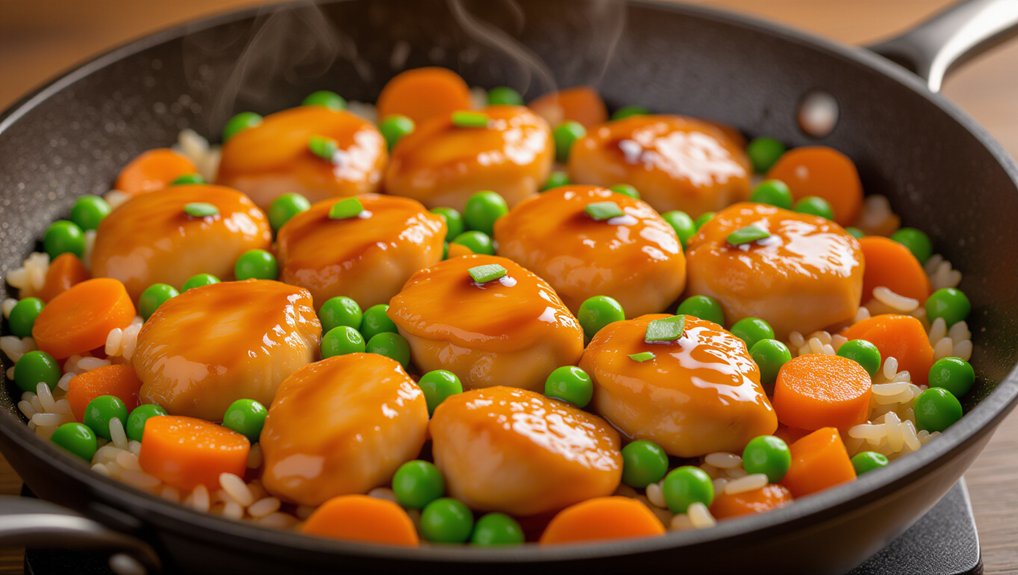
Now that you’ve seasoned your ingredients, it’s time to focus on the cooking method.
Start by chopping everything you need for quick, even cooking, then sauté over high heat to achieve that perfect fried rice texture.
Finally, don’t forget to garnish with green onions for a fresh finish!
Ingredient Chopping Essentials
When it comes to making delicious chicken fried rice, chopping your ingredients correctly is crucial for both flavor and presentation.
The right cuts ensure even cooking and a pleasing texture, making your dish more enjoyable. Here are some essential tips for chopping:
- Chicken: Dice into small, uniform pieces for quick cooking.
- Vegetables: Chop bell peppers, carrots, and onions into bite-sized cubes to enhance flavor distribution.
- Garlic: Mince finely to release its aromatic oils.
- Green Onions: Slice thinly, using both the white and green parts for added color and taste.
- Eggs: Beat well before cooking; they’ll mix easily with the rice later.
Sautéing Over High Heat
Sautéing over high heat is essential for achieving that perfect chicken fried rice texture and flavor. When you crank up the heat, you’re creating a crispy, slightly charred exterior on the chicken and veggies, while keeping everything tender inside.
Here are some tips to keep in mind:
- Use a well-seasoned wok or skillet to ensure even cooking.
- Keep all ingredients prepped and ready to go; timing is crucial.
- Don’t overcrowd the pan; work in batches if necessary.
- Stir frequently to prevent burning and promote even browning.
- Add cold, day-old rice for the best results; it separates easily and fries beautifully.
Mastering this technique will elevate your fried rice to a whole new level!
Garnish With Green Onions
Garnishing with green onions is a simple yet impactful step that can elevate your chicken fried rice.
These vibrant herbs add not just flavor but also a burst of color, making your dish visually appealing.
Here’s how to make the most of green onions:
- Freshness: Use them raw for a crisp texture.
- Flavor Boost: Their mild onion flavor enhances the overall taste.
- Color Contrast: Bright green adds visual appeal against the rice.
- Versatility: Mix into the dish or sprinkle on top for garnish.
- Nutritional Value: Packed with vitamins and antioxidants, they’re a healthy addition.
Ingredients List and Measurements
Chicken Fried Rice Recipe
Whip up a delicious chicken fried rice with this easy recipe that combines fresh ingredients for a mouthwatering dish.
Ingredients
- 2 cups cooked rice (preferably chilled)
- 1 cup diced chicken breast (sautéed until golden)
- 1 cup mixed vegetables (peas, carrots, corn)
- 2 eggs (beaten)
- 3 tablespoons soy sauce
- 1 tablespoon sesame oil
- 2-3 green onions (chopped for garnish)
Instructions
- In a large skillet or wok, heat sesame oil over medium-high heat.
- Add the diced chicken and sauté until golden brown.
- Stir in the mixed vegetables and cook for another 2-3 minutes.
- Push the chicken and vegetables to the side of the pan, then pour in the beaten eggs.
- Scramble until fully cooked.
- Add the chilled rice to the pan and mix everything together.
- Pour in soy sauce and stir until well combined and heated through.
- Garnish with chopped green onions before serving.
Use Day-Old Rice
Using day-old rice is key to achieving the perfect chicken fried rice. It not only enhances the texture but also allows for better flavor absorption.
Let’s explore why this simple switch can elevate your dish.
- Improved texture: Less moisture means firmer grains.
- Better flavor absorption: Rice soaks up sauces and seasonings.
- Quick cooking time: No need to dry out fresh rice.
- Reduced stickiness: Avoid clumping for better stir-frying.
- Convenience: Pre-cooked rice is ready to go!
Benefits Of Day-Old Rice
While freshly cooked rice might seem ideal for chicken fried rice, day-old rice actually brings several advantages.
First, it’s drier and less sticky, which makes it easier to stir-fry without clumping. This texture allows each grain to absorb flavors better, enhancing your dish’s overall taste.
You’ll also save time—cooking rice the day before lets you whip up your meal quickly. Plus, using leftovers cuts down on food waste, making it a smart choice for your kitchen.
By letting the rice chill in the fridge overnight, you’ll not only improve its quality but also have a delicious, effortless meal ready to go.
Texture Makes A Difference
Day-old rice truly shines when it comes to texture in chicken fried rice. When you use rice that’s been refrigerated overnight, the grains dry out a bit, making them firmer and less sticky.
This means they’ll stay separate during cooking, giving your dish that perfect, fluffy consistency. Freshly cooked rice can clump together, resulting in a mushy mess. Nobody wants that!
Flavor Absorption Improvement
When you opt for day-old rice, you’ll notice a significant boost in flavor absorption in your chicken fried rice.
Freshly cooked rice tends to be moist and sticky, making it difficult for sauces and seasonings to penetrate. Day-old rice, on the other hand, dries out slightly in the fridge, giving it the perfect texture to soak up those delicious flavors.
Using cold, day-old rice allows each grain to separate easily, ensuring even distribution of your soy sauce, garlic, and other seasonings.
This results in a more delicious and well-balanced dish. So, next time you’re making chicken fried rice, plan ahead and prepare your rice the day before.
You’ll see how this simple step transforms your meal into a flavor-packed delight.
Caloric Content per Serving
A typical serving of chicken fried rice contains around 300 to 400 calories, depending on the ingredients and portion size. This makes it a satisfying yet relatively light meal option. Here’s a quick breakdown of the caloric content based on common ingredients:
| Ingredient | Calories per Serving |
|---|---|
| Chicken (3 oz) | 140 |
| Cooked Rice (1 cup) | 200 |
| Vegetables (1/2 cup) | 50 |
| Soy Sauce (1 tbsp) | 10 |
Overcrowding the Pan
To achieve perfectly cooked chicken fried rice, avoid overcrowding the pan, as doing so can lead to uneven cooking and a mushy texture.
When you pack too much into the skillet, the heat gets trapped, preventing that delightful crispy finish you crave. Here are some tips to keep in mind:
- Use a large pan: A wider surface allows for better heat distribution.
- Cook in batches: If you have a lot of ingredients, prepare them separately.
- Keep the heat high: This helps to sear your ingredients quickly.
- Stir-fry efficiently: Move the ingredients around frequently for even cooking.
- Let it breathe: Give each ingredient space to develop flavor and texture.
Add Pineapple for Sweetness
Adding pineapple to your chicken fried rice brings a delightful sweetness that balances the savory flavors.
To enhance the texture and flavor even more, consider tossing in some crunchy cashews.
If you want to boost the protein, shrimp makes a fantastic addition, creating a well-rounded dish.
Add Cashews for Crunch
While cooking your chicken fried rice, consider tossing in some cashews for an irresistible crunch.
These delicious nuts not only add texture but also enhance the overall flavor profile of your dish. Here’s why you should add cashews:
- Nutty Flavor: Cashews bring a unique, rich taste that complements the savory elements.
- Textural Contrast: Their crunch balances the softness of the rice and chicken.
- Nutritional Boost: Cashews are packed with healthy fats, protein, and essential minerals.
- Versatile Pairing: They work well with various veggies and spices you might use.
- Visual Appeal: Their golden hue adds a vibrant touch to your dish.
Add Shrimp for Protein
Elevate your chicken fried rice by incorporating shrimp for a protein-packed twist. Shrimp not only boosts the dish’s nutritional value but also adds a delightful flavor and texture.
Here’s why you should consider adding shrimp to your recipe:
- Quick Cooking: Shrimp cooks in just a few minutes, saving you time.
- Flavorful: It absorbs the seasonings well, enhancing the overall taste.
- Versatile: Pair it with various vegetables and sauces for a unique dish.
- Healthy Option: Low in calories and high in protein, shrimp keeps your meal balanced.
- Appealing: The vibrant color of shrimp makes your fried rice visually enticing.
Common Cooking Inquiries
When making chicken fried rice, you might’ve questions about essential cooking techniques or what to do if you’re missing an ingredient.
Maybe you’re facing some common issues in the kitchen that need troubleshooting.
Let’s tackle these inquiries to help you cook with confidence!
Essential Cooking Techniques
To master chicken fried rice, you’ll need to grasp some essential cooking techniques that can elevate your dish from ordinary to extraordinary.
Start with day-old rice; it’s less sticky and fries better. Use a hot wok or skillet to achieve that desirable sear, allowing flavors to develop.
Don’t overcrowd the pan; cook in batches if necessary to maintain high heat. When adding ingredients, keep them moving to prevent burning.
Always incorporate your proteins and vegetables in stages, ensuring everything cooks evenly.
Finally, use a mix of soy sauce and sesame oil for flavor, but don’t drown your rice.
With these techniques in hand, you’ll create a chicken fried rice that’s not just good, but great!
Ingredient Substitutions Guide
Now that you’ve got the cooking techniques down, let’s talk about ingredient substitutions that can help you customize your chicken fried rice.
If you don’t have chicken, try shrimp, tofu, or even leftover pork for a tasty twist.
For vegetables, use whatever’s in your fridge—carrots, peas, or bell peppers all work well.
Don’t have soy sauce? A mix of tamari or coconut aminos can do the trick.
If you’re looking for a gluten-free option, choose rice vinegar instead of soy sauce.
For a kick, add sriracha or chili paste if you like some heat.
And if you’re out of sesame oil, olive oil or any neutral oil will suffice.
Get creative and make it your own!
Troubleshooting Common Issues
Even the best cooks encounter issues while making chicken fried rice, so don’t worry if things don’t go as planned.
If your rice is too sticky, it might’ve been cooked too long or not cooled properly. Try using day-old rice; it’s drier and works best.
If the flavors are flat, don’t hesitate to add more soy sauce or a splash of sesame oil to enhance taste.
If your chicken isn’t cooked evenly, ensure you cut it into small, uniform pieces for consistent cooking.
Lastly, if your fried rice feels dry, a bit of chicken broth or extra oil can help.
Perfect Your Heat Control
While cooking chicken fried rice, mastering heat control is crucial for achieving that perfect texture and flavor. Start with high heat to quickly sear the chicken and vegetables, locking in their juices.
Once they’re cooked, lower the heat slightly before adding the rice; this helps prevent it from burning. If your pan starts to smoke, it’s too hot—reduce the heat immediately.
Use a spatula to stir constantly, ensuring even cooking and preventing sticking. If you notice any parts browning too quickly, adjust your heat accordingly.
The goal is a balance: high enough to create that signature wok hei, but not so high that ingredients burn. With practice, you’ll develop an intuitive feel for the right temperature.
Frequently Asked Questions
Can I Use Frozen Vegetables in Chicken Fried Rice?
Yes, you can use frozen vegetables in chicken fried rice! They’re convenient and save time. Just add them directly to the pan when the rice is nearly done, letting them heat through for a quick, tasty meal.
What Type of Chicken Works Best for Fried Rice?
Boneless, skinless chicken breast or thighs work best for fried rice. They cook quickly and stay tender. You can also use leftover rotisserie chicken for added flavor and convenience, making your meal even easier.
How Can I Make Fried Rice Spicier?
To make your fried rice spicier, add chopped fresh chilies, a dash of hot sauce, or sprinkle red pepper flakes while cooking. You can also stir in sriracha or chili oil for an extra kick.
Is Using Soy Sauce Essential for Flavor?
Yes, using soy sauce is essential for flavor. It adds depth and umami, enhancing the overall taste. If you prefer alternatives, try tamari or coconut aminos, but soy sauce really brings that classic fried rice flavor.
Can I Substitute Rice for Quinoa in This Recipe?
Yes, you can substitute rice with quinoa in this recipe. Just make sure to adjust the cooking time and liquid ratio, as quinoa cooks differently. You’ll still enjoy a delicious, nutritious meal!
Conclusion
Now that you know how to make comforting chicken fried rice, it’s time to put your skills to the test. Remember, using day-old rice and keeping the pan from overcrowding are key for that perfect texture. Don’t hesitate to experiment with flavors, like adding pineapple for a sweet twist. With a little practice and attention to heat control, you’ll whip up a delicious dish that warms the heart and satisfies your cravings. Enjoy every bite!