
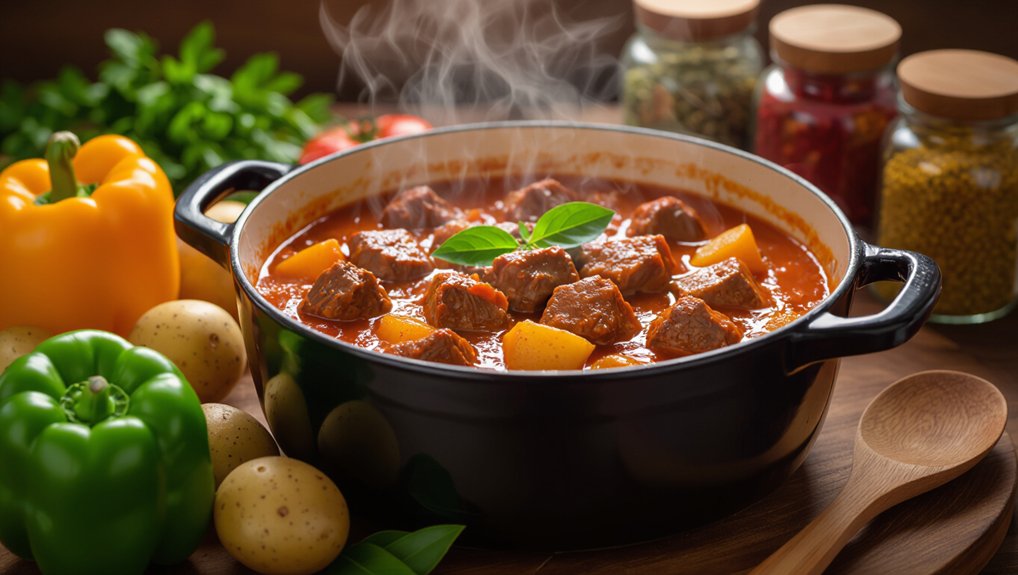
When you think of comfort food, Beef Caldereta often comes to mind. This hearty dish combines tender beef, rich tomato sauce, and a medley of vegetables for a truly satisfying meal. You’ll want to focus on key ingredients and techniques to elevate the flavors. From choosing the right meat to perfecting the sauce, there are plenty of tips to ensure your dish stands out. Let’s explore the essential steps to create this beloved classic.
What Is Caldereta Sauce?
Caldereta sauce is a rich and savory Filipino sauce that elevates any beef dish to a new level. This sauce combines a medley of flavors, creating a delightful experience for your palate.
It’s made with a base of tomatoes and often includes ingredients like bell peppers, carrots, and spices. When you prepare it, you’ll notice how the sauce becomes thick and luscious, coating the beef perfectly.
You might also find variations that incorporate liver spread, giving it a unique depth. Using Caldereta sauce not only enhances the taste of your beef but also adds a vibrant color to your dish.
Whether you’re serving it for a special occasion or a cozy dinner, this sauce is sure to impress.
Essential Flavor Components
To create a mouthwatering Beef Caldereta, you’ll want to focus on some essential flavor components. These ingredients not only enhance the dish but also bring it to life. Here’s what you’ll need to get started:
- Beef
- Potatoes
- Carrots
- Spicy chili peppers
- Savory spices
Beef, Potatoes, and Carrots
When crafting a delicious beef caldereta, the trio of beef, potatoes, and carrots plays a vital role in creating its signature flavor. The tender beef provides a rich, savory base, while the potatoes and carrots add sweetness and texture. Together, they create a harmonious balance that elevates the dish.
To enhance your experience, consider these tips:
- Use chuck or brisket for tender, flavorful beef.
- Cut potatoes into uniform pieces to ensure even cooking.
- Opt for firm carrots to maintain their shape and crunch.
- Don’t skimp on seasoning; it brings out the natural flavors.
- Simmer slowly to allow the ingredients to meld beautifully.
These elements will make your beef caldereta truly comforting and delicious!
Spicy Chili Peppers
While the beef caldereta is rich and hearty, the addition of spicy chili peppers takes it to another level.
These peppers not only enhance the dish’s flavor but also add an exciting kick that balances the savory elements. Here’s how to maximize their impact:
- Choose the Right Peppers: Opt for jalapeños, siling haba, or even Thai chili for varied heat levels.
- Control the Spice: Adjust the quantity according to your heat tolerance. Start small and add more as needed.
- Incorporate Early: Add the peppers during cooking to infuse their heat into the sauce.
- Complement with Acidity: A splash of vinegar or lime can help cut through the heat.
- Garnish: Top your caldereta with fresh chili slices for an appealing presentation and extra heat.
Cooking Instructions Unveiled
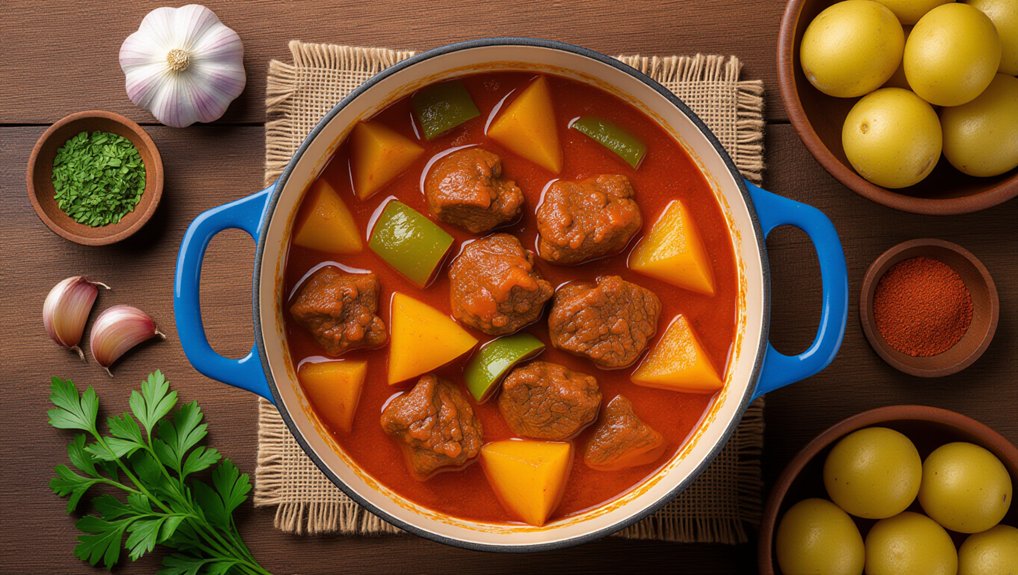
Now that you’ve gathered the essential ingredients, it’s time to get cooking!
Start by sautéing the onions until they’re translucent, which adds a rich flavor base.
Don’t forget to garnish your dish with fresh herbs for that perfect finishing touch!
Ingredient Gathering Essentials
Before diving into the delicious world of Beef Caldereta, gather your ingredients to ensure a smooth cooking experience.
Having everything ready will make the process much more enjoyable and efficient. Here’s what you need:
- Beef chuck: Cut into bite-sized pieces for optimal tenderness.
- Potatoes: Peeled and diced; they’ll add heartiness to your dish.
- Carrots: Sliced; they bring sweetness and color to the mix.
- Bell peppers: Chopped; these add flavor and a pop of freshness.
- Olives: Sliced; they provide a unique tang that balances the richness.
With these essential ingredients on hand, you’re all set to start creating a comforting and flavorful Beef Caldereta that everyone will love!
Sauté Onions Until Translucent
Start by heating oil in a large pot over medium heat. Once the oil shimmers, add your chopped onions. Sauté them until they become translucent, stirring occasionally. This step releases their sweetness and builds a flavorful base for your beef caldereta.
Here’s how to do it right:
- Use yellow or white onions for a balanced flavor.
- Stir gently to prevent browning; you want them soft, not caramelized.
- Cook for about 5-7 minutes, keeping an eye on them.
- If they start to stick, add a splash of water to loosen them up.
- Don’t rush; patience here enhances the overall taste of the dish.
Once they’re translucent, you’re ready to move on to the next steps in your beef caldereta.
Garnish With Fresh Herbs
As you near the end of cooking your beef caldereta, adding fresh herbs can elevate its flavor and presentation. Garnishing with herbs not only adds a pop of color but also enhances the dish’s aroma.
Here are some fresh herb options you can use:
- Cilantro: Adds a vibrant, citrusy note.
- Parsley: Brings a fresh, mild flavor that balances richness.
- Basil: Offers a sweet, fragrant touch to the dish.
- Thyme: Infuses earthy notes that complement the beef.
- Green onions: Provides a crunchy texture and mild onion flavor.
Sprinkle your chosen herbs generously over the caldereta just before serving.
This simple step will make your dish not only more appetizing but also memorable. Enjoy!
Cooking Time and Serving Size
Beef Caldereta Recipe
A hearty and flavorful Filipino dish, perfect for family gatherings and celebrations. This comforting meal is best enjoyed with rice on the side.
Ingredients
- 2 lbs beef (chuck or brisket), cut into cubes
- 1/4 cup cooking oil
- 1 onion, chopped
- 4 cloves garlic, minced
- 2 cups beef broth
- 1 cup tomato sauce
- 1/2 cup green olives
- 2 carrots, sliced
- 1 potato, diced
- 1 bell pepper, sliced
- Salt and pepper to taste
Instructions
- Heat oil in a large pot over medium heat. Sauté onions and garlic until fragrant.
- Add beef cubes and brown on all sides.
- Pour in beef broth and tomato sauce. Bring to a boil, then reduce heat to low.
- Cover and simmer for 2-3 hours, or until beef is tender.
- Add carrots, potatoes, and bell peppers. Cook for an additional 30 minutes.
- Stir in olives and season with salt and pepper to taste. Serve hot.
Use Marbled Beef Cuts
When it comes to making the perfect Beef Caldereta, using marbled cuts is key. These cuts not only boost flavor but also ensure tenderness, making every bite a delight.
Here are some ideal options and cooking techniques to keep in mind:
- Chuck roast
- Brisket
- Short ribs
- Ribeye
- Flank steak
Ideal Cuts For Caldereta
Choosing the right cut of beef is crucial for a delicious Caldereta, and marbled cuts are your best bet. Cuts like chuck or brisket offer the perfect balance of tenderness and rich flavor.
The marbling in these cuts melts during cooking, infusing the dish with a savory depth that enhances every bite.
You might also consider short ribs, which are equally flavorful and become wonderfully tender after a long simmer.
Look for cuts with visible fat interspersed throughout; this fat will break down and keep the meat juicy.
Avoid lean cuts, as they can dry out and lack the richness Caldereta is known for.
Enhancing Flavor And Tenderness
To truly enhance the flavor and tenderness of your Caldereta, marbled beef cuts are the secret weapon.
These cuts, like chuck or brisket, have intramuscular fat that melts during cooking, infusing your dish with rich flavor and creating a tender texture.
When you choose marbled beef, you’re ensuring every bite is juicy and satisfying.
This fat not only contributes to the taste but also helps maintain moisture, preventing your meat from drying out as it simmers in the savory sauce.
So, don’t shy away from those beautifully marbled pieces; they’ll elevate your Caldereta to a whole new level.
With the right cut, you’ll impress everyone at the table with your flavorful, tender beef dish.
Cooking Techniques For Marbling
Marbled beef cuts shine when you apply the right cooking techniques. Start by searing the meat over high heat to lock in those flavorful juices and create a rich crust.
Once seared, lower the heat and let it simmer gently. This method allows the marbling to melt into the meat, enhancing tenderness and flavor.
Braising is another excellent technique; by cooking the beef in a flavorful liquid, you’ll achieve a melt-in-your-mouth texture.
Don’t forget to season generously; the fat in marbled cuts absorbs spices beautifully.
Lastly, always let the meat rest before slicing. This ensures the juices redistribute, giving you a succulent bite every time.
Enjoy your perfectly cooked beef caldereta!
Caloric Content per Serving
When it comes to enjoying Beef Caldereta, you might wonder about its caloric content. A typical serving packs a hearty punch, making it a satisfying meal. Here’s a breakdown to help you gauge what’s on your plate:
| Ingredient | Calories per Serving | Notes |
|---|---|---|
| Beef (3 oz) | 250 | Lean cuts recommended |
| Tomato Sauce (1/2 cup) | 80 | Adds flavor and moisture |
| Vegetables (1 cup) | 50 | Carrots, potatoes, etc. |
| Olive Oil (1 tbsp) | 120 | For sautéing |
| Total | 500 | Per serving estimate |
Keep in mind that portion sizes and ingredient choices can affect the overall calorie count, so adjust as needed for your preferences!
Overcooking the Beef Chunks
Overcooking the beef chunks can turn your Beef Caldereta from tender and flavorful to tough and chewy. To ensure perfectly cooked beef, keep these tips in mind:
- Choose the right cut: Use tougher cuts like chuck or brisket that benefit from slow cooking.
- Monitor cooking time: Aim for a simmer, not a rolling boil, to maintain tenderness.
- Add liquid wisely: Use enough broth or sauce but avoid drowning the beef, which can lead to overcooking.
- Check doneness regularly: Use a fork to test tenderness; it should break apart easily.
- Let it rest: Allow the beef to rest after cooking so the juices redistribute.
Add Olives for Richness
Adding olives to your Beef Caldereta brings a wonderful richness that elevates the dish.
To enhance this depth, consider incorporating red wine and roasted bell peppers for a burst of flavor. Together, these ingredients create a harmonious balance that makes your caldereta unforgettable.
Add Red Wine for Depth
To enhance the flavor profile of your beef caldereta, incorporating red wine can truly elevate the dish. The acidity and richness of red wine help balance the savory elements, creating a deeper, more complex taste.
Here’s how to make the most of it:
- Choose a good-quality red wine that you’d enjoy drinking.
- Add the wine early in the cooking process to allow the flavors to meld.
- Use around a cup of wine for a balanced flavor without overpowering the dish.
- Consider a full-bodied wine like Cabernet Sauvignon or Merlot for added depth.
- Taste and adjust as you go, ensuring the wine complements the other ingredients.
With these tips, your beef caldereta will have that extra touch of sophistication!
Incorporate Roasted Bell Peppers
After enhancing your beef caldereta with red wine, consider incorporating roasted bell peppers for a burst of flavor and color.
These sweet, smoky peppers elevate your dish, making it even more comforting. Here’s how to add them effectively:
- Choose vibrant colors: Use red, yellow, and orange bell peppers for visual appeal.
- Roast them well: Char the peppers until they’re tender, bringing out their natural sweetness.
- Slice thinly: Cut the roasted peppers into strips for easy mixing and presentation.
- Add them towards the end: Stir them in just before serving to keep their texture and flavor intact.
- Don’t forget olives: For added richness, toss in some olives, enhancing both taste and complexity.
Your beef caldereta will shine with these additions!
Common Cooking Mistakes
When making Beef Caldereta, it’s easy to make a few common mistakes that can ruin your dish.
You might overcook the beef, skip the marination time, or overlook the balance of flavors.
Let’s tackle these pitfalls to ensure your dish shines!
Overcooking The Beef
Overcooking the beef can turn your delicious caldereta into a tough and chewy disappointment, so it’s crucial to keep an eye on the cooking time. Aim for tender, melt-in-your-mouth bites, not something you have to gnaw on.
Generally, slow-cooking your beef on low heat helps break down the fibers, but if you leave it too long, it’ll dry out. Check for doneness with a fork; when it pulls apart easily, you’re in the clear.
If you’re using tougher cuts, don’t rush the process—patience pays off. Remember, you can always cook it a bit longer, but you can’t undo overcooked meat.
Keep your senses sharp, and you’ll serve up a caldereta that’s both flavorful and tender.
Skipping Marination Time
Failing to marinate your beef can lead to a lack of depth in flavor that’s vital for a great caldereta. Skipping this step means missing out on tenderizing the meat and infusing it with the rich spices and ingredients you’ll use.
Marination gives your beef a chance to soak up the flavors from soy sauce, garlic, and spices, making every bite more enjoyable. Without it, your dish may taste flat and one-dimensional.
Even a short marination time can make a big difference, so don’t rush this crucial step. Take the time to let your beef soak and transform, and you’ll elevate your caldereta from ordinary to extraordinary.
Trust me, your taste buds will thank you!
Ignoring Flavor Balance
While crafting Beef Caldereta, it’s easy to overlook the importance of flavor balance, but doing so can lead to a dish that’s either too salty, too sweet, or simply flat.
To avoid this pitfall, pay attention to the key elements: saltiness, acidity, and sweetness. Start by tasting as you go; this helps you adjust seasoning without going overboard.
If your dish is too salty, a splash of vinegar or a hint of sugar can help. Conversely, if it’s too sweet, a dash of soy sauce may bring it back.
Serve With Crusty Bread
Serving Beef Caldereta with crusty bread elevates the meal to a whole new level. The rich, savory sauce begs for a sturdy companion, and that’s where the bread comes in. As you dip a piece of crusty bread into the sauce, you’ll savor the blend of flavors even more.
It’s not just about filling your plate; it’s about enhancing every bite. Opt for a sourdough or a baguette, something with a crunchy exterior and a soft interior. This contrast makes each mouthful delightful.
Plus, the bread acts as a perfect vehicle for soaking up the delicious sauce, ensuring none of that comforting goodness goes to waste. So, grab a loaf, and enjoy the ultimate Beef Caldereta experience!
Frequently Asked Questions
Can I Use Other Meats Instead of Beef for Caldereta?
Yes, you can use other meats for caldereta! Chicken, pork, or even goat work well. Just adjust cooking times and seasonings to suit the meat you choose, and you’ll still enjoy a delicious dish.
What Side Dishes Pair Well With Beef Caldereta?
Rice is a classic side for beef caldereta, absorbing the rich sauce perfectly. You can also serve it with steamed vegetables or a fresh salad to balance the dish’s flavors and add some crunch. Enjoy!
How Do I Store Leftover Beef Caldereta?
To store leftover beef caldereta, let it cool completely, then transfer it to an airtight container. Refrigerate for up to three days or freeze for up to three months. Reheat thoroughly before serving.
Can I Freeze Beef Caldereta for Later Use?
Yes, you can freeze beef caldereta for later use. Just let it cool completely, transfer it to airtight containers, and store in the freezer. It’ll maintain its flavor and texture for about three months.
What Wine Complements Beef Caldereta Best?
A full-bodied red wine, like Cabernet Sauvignon or Malbec, complements beef caldereta beautifully. Their rich flavors enhance the dish’s savory notes, making your meal even more enjoyable. Don’t hesitate to pour a glass!
Conclusion
Now that you know how to make Beef Caldereta Comfort, gather your ingredients and get cooking! Remember to sauté your onions, sear the beef, and let it simmer to perfection. Don’t rush the process—let those flavors meld together. Add olives for that extra richness and avoid common mistakes to ensure a delightful meal. Serve it hot with crusty bread or steamed rice, and enjoy this comforting dish that brings warmth and nostalgia to your table.