
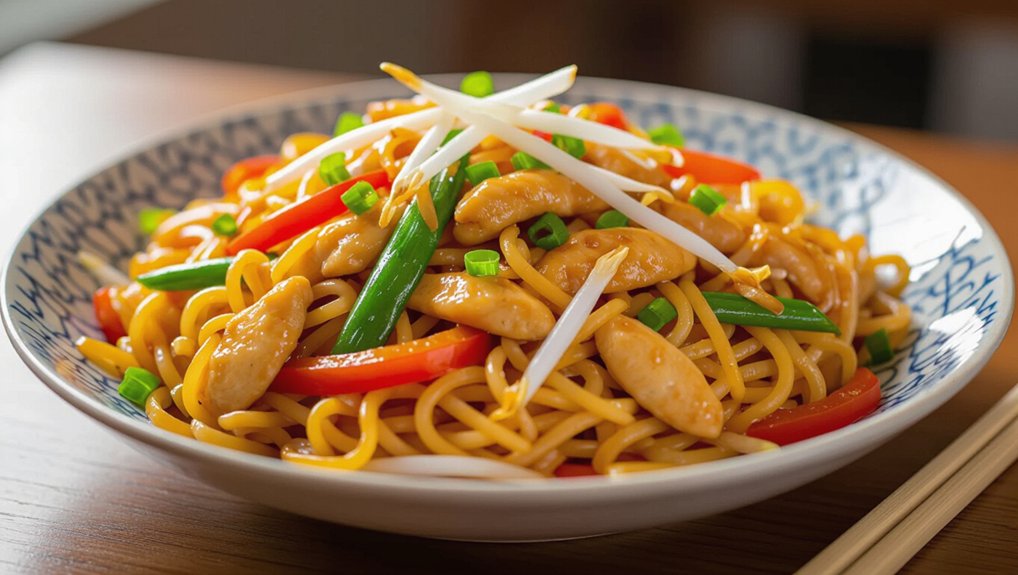
When you think about comfort food, Chicken Chow Mein often comes to mind. It’s a dish that combines tender chicken, vibrant vegetables, and savory noodles. You’ll want to start with marinating the chicken to pack in flavor before stir-frying everything together. But there are a few key techniques and common pitfalls to avoid that can make or break your dish. Let’s explore how to achieve that perfect balance and texture.
What Is Chow Mein?
Chow Mein is a popular Chinese dish that features stir-fried noodles, vegetables, and often protein like chicken, beef, or shrimp. Its origins trace back to Chinese immigrants in America, who adapted traditional recipes to local tastes.
You’ll find two main styles: crispy and soft. Crispy chow mein has fried noodles that add a delightful crunch, while soft chow mein uses softer noodles for a tender bite.
The dish typically includes a mix of colorful vegetables, such as bell peppers, carrots, and bean sprouts, enhancing both flavor and nutrition. Chow Mein is versatile, allowing you to customize it with your favorite ingredients.
Whether you’re enjoying it at a restaurant or making it at home, it’s a satisfying meal packed with flavor.
Essential Noodles and Vegetables
When you’re making Chicken Chow Mein, the right noodles and veggies are crucial for that authentic taste.
Here are three essentials you can’t skip:
- Chow mein noodles
- Fresh bean sprouts
- Crisp bell peppers
These ingredients will elevate your dish and keep it flavorful!
Key Noodles and Proteins
To create a delicious chicken chow mein, you’ll need to focus on the right noodles and proteins that bring the dish to life.
Start with the noodles; egg noodles are a classic choice, offering a rich flavor and chewy texture. For proteins, chicken is the star, but you can enhance your dish with additional options.
Here are the key components to consider:
- Egg Noodles: They absorb flavors well and provide that signature chow mein texture.
- Chicken Breast: Tender and juicy, it’s easy to cook and pairs perfectly with the noodles.
- Optional Proteins: Consider adding shrimp or tofu for an extra layer of flavor and variety.
Choosing the right noodles and proteins sets the foundation for your chow mein masterpiece!
Flavorful Sauce Enhancements
A well-crafted sauce can elevate your chicken chow mein from good to unforgettable. To achieve that perfect balance of flavors, consider these key enhancements:
- Soy Sauce: Use a combination of light and dark soy sauce for depth and richness.
- Oyster Sauce: This adds a savory umami kick that complements the chicken beautifully.
- Sesame Oil: A drizzle at the end gives a nutty aroma that ties everything together.
Mix these sauces in a bowl, adjusting to your taste.
Don’t forget to add a pinch of sugar or a splash of vinegar for balance.
This flavorful sauce won’t only coat your noodles and vegetables but also unify all the ingredients, making every bite a delight!
Detailed Cooking Instructions
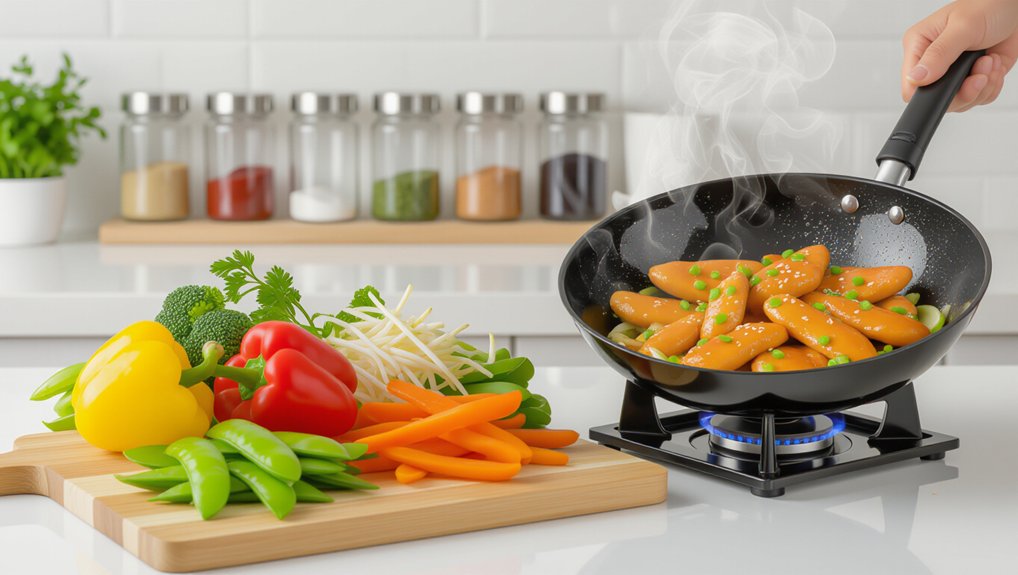
Now that you’ve gathered your ingredients, it’s time to chop and marinate the chicken to enhance its flavor.
Next, you’ll heat your wok and layer the ingredients for that perfect stir-fry.
Don’t forget to finish it off with a sprinkle of sesame seeds for added crunch!
Ingredient Chopping and Marinating
Begin by gathering all your ingredients—fresh vegetables, chicken, and seasonings—before diving into the chopping and marinating process. This step is crucial for a flavorful Chicken Chow Mein.
- Chop your vegetables: Slice bell peppers, carrots, and green onions into bite-sized pieces. Aim for uniform sizes for even cooking.
- Prepare the chicken: Cut the chicken into thin strips, ensuring they’ll cook quickly and absorb the marinade well.
- Marinate the chicken: Combine soy sauce, garlic, and ginger in a bowl, then add the chicken. Let it marinate for at least 15 minutes to enhance the flavor.
With everything prepped, you’re ready to move on to cooking, ensuring your Chow Mein will be delicious and satisfying!
Wok Heating and Ingredient Layering
Heat your wok over high heat until it’s shimmering, creating the perfect environment for a quick stir-fry.
Once heated, add your oil and swirl it around to coat the surface.
To achieve the best flavor and texture, layer your ingredients thoughtfully:
- Protein First: Start with your marinated chicken, cooking it until golden brown. This ensures it stays juicy and flavorful.
- Aromatics Next: Add garlic and ginger, stirring for about 30 seconds to unleash their aroma.
- Veggies Last: Toss in your vegetables, like bell peppers and bok choy, and stir-fry just until tender-crisp.
This method keeps everything vibrant and fresh, making your chicken chow mein a delightful dish.
Enjoy the sizzle!
Garnish With Sesame Seeds
Once your chicken chow mein is beautifully stir-fried and ready to serve, garnishing it with sesame seeds will elevate the dish’s flavor and presentation.
Here’s how to do it:
- Choose the Right Seeds: Use toasted sesame seeds for a nutty flavor and added crunch. You can find these in most grocery stores.
- Timing is Key: Sprinkle the sesame seeds just before serving. This keeps them crunchy and vibrant.
- Don’t Overdo It: A light dusting goes a long way. Too many seeds can overwhelm the dish’s delicate flavors.
With these simple steps, your chicken chow mein won’t only taste amazing but also look incredibly inviting.
Enjoy your delicious creation!
Ingredient List and Measurements
Delicious Chicken Chow Mein
A flavorful stir-fried dish that will warm your heart and satisfy your cravings.
Ingredients
- 1 pound boneless chicken breast, sliced thin
- 2 cups fresh chow mein noodles
- 1 cup bean sprouts
- 1 cup chopped cabbage
- 1 cup sliced bell peppers
- 1/2 cup sliced green onions
- 3 tablespoons soy sauce
- 1 tablespoon oyster sauce
- 1 teaspoon sesame oil
- 2 cloves minced garlic
- A pinch of salt
- Vegetable oil for stir-frying
Instructions
- Heat vegetable oil in a large pan over medium-high heat.
- Add the minced garlic and stir-fry for about 30 seconds.
- Introduce the sliced chicken breast and cook until no longer pink.
- Add the chopped cabbage, bell peppers, and bean sprouts; stir-fry for 3-4 minutes.
- In a small bowl, mix soy sauce, oyster sauce, and sesame oil; pour over the chicken and vegetables.
- Stir in chow mein noodles and green onions; toss everything together until well combined.
- Season with a pinch of salt, if desired, and serve hot.
Use High Heat Consistently
Using high heat consistently is key to perfecting your chicken chow mein.
It helps achieve three crucial outcomes:
- Optimal cooking temperature for meat.
- Quick vegetable searing for freshness.
- Noodle texture preservation to avoid mushiness.
Mastering these points will elevate your dish!
Optimal Cooking Temperature
Achieving the perfect chicken chow mein hinges on maintaining high heat throughout the cooking process. This isn’t just about speed; it’s crucial for flavor and texture. When you crank up the heat, your chicken sears beautifully, locking in juices and creating that sought-after caramelization.
It’s also vital for stir-frying the noodles, ensuring they get that delightful char without becoming mushy.
Use a wok or a heavy skillet to retain heat effectively. Preheat your pan until it’s smoking, then add your oil and chicken.
Keep things moving quickly; this isn’t a slow-cook dish. By consistently using high heat, you’ll create a vibrant, delicious chow mein that’s both comforting and satisfying.
Embrace the heat, and your dish will shine!
Quick Vegetable Searing
High heat doesn’t just benefit the chicken; it’s equally important for searing your vegetables. When you crank up the heat, you create a quick, flavorful char that locks in nutrients and enhances texture.
Start by prepping your veggies—think bell peppers, broccoli, and snap peas. Cut them into uniform pieces to ensure even cooking.
Once your oil is hot and shimmering, toss in the vegetables and don’t overcrowd the pan; this prevents steaming. Stir-fry them for just a couple of minutes, keeping an eye on that vibrant color and crispness.
You want them tender but still crunchy. This quick searing adds a delightful contrast to your chow mein, making every bite a burst of flavor and freshness.
Noodle Texture Preservation
To preserve the perfect texture of your noodles, maintaining high heat throughout the cooking process is essential.
Start by boiling your noodles until they’re just al dente; you want them firm enough to hold up in the stir-fry. Once drained, set them aside while you heat your wok or pan.
When you’re ready, add oil and ensure it’s shimmering before tossing in your noodles. The high heat quickly sears the noodles, giving them a slight crispiness while keeping the inside tender.
Stir-fry continuously, allowing the noodles to absorb flavors without getting mushy. Remember, the goal is to keep that delightful bite.
With consistent high heat, you’ll achieve the ideal texture that makes your chicken chow mein irresistible.
Caloric Content per Serving
Ever wondered how many calories are packed into a serving of chicken chow mein? Typically, a serving contains around 300 to 400 calories, depending on the ingredients and portion size. It’s a satisfying meal, but if you’re watching your calorie intake, it’s good to know what you’re eating.
Here’s a quick breakdown of the caloric content:
| Ingredient | Calories per Serving |
|---|---|
| Chicken (3 oz) | 140 |
| Chow Mein Noodles | 200 |
| Vegetables (1 cup) | 50 |
| Sauce (2 tbsp) | 50 |
Keep in mind that adding extras like fried noodles or sauces can increase the calorie count significantly. Enjoy your chow mein, but be mindful of those calories!
Overcrowding the Wok
When you overcrowd the wok, you risk ruining the texture and flavor of your chicken chow mein. Cooking in a cramped space creates steam instead of that desired stir-fry sizzle.
Here are three key reasons to avoid overcrowding:
- Uneven Cooking: Ingredients won’t cook uniformly, leading to some pieces being overcooked while others remain raw.
- Loss of Flavor: The distinct flavors of your sauces and seasonings get diluted when there’s too much food in the pan.
- Soggy Texture: Instead of crispy veggies and tender chicken, you’ll end up with a mushy mix that lacks the satisfying crunch.
To achieve that perfect chow mein, cook in smaller batches and savor every bite!
Add Crispy Wonton Strips
To elevate your chicken chow mein, add crispy wonton strips for that perfect crunch.
You’ll want to toss in fresh bean sprouts and sautéed bok choy to balance the textures and flavors.
These ingredients will take your dish from good to great!
Add Fresh Bean Sprouts
Add fresh bean sprouts to your chicken chow mein for a delightful crunch and vibrant flavor.
These little gems not only enhance the dish’s texture but also provide essential nutrients. Here’s why you should add them:
- Crisp Texture: Bean sprouts add a satisfying crunch that contrasts beautifully with tender chicken and soft noodles.
- Fresh Flavor: Their mild, slightly nutty taste brightens up your chow mein, making each bite more enjoyable.
- Nutritional Boost: Packed with vitamins and minerals, bean sprouts contribute to your overall health while keeping your meal light.
Simply toss them in at the end of cooking to maintain their freshness.
You’ll love how they elevate your chicken chow mein to the next level!
Add Sautéed Bok Choy
Sautéed bok choy brings a vibrant touch to your chicken chow mein, enhancing both flavor and nutrition. This leafy green not only adds color but also offers a satisfying crunch. Here’s why you should include it:
- Nutrient-Rich: Bok choy is packed with vitamins A, C, and K, boosting your meal’s health benefits.
- Flavor Balance: Its mild, slightly sweet taste complements the savory chicken and noodles, creating a harmonious dish.
- Texture Variety: The crispness of bok choy contrasts wonderfully with the tender chicken and soft noodles, adding depth to every bite.
To sauté, cook it briefly in a hot pan with a bit of oil until just tender. Incorporating bok choy makes your chow mein not just a meal but a delightful experience!
Common Cooking Mistakes
When making chicken chow mein, it’s easy to make some common mistakes.
Overcooking the noodles, choosing the wrong vegetables, and not balancing your seasonings can really affect the dish.
Let’s explore how to avoid these pitfalls for a perfect chow mein every time.
Overcooking The Noodles
Although it might seem tempting to cook noodles until they’re perfectly soft, overcooking them can ruin your chicken chow mein. When noodles sit in boiling water too long, they become mushy, losing that delightful texture you crave.
Instead, aim for al dente—just firm enough to hold their shape. To achieve this, follow the package instructions closely, and taste the noodles a minute or two before the time is up.
Once they’re ready, drain them immediately and rinse under cold water to stop the cooking process. This simple step helps maintain their integrity, allowing them to soak up the savory flavors of your chow mein sauce without turning into a sticky mess.
Enjoy that perfect bite!
Wrong Vegetable Choices
Choosing the right vegetables can make or break your chicken chow mein. If you pick the wrong ones, your dish may lack flavor and texture. Avoid starchy vegetables like potatoes or corn, as they can overwhelm the dish. Instead, opt for classic choices like bell peppers, carrots, and snow peas.
These not only add crunch but also vibrant colors that enhance presentation. Don’t forget about aromatics like garlic and green onions—they elevate the overall taste.
Also, steer clear of overly watery vegetables like zucchini, which can make your chow mein soggy. By selecting the right mix, you’ll create a balanced dish that complements the chicken and noodles, ensuring a delicious, satisfying meal.
Insufficient Seasoning Balance
One of the biggest missteps in making chicken chow mein is failing to achieve a proper seasoning balance. If you under-season, your dish can taste bland and flat.
Start with soy sauce, but don’t stop there—add oyster sauce for depth and a hint of sweetness. You might also consider a splash of sesame oil for richness.
Don’t forget salt and pepper; they’re essential in enhancing the flavors. Taste as you go, adjusting to your preference.
Fresh ingredients like ginger and garlic can elevate your chow mein, but they need to shine through the seasoning. If you mix everything but forget to balance these flavors, your chow mein won’t deliver that comforting punch.
Balance Flavors for Harmony
To create a delicious chicken chow mein, balancing flavors is essential for achieving harmony in every bite. Start with a savory base, using soy sauce for umami depth.
Then, add a splash of rice vinegar to brighten the dish. Don’t forget to incorporate garlic and ginger; they’ll elevate your flavors significantly.
Next, consider sweetness. A touch of sugar or hoisin sauce can round out the saltiness. For heat, a pinch of red pepper flakes or a drizzle of chili oil can add an exciting kick.
Finally, include fresh vegetables like bell peppers and bok choy, which not only contribute flavor but also texture. By harmonizing these elements, your chow mein becomes a satisfying and well-rounded meal. Enjoy!
Frequently Asked Questions
Can I Use Gluten-Free Noodles for Chow Mein?
Yes, you can use gluten-free noodles for chow mein. Just ensure they’re cooked according to package instructions. They’ll provide a tasty and satisfying alternative, allowing you to enjoy the dish without gluten.
How Do I Store Leftover Chicken Chow Mein?
Store leftover chicken chow mein in an airtight container in the fridge. It’ll stay fresh for up to three days. When you’re ready to eat, just reheat it on the stove or in the microwave.
What Proteins Can I Substitute for Chicken?
You can substitute chicken with beef, shrimp, tofu, or pork. Each option brings a unique flavor and texture, so feel free to experiment based on your preferences and what you have on hand. Enjoy!
Is Chow Mein Suitable for Meal Prep?
Yes, chow mein’s great for meal prep! You can easily store it in the fridge for a few days. Just reheat it when you’re ready, and you’ll enjoy a delicious, convenient meal anytime.
Can I Make Chow Mein in Advance?
Yes, you can make chow mein in advance. Just cook the noodles and veggies, store them separately, and combine when you’re ready to eat. This way, you’ll keep everything fresh and flavorful for later.
Conclusion
Now that you know how to make Chicken Chow Mein Comfort, it’s time to savor the deliciousness you’ve created! Remember to keep your ingredients fresh and vibrant, and don’t be afraid to adjust flavors to suit your taste. With a bit of practice, you’ll master this dish and impress your family and friends. So grab that wok, get cooking, and enjoy every bite of your homemade chow mein! Happy cooking!