
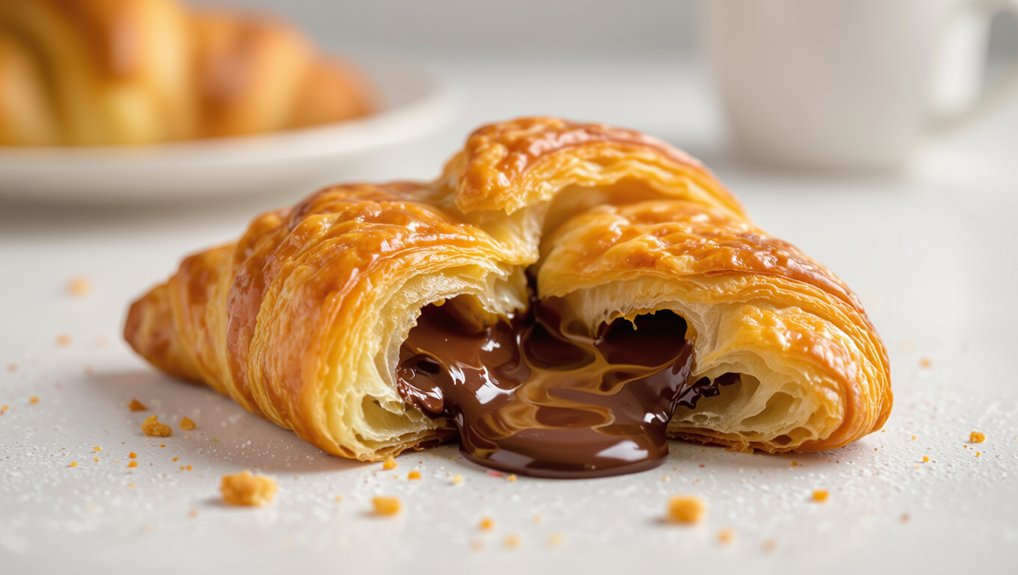
If you want to make buttery chocolate croissants with flaky layers and a molten dark chocolate core, you’ll need to master laminated dough. This technique is essential for achieving those signature layers that make croissants truly special. You’ll also discover the importance of high-quality ingredients and precise folding methods. As you prepare, remember that every step counts. Curious about the best practices to ensure your croissants rise to perfection? Let’s explore further.
What Is Laminated Dough?
Laminated dough is the secret behind flaky, buttery pastries like chocolate croissants. This technique involves layering dough and butter, creating a delicate structure that puffs up when baked.
You start by rolling out a block of cold butter and encasing it in dough. Then, you fold and roll it multiple times, forming layers. Each fold traps air, which expands in the oven, giving you those irresistible layers.
The key is keeping everything cold and working quickly to prevent the butter from melting.
When you slice into a freshly baked croissant, you’ll notice the beautiful, flaky texture that’s a direct result of this labor-intensive process.
Mastering laminated dough is essential for achieving that perfect pastry you crave.
Essential Baking Flour
When you’re making chocolate croissants, the right flour is crucial for achieving that perfect texture. Choosing the best baking flour not only supports the structure but also enhances the flavor of your pastries.
Let’s explore some key components that can help you succeed in your baking journey.
- Bread flour for strength
- All-purpose flour for versatility
- Cake flour for tenderness
- Whole wheat flour for nuttiness
- Pastry flour for flakiness
Key Components for Success
To achieve perfectly flaky chocolate croissants, you need to start with the right flour. Choosing a high-quality flour is crucial for creating those delightful layers.
Look for flour that has a higher protein content; it helps develop gluten, giving your croissants structure and chewiness.
Here are some key points to consider:
- All-Purpose Flour: Versatile and commonly used for croissants.
- Bread Flour: Higher protein content for a chewier texture.
- Pastry Flour: Lower protein levels for a more tender crumb.
- Organic Options: Free from additives for a cleaner taste.
- Freshness: Always check the expiration date to ensure peak quality.
With the right flour, you’re one step closer to croissant perfection!
Flavor Enhancements
Once you’ve selected the right flour, enhancing the flavor of your chocolate croissants becomes the next exciting step.
You can elevate your pastries by incorporating a few key ingredients that complement the rich chocolate and buttery layers. Here are some suggestions to amp up the flavor:
- Vanilla Extract: A splash adds warmth and depth.
- Sea Salt: A pinch enhances sweetness and balances flavors.
- Cinnamon: A subtle hint of spice can elevate the profile.
- Almond Extract: This adds a unique nutty undertone.
- Citrus Zest: A touch of lemon or orange zest brightens the overall taste.
Experimenting with these enhancements will make your chocolate croissants truly unforgettable!
Layering Dough Technique
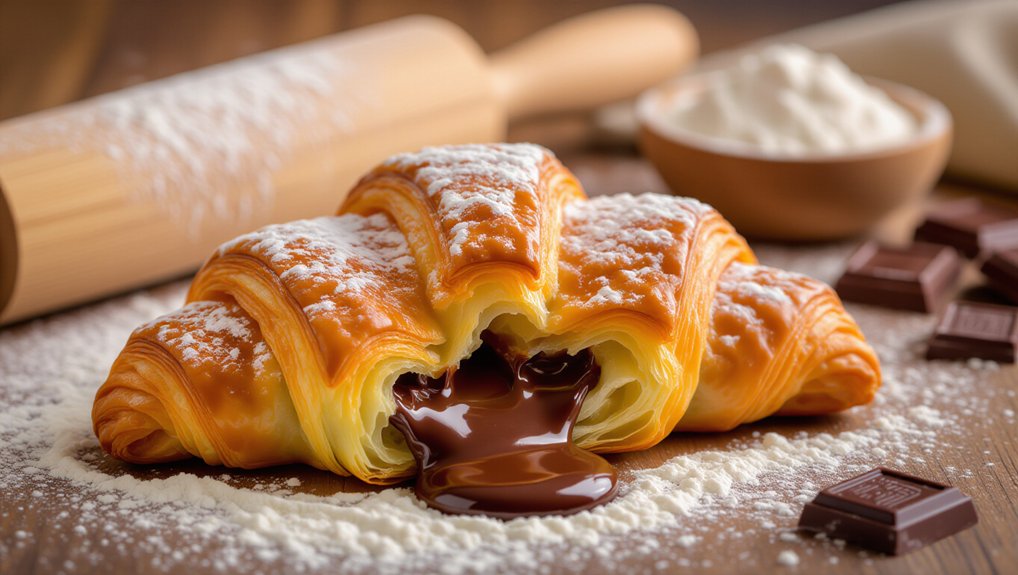
When you layer the dough for chocolate croissants, every step counts for achieving that perfect flaky texture.
Chilling the dough properly and baking at precise temperatures are key to success.
Plus, a touch of elegant chocolate drizzle can take your croissants to the next level.
Dough Chilling for Optimal Texture
Chilling the dough is crucial for achieving that perfect flaky texture in your chocolate croissants. It allows the butter to firm up, ensuring the layers stay distinct when baked.
Here are some tips for effective dough chilling:
- Chill Between Layers: After each fold, refrigerate the dough for at least 30 minutes.
- Use Plastic Wrap: Wrap the dough tightly to prevent it from drying out.
- Check Temperature: The dough should feel cold but pliable when you’re ready to roll it out.
- Keep Ingredients Cold: Ensure your butter and water are chilled before mixing.
- Don’t Rush: Patience is key; skipping chilling steps can lead to a dense croissant.
Baking at Precise Temperatures
To achieve that golden, flaky exterior on your chocolate croissants, baking at precise temperatures is essential. The right temperature ensures your layers rise beautifully and your chocolate melts perfectly at the core.
Here are some tips to help you nail it:
- Preheat your oven fully; don’t skip this step.
- Bake at a high temperature (around 400°F) to create steam, which helps puff the layers.
- Keep an eye on the croissants; they can go from golden to burnt quickly.
- Use an oven thermometer to check accuracy; many ovens can be off.
- Rotate the baking sheet halfway through for even baking.
Following these guidelines will elevate your croissant game to a whole new level! Enjoy the process!
Elegant Chocolate Drizzle
Achieving that perfect flaky texture isn’t the only key to a delicious chocolate croissant; the layering technique plays a significant role, too.
By incorporating chocolate into the dough layers, you’ll create an elegant drizzle that enhances both flavor and presentation.
Here’s how to master this technique:
- Chill your dough: Keep the butter cold for optimal layering.
- Roll and fold: Use the classic lamination method to create thin layers.
- Add chocolate: Place dark chocolate pieces between the layers for a rich core.
- Brush with egg wash: This gives your croissants a beautiful golden finish.
- Drizzle with melted chocolate: Once baked, add a glossy touch to elevate your croissants.
Follow these steps, and you’ll impress everyone with your elegant creations!
Ingredient Breakdown for Croissants
Delicious Chocolate Croissants
Indulge in the buttery, flaky goodness of homemade chocolate croissants, filled with rich dark chocolate that melts in your mouth.
Ingredients:
- 4 cups all-purpose flour
- 1/4 cup sugar
- 2 1/4 tsp yeast
- 1 tsp salt
- 1 cup whole milk
- 1 1/2 cups high-quality unsalted butter
- 1 cup dark chocolate, chopped
Instructions:
- In a bowl, combine flour, sugar, yeast, and salt.
- Warm the milk and mix it into the dry ingredients until a dough forms.
- Knead the dough for about 5 minutes until smooth.
- Let the dough rise in a warm spot for about 1 hour, or until doubled in size.
- Roll out the dough and incorporate the butter, folding it to create layers.
- Cut the dough into triangles, place chocolate pieces at the base, and roll them up.
- Let the rolled croissants rise again for 30 minutes.
- Bake at 400°F (200°C) for 15-20 minutes until golden brown.
Use Cold Butter Cubes
Using cold butter cubes is crucial for achieving the perfect flaky texture in your chocolate croissants. Keeping the butter chilled prevents it from blending too much with the dough, which is key to creating those delightful layers.
Let’s explore how to properly chill your butter and the impact it has on your croissants’ flakiness.
- Importance of cold butter for texture
- Techniques for chilling butter effectively
- How butter temperature affects flakiness
- Best practices for incorporating butter
- Tips for storing butter before baking
Importance Of Cold Butter
When you incorporate cold butter cubes into your dough, you ensure a flaky, tender texture in your chocolate croissants. The key here is temperature; cold butter creates steam when it melts during baking, which forms those irresistible layers.
If the butter’s too warm, it blends into the dough instead of staying in distinct pieces, leading to a dense result. You want those pockets of butter to work their magic, creating airiness and lift.
Plus, using cold butter helps maintain the structure of your dough, making it easier to roll out. So, always keep your butter chilled until you’re ready to use it.
This small detail can make a huge difference in the final outcome of your delicious croissants.
Techniques For Proper Chilling
To achieve perfectly flaky chocolate croissants, proper chilling techniques are essential. Start by using cold butter cubes; this keeps the butter solid and helps create those desirable layers.
Cut your butter into small cubes and freeze them for about 15 minutes before incorporating them into your dough. When mixing, handle the dough as little as possible to maintain that chill.
If you notice the butter starting to soften, pop the dough back in the fridge for a quick chill. After rolling out your dough, give it another rest in the fridge for at least 30 minutes before shaping the croissants.
This helps maintain the cold temperature, ensuring you get those stunning, flaky layers.
Effects On Flakiness
Cold butter cubes play a vital role in achieving the flakiness you desire in chocolate croissants. When you incorporate cold butter into your dough, it creates steam as the butter melts during baking. This steam helps separate the layers of dough, resulting in that beautiful, flaky texture.
If your butter’s too warm, it’ll blend too smoothly into the dough, preventing those distinct layers from forming.
To maximize flakiness, you should cube the butter and keep it chilled until you’re ready to use it. As you fold and roll the dough, aim to maintain that cold temperature.
This simple step makes all the difference, allowing you to enjoy croissants that are irresistibly flaky and deliciously buttery.
Caloric Content per Serving
A single chocolate croissant typically contains around 300 to 400 calories, depending on its size and the ingredients used. While indulging in this flaky treat, it’s good to be aware of its caloric content. Here’s a quick breakdown for better insight:
| Ingredient | Calories (per serving) | Notes |
|---|---|---|
| Croissant (plain) | 250 | Base pastry |
| Dark chocolate | 50 | Rich and melted center |
| Butter | 100 | Adds richness |
| Sugar | 20 | Sweetness factor |
| Total (approximate) | 420 | Varies by ingredients |
Keep this in mind while enjoying your chocolate croissants, and you can make informed choices about your indulgences!
Overworking the Dough
While making chocolate croissants, it’s crucial to avoid overworking the dough, as this can lead to a tough texture. To achieve that perfect flaky layer, you need to handle the dough gently.
Here are some tips to keep in mind:
- Be gentle: Use light pressure when rolling out the dough.
- Chill frequently: Rest the dough in the fridge to maintain its temperature.
- Limit kneading: Only knead enough to combine ingredients, then stop.
- Watch the time: Don’t spend too long rolling; aim for efficiency.
- Listen to the dough: If it feels elastic, give it a break.
Fruit-filled Croissant Options
If you’re looking to switch things up, fruit-filled croissants are a delicious option.
You can try a nutty almond filling for a rich taste or a cinnamon sugar swirl for a sweet twist.
Both choices add a fruity flair that elevates your pastry game!
Nutty Almond Filling Option
For a delightful twist on classic chocolate croissants, consider adding a nutty almond filling that elevates the experience. This filling not only complements the chocolate but also adds a rich, satisfying crunch.
You’ll love how the flavors meld together, creating a perfect balance. Here’s how to make it:
- Blanched almonds: Finely chop or grind them for a smooth texture.
- Powdered sugar: Sweeten the filling without the graininess of granulated sugar.
- Almond extract: A few drops enhance the almond flavor.
- Butter: Use softened butter to create a creamy consistency.
- A pinch of salt: This will elevate the overall taste, balancing the sweetness.
With these ingredients, your croissants will be a unique treat that everyone will adore!
Cinnamon Sugar Swirl Filling
Cinnamon sugar swirl filling transforms your chocolate croissants into a delightful treat that’s hard to resist. This sweet addition complements the rich chocolate perfectly, adding warmth and flavor.
Here’s how to create that irresistible swirl:
- Mix together sugar, cinnamon, and a pinch of salt.
- Spread softened butter over the rolled-out dough.
- Evenly sprinkle the cinnamon sugar mix on top.
- Roll the dough tightly, creating a beautiful swirl.
- Cut and shape the croissants as usual.
When baked, the filling caramelizes, creating a delicious, gooey center that pairs wonderfully with melted chocolate.
Your friends and family will love this twist on the classic recipe, making every bite a heavenly experience! Enjoy your baking adventure!
Croissant Baking Tips
When you’re making chocolate croissants, mastering a few key tips can make all the difference.
Focus on understanding dough lamination, choosing quality ingredients, and controlling temperature carefully.
These factors will elevate your baking game and lead to perfectly flaky results.
Understand Dough Lamination
Understanding dough lamination is crucial for achieving those flaky, layered chocolate croissants you crave. This technique involves folding butter into your dough multiple times, creating layers that puff up beautifully when baked.
Start with a well-chilled butter block and dough; this keeps everything firm and manageable. Roll out your dough into a rectangle, then place the butter in the center. Fold the dough over the butter, sealing the edges to trap it inside.
Roll out again and fold to create layers. Repeat this process several times, resting your dough in the fridge as needed. By the time you’re ready to shape your croissants, those layers will be ready to rise and create that irresistible flaky texture you desire.
Choose Quality Ingredients
To achieve the perfect chocolate croissants, the quality of your ingredients matters just as much as mastering dough lamination.
Start with high-fat butter—look for European-style options with at least 82% butterfat. This will give your croissants that rich, flaky texture you crave.
Next, choose unbleached all-purpose flour, as it provides the right balance of strength and tenderness.
Don’t skimp on the chocolate; opt for high-quality dark chocolate with at least 70% cocoa content for a deep, satisfying flavor.
Fresh yeast is also crucial; it helps your dough rise beautifully.
Lastly, use pure vanilla extract to elevate the taste, avoiding imitation products.
Investing in quality ingredients now will pay off with irresistible croissants later!
Control Temperature Carefully
Controlling temperature is essential for achieving perfectly baked chocolate croissants, as it influences both the dough’s rise and the final texture.
Keep your ingredients, especially butter, chilled to maintain their firmness while incorporating them into the dough. If the butter melts too quickly during lamination, you’ll lose those flaky layers.
When proofing your dough, find a warm, draft-free spot, but don’t let it get too hot; around 75°F (24°C) is ideal. Over-proofing can lead to a collapse during baking.
Finally, preheat your oven properly and use a baking stone or steel for even heat distribution. This ensures a golden, crispy crust while keeping the inside wonderfully soft.
Perfectly Flaky, Buttery Layers
Achieving perfectly flaky, buttery layers in your chocolate croissants is all about mastering the lamination process. Start with a well-chilled dough; temperature control is key.
Roll the dough into a rectangle, then encase cold, pliable butter within it. Fold and roll out the dough multiple times, creating layers that will puff up beautifully in the oven.
Each fold traps air, which expands during baking, resulting in that irresistible flakiness. Don’t rush this step—take your time to ensure even layers.
Rest the dough in the fridge between folds to keep the butter firm. When you finally bake them, the layers will separate, creating a light, airy texture that perfectly complements the melted dark chocolate core.
Enjoy every bite!
Frequently Asked Questions
Can I Use a Different Type of Chocolate for the Filling?
Yes, you can use different types of chocolate for the filling! Milk chocolate, white chocolate, or even flavored varieties will work. Just remember to adjust for sweetness to match your taste preferences. Enjoy experimenting!
How Long Can I Store Unbaked Croissants in the Fridge?
You can store unbaked croissants in the fridge for up to 24 hours. Just make sure to wrap them tightly in plastic wrap to prevent drying out, and let them rise before baking.
What Should I Do if My Dough Is Too Sticky?
If your dough’s too sticky, sprinkle a bit of flour over it and gently fold until it reaches the right consistency. Avoid adding too much flour, though, as it can affect the dough’s texture.
Can I Freeze Baked Croissants for Later Enjoyment?
Yes, you can freeze baked croissants for later enjoyment. Just wrap them tightly in plastic wrap or foil, then place them in an airtight container. When you’re ready, reheat them in the oven for a fresh taste!
What Kitchen Tools Do I Need for Making Croissants?
You’ll need a mixing bowl, rolling pin, sharp knife, baking sheet, parchment paper, and a pastry brush. A thermometer helps monitor dough temperature, ensuring perfect flaky layers. Don’t forget your patience for the process!
Conclusion
Now that you know how to make buttery chocolate croissants, it’s time to put your skills to the test! Remember to take your time with the laminated dough and keep everything chilled for those perfect flaky layers. Don’t hesitate to experiment with different fillings, too! With practice, you’ll master the art of croissant-making and enjoy the irresistible combination of buttery pastry and melted dark chocolate. Happy baking, and savor every delicious bite!