
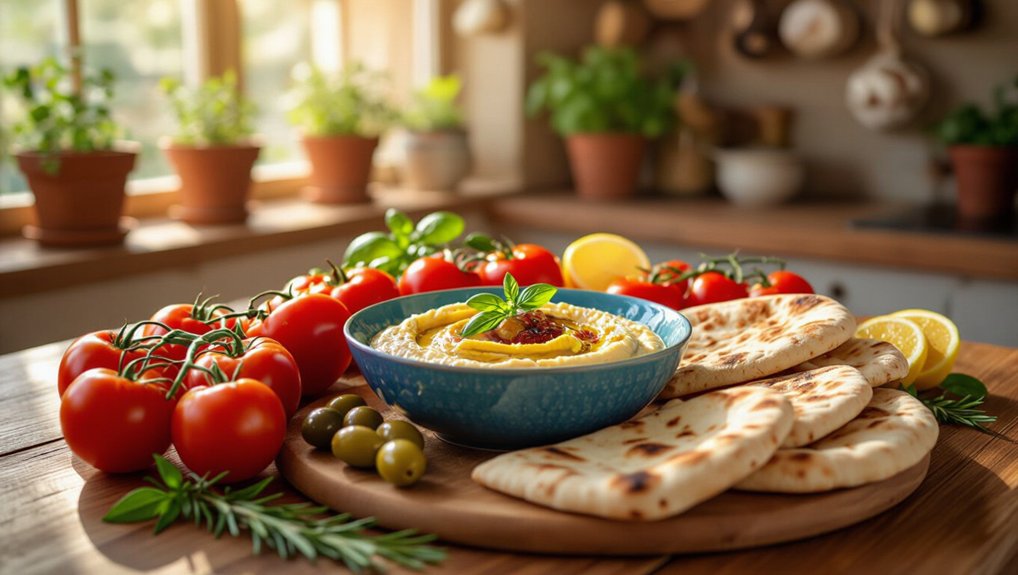
Creating a Mediterranean fresh table is all about embracing vibrant ingredients and simple flavors. You’ll want to gather fresh vegetables, herbs, and proteins that not only look appealing but also taste delightful. Focusing on quality and presentation can elevate your meal. As you set the scene, consider what makes this cuisine unique and how each element contributes to the overall experience. Let’s explore the essential components to bring this vision to life.
What Is Mediterranean Cuisine?
Mediterranean cuisine is a vibrant tapestry of flavors and ingredients that reflects the diverse cultures surrounding the Mediterranean Sea.
When you dive into this culinary world, you’ll find a delightful mix of fresh vegetables, grains, and legumes. Staples like olives, tomatoes, and citrus fruits bring brightness to your dishes.
You might notice that many meals are built around wholesome ingredients, promoting a healthy lifestyle. Seafood plays a significant role, thanks to the sea’s bounty, while meats like lamb and chicken are often grilled or roasted to perfection.
The use of olive oil, both for cooking and dressing, adds richness and depth. Each bite transports you to sun-soaked shores, making every meal an experience worth savoring.
Fresh Herbs and Spices
Fresh herbs and spices are the heartbeat of Mediterranean cuisine, adding vibrant flavors to your dishes.
You’ll want to incorporate these key components to elevate your meals and complement toppings like feta cheese.
Here are some essentials to keep on hand:
- Basil
- Oregano
- Parsley
- Thyme
Key Flavorful Components
While you might think of Mediterranean cuisine as simply sun-kissed produce, the key flavorful components truly lie in the fresh herbs and spices that elevate every dish.
These ingredients not only enhance taste but also bring vibrant aromas to your table. Here are some staples to consider:
- Basil: Adds a sweet, aromatic touch to salads and sauces.
- Oregano: Offers a robust, peppery flavor that’s perfect for marinades.
- Parsley: Brightens up dishes with its fresh, slightly peppery taste.
- Cumin: Introduces a warm, earthy note that complements many savory recipes.
Incorporating these herbs and spices will transform your meals, making them a true celebration of Mediterranean flavors.
Toppings Like Feta Cheese
When building a Mediterranean fresh table, toppings like feta cheese play a pivotal role in enhancing flavors. Feta adds a creamy, tangy element that perfectly complements fresh vegetables and herbs.
To elevate your dish even more, consider incorporating fresh herbs and spices. Here are some great options:
- Oregano: This classic Mediterranean herb adds a warm, earthy flavor.
- Mint: Bright and refreshing, mint brings a unique twist to your toppings.
- Basil: Sweet and aromatic, basil pairs beautifully with feta.
- Red pepper flakes: For a little kick, sprinkle some red pepper flakes on top.
Mix and match these toppings to create a delicious, vibrant Mediterranean experience that’ll impress your guests!
Detailed Cooking Instructions
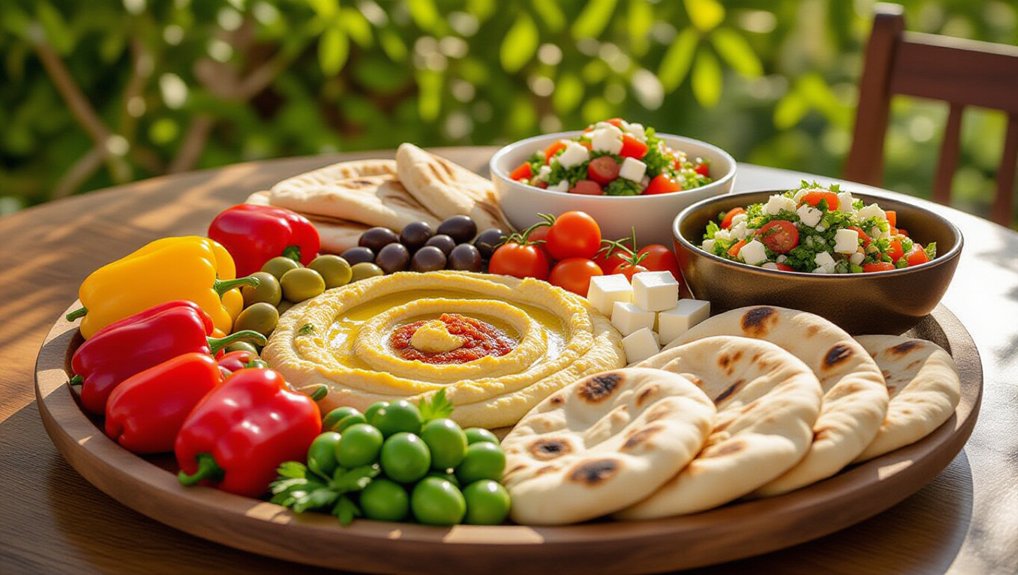
To create a vibrant Mediterranean dish, start by chopping your vegetables finely for an even cook.
Sauté them until they’re tender and fragrant, bringing out their natural flavors.
Finally, don’t forget to add a colorful herb garnish for that extra pop!
Chop Vegetables Finely
Chop your vegetables finely to enhance the flavors in your Mediterranean fresh table. This not only improves the texture but also allows the ingredients to mingle beautifully, creating a harmonious dish.
Here’s how to get it just right:
- Use a sharp knife: A good knife makes the job easier and more precise.
- Cut in uniform sizes: This ensures even cooking and a more appealing presentation.
- Practice proper technique: Hold the knife correctly and use a claw grip with your non-dominant hand to keep your fingers safe.
- Keep the cuts small: Smaller pieces absorb flavors better and create a delightful burst in each bite.
With finely chopped veggies, you’re setting the stage for a vibrant Mediterranean experience!
Sauté Until Tender and Fragrant
With your vegetables finely chopped, it’s time to elevate their flavors through sautéing.
Heat a generous splash of olive oil in a large skillet over medium heat. Once the oil’s shimmering, add your chopped veggies. Cook them for about 5-7 minutes until they’re tender and fragrant.
Keep these tips in mind:
- Stir frequently to ensure even cooking.
- Don’t overcrowd the pan; sauté in batches if necessary.
- Add a pinch of salt to enhance flavors.
- Consider adding garlic or onion for extra aroma.
Once they’re perfectly sautéed, your vegetables will shine with vibrant flavors, ready to complement your Mediterranean fresh table.
Enjoy this step; it’s where the magic begins!
Colorful Herb Garnish
A vibrant herb garnish adds a burst of flavor and color to your Mediterranean fresh table. It’s simple to create a stunning garnish that’ll impress your guests. Here’s how you can do it:
- Choose Fresh Herbs: Opt for basil, parsley, mint, or dill for a fragrant touch.
- Chop or Tear: Chop the herbs finely or tear them by hand to release their essential oils.
- Mix with Olive Oil: Combine the herbs with a drizzle of high-quality olive oil for richness.
- Add Citrus Zest: Grate some lemon or orange zest into the mix for an extra zing.
Sprinkle this colorful concoction over your dishes just before serving. You’ll elevate both the look and taste of your Mediterranean feast!
Ingredient List
Mediterranean Fresh Table
Create a vibrant Mediterranean feast with a delightful array of fresh ingredients.
Ingredients
- Ripe tomatoes
- Cucumbers
- Bell peppers
- Olives
- Artichokes
- Roasted red peppers
- Fresh basil
- Fresh parsley
- Fresh mint
- Grilled chicken, shrimp, or chickpeas
- Feta or goat cheese
- Crusty bread or pita
Instructions
- Gather all the fresh ingredients on a large serving table.
- Slice the tomatoes, cucumbers, and bell peppers into bite-sized pieces.
- Arrange olives, artichokes, and roasted red peppers in small bowls.
- Chop the fresh herbs and sprinkle them over the vegetables.
- Add your choice of grilled chicken, shrimp, or chickpeas for protein.
- Crumble feta or goat cheese over the top for a creamy texture.
- Serve with crusty bread or pita on the side.
Use High-Quality Olive Oil
Using high-quality olive oil is essential for a Mediterranean fresh table. You want to make sure you’ve got the best oil to enhance your dishes.
Here are some key points to consider:
- Choose extra virgin oil for the best flavor.
- Check for freshness by looking at the harvest date.
- Experiment with different flavor profiles for variety.
- Store it properly to maintain its quality.
Choose Extra Virgin Oil
Choosing high-quality extra virgin olive oil is essential for elevating your Mediterranean fresh table. It’s the backbone of your dishes, enhancing flavors and providing health benefits.
Look for oils that are cold-pressed, as this method preserves the rich taste and nutrients. When you pour that golden liquid over your salads or grilled vegetables, you’ll notice the difference.
The robust, fruity notes of premium olive oil can transform even the simplest ingredients into a culinary masterpiece. Don’t settle for standard oil; invest in a bottle that boasts a strong flavor profile.
Your Mediterranean spread deserves the best, and high-quality extra virgin olive oil is a key player in achieving that vibrant, fresh taste.
Check for Freshness
To ensure your Mediterranean fresh table shines, checking the freshness of your olive oil is crucial.
Start by looking at the bottle; it should be dark or opaque to protect the oil from light. Next, check the harvest date on the label. Fresh olive oil will typically be best within 18-24 months of that date.
Don’t be swayed by labels claiming “pure” or “light” oil—those often lack the robust flavor you want. When you open the bottle, take a whiff; a fresh oil should smell vibrant, grassy, or fruity.
Lastly, taste it! A fresh olive oil will have a peppery finish, signaling quality. Prioritizing freshness will elevate your Mediterranean dishes and enhance your culinary experience.
Consider Flavor Profiles
How can you enhance the flavors of your Mediterranean fresh table? Start by using high-quality olive oil. This isn’t just a cooking ingredient; it’s a flavor powerhouse. Choose an extra virgin variety for its rich, fruity notes that elevate vegetables, breads, and dips.
Drizzle it generously over salads or use it as a dipping sauce for crusty bread.
Don’t forget to pair your olive oil with complementary flavors. Think fresh herbs like basil and oregano, tangy lemon juice, or zesty garlic. These additions create a harmonious balance that sings on your palate.
Experiment with different blends, and don’t hesitate to taste as you go. With high-quality olive oil, your Mediterranean fresh table won’t only look vibrant but taste divine!
Caloric Breakdown per Serving
When you prepare a Mediterranean Fresh Table, understanding the caloric breakdown per serving is essential for maintaining a balanced diet. This knowledge helps you enjoy the flavors while keeping your meals nutritious.
Here’s a quick overview of the average calorie content in typical Mediterranean ingredients:
| Ingredient | Calories per Serving |
|---|---|
| Olive oil (1 tbsp) | 119 |
| Feta cheese (1 oz) | 75 |
| Chickpeas (1/2 cup) | 134 |
| Mixed veggies (1 cup) | 50 |
Overcooking the Vegetables
Although it might seem tempting to cook vegetables until they’re completely tender, overcooking can diminish their vibrant flavors and nutritional value. You want to keep that fresh Mediterranean essence alive!
Here are some tips to avoid overcooking:
- Watch the time: Keep an eye on cooking times; most veggies only need a few minutes.
- Use high heat: Sautéing or roasting at a higher temperature helps retain crunchiness.
- Blanch briefly: For a quick cook, blanch vegetables in boiling water and then shock them in ice water to stop the cooking process.
- Choose the right method: Steaming or grilling can keep veggies crisp and flavorful without losing their nutrients.
Add Grilled Shrimp Skewers
To elevate your grilled shrimp skewers, consider adding roasted red peppers for a burst of flavor and color.
A squeeze of lemon right before serving brightens the dish and enhances the shrimp’s natural taste.
These simple additions make your Mediterranean table even more inviting.
Add Roasted Red Peppers
Elevate your Mediterranean fresh table by adding vibrant roasted red peppers.
These colorful additions not only enhance the visual appeal but also bring a smoky, sweet flavor that complements your meal beautifully.
Here’s how to make them shine:
- Slice them thin: This makes them easy to incorporate into salads or as a topping for grilled meats.
- Pair with herbs: Fresh basil or oregano can amplify their flavors.
- Include in dips: Blend them into hummus or tzatziki for a unique twist.
- Serve warm or cold: Roasted red peppers are versatile, fitting perfectly into any dish, whether it’s a warm platter or a chilled salad.
With these tips, your Mediterranean table will be bursting with flavor!
Add a Squeeze of Lemon
Brighten up your Mediterranean fresh table with a squeeze of lemon! This simple addition elevates flavors and adds a refreshing zing, especially when paired with grilled shrimp skewers.
Here’s how lemon enhances your dish:
- Boosts Flavor: A dash of lemon juice highlights the natural sweetness of shrimp.
- Enhances Freshness: The zesty aroma livens up the entire table setting.
- Balances Richness: It cuts through the richness of olive oil and spices, creating harmony.
- Nutritional Punch: Packed with vitamin C, it’s a healthy choice that supports your immune system.
Common Cooking Inquiries
When you’re cooking Mediterranean dishes, knowing the essential ingredients can make all the difference.
You’ll also want to explore some effective cooking techniques and flavor pairing tips to elevate your meals.
Let’s tackle these common inquiries to help you create vibrant, delicious dishes.
Essential Ingredients To Use
To create a Mediterranean fresh table, you’ll want to focus on a few essential ingredients that capture the vibrant flavors of the region.
Start with high-quality olive oil, as it adds richness to your dishes. Fresh herbs like basil, oregano, and parsley are crucial for that aromatic touch.
Don’t forget ripe tomatoes, cucumbers, and bell peppers, which bring color and crunch to your salads. Incorporate feta cheese or olives for a salty kick, and consider using grains like quinoa or couscous for a hearty base.
Lastly, lemon juice offers a zesty brightness that ties everything together.
Cooking Techniques Explained
Mastering Mediterranean cooking techniques can elevate your fresh table to new heights.
Start with grilling, which enhances flavors and adds a delicious smoky touch to vegetables and meats.
Sautéing is another essential technique; it helps to quickly cook ingredients while preserving their textures and colors.
Don’t overlook the importance of marinating—this infuses your dishes with vibrant flavors and tenderizes proteins.
Braising, a slow-cooking method, works wonders for tougher cuts of meat, making them melt-in-your-mouth tender.
Lastly, steaming is a fantastic way to retain nutrients in your vegetables, ensuring they stay vibrant and healthy.
Flavor Pairing Tips
Although Mediterranean cuisine showcases a diverse array of flavors, knowing how to pair them can elevate your dishes significantly.
Start with fresh herbs like basil, oregano, or dill to enhance the natural taste of vegetables and meats. Olive oil is your best friend; it complements almost everything while adding richness.
For acidity, incorporate lemon juice or vinegar, which brightens flavors and balances richness. When it comes to cheeses, feta and goat cheese pair beautifully with salads and roasted veggies.
Don’t forget about nuts—almonds and pine nuts add crunch and depth. Finally, experiment with spices like cumin or paprika for an extra kick.
Trust your palate, and don’t hesitate to mix and match until you find your perfect combination!
Enjoy With Fresh Pita
Fresh pita is the perfect companion for your Mediterranean feast, elevating each bite with its warm, fluffy texture. You can enjoy it in countless ways—use it to scoop up creamy hummus or savory tzatziki.
When you grill or warm the pita, it becomes even more irresistible, creating a delightful contrast with chilled dips and vibrant salads.
Try wrapping fresh veggies, grilled meats, or roasted eggplant in pita for a satisfying meal. You’ll love how it soaks up flavors, making every bite a taste sensation.
Don’t forget to sprinkle some herbs or spices to enhance your experience. With fresh pita, you’re not just eating; you’re creating a memorable gathering around your Mediterranean table. Enjoy the simplicity and joy it brings!
Frequently Asked Questions
What Are the Health Benefits of Mediterranean Cuisine?
Mediterranean cuisine boosts heart health, supports weight management, and enhances brain function. You’ll enjoy fresh fruits, vegetables, healthy fats, and whole grains, which provide essential nutrients and antioxidants, promoting overall well-being and longevity.
Can I Substitute Ingredients for Dietary Restrictions?
Yes, you can substitute ingredients for dietary restrictions. Use whole grains instead of pasta, swap dairy with plant-based alternatives, and choose lean proteins. Just ensure the flavors still align with Mediterranean cuisine’s essence.
How Long Can Leftovers Be Stored?
You can store leftovers in the fridge for about three to four days. If you want them to last longer, freeze them for up to three months. Just make sure to seal them properly!
What Beverages Pair Well With Mediterranean Dishes?
You’ll enjoy pairing Mediterranean dishes with crisp white wines like Sauvignon Blanc or refreshing rosé. For non-alcoholic options, try sparkling water with lemon or herbal iced teas to complement those vibrant flavors beautifully.
Are There Vegetarian or Vegan Options Available?
Yes, there are plenty of vegetarian and vegan options available. You’ll find dishes like falafel, hummus, stuffed grape leaves, and plenty of fresh salads that celebrate vibrant flavors and healthy ingredients. Enjoy exploring them!
Conclusion
Creating a Mediterranean fresh table is all about embracing vibrant flavors and communal enjoyment. By using fresh ingredients, high-quality olive oil, and simple cooking techniques, you’ll craft a delightful spread that everyone will love. Don’t forget to add your favorite proteins and enjoy the meal with crusty bread or pita. Celebrate the joy of sharing and savor every bite, making your dining experience both memorable and delicious. Dive into this culinary journey and relish the freshness!