
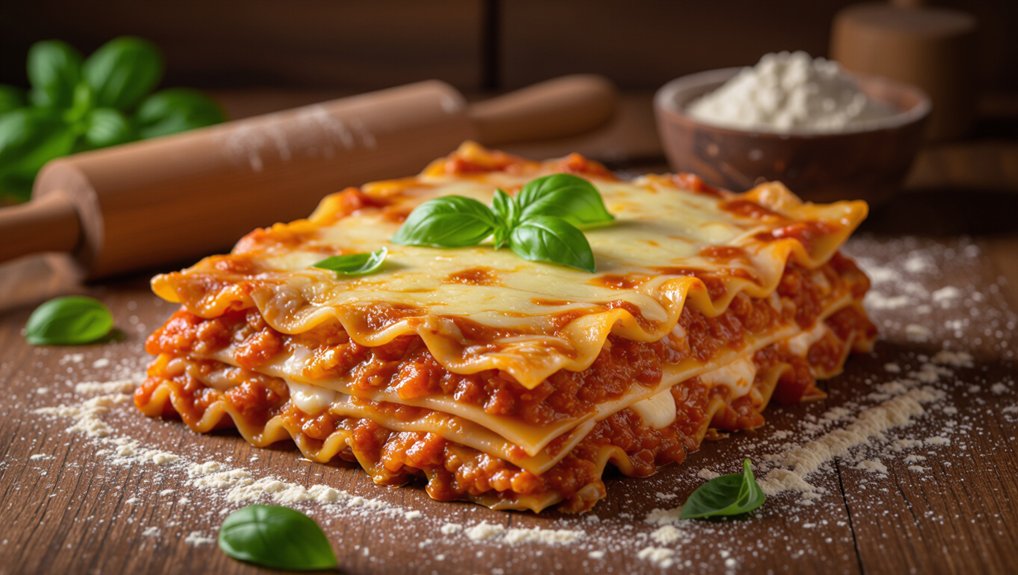
When you’re ready to tackle classic meat lasagna, understanding the layering process is key. You’ll want to balance flavors and textures for the best results. Choosing the right cheeses and knowing how to assemble the dish can make all the difference. Plus, there are a few tips to keep in mind that can elevate your lasagna to a new level. Let’s explore the essential steps to ensure you get it just right.
What Is Lasagna Layering?
When you dive into lasagna layering, you’re creating a delicious structure that holds all the flavors together. Each layer serves a purpose, making sure every bite is satisfying.
Start with a base of sauce to prevent sticking, then add noodles. Alternate between meat, sauce, and cheese, ensuring even distribution. This balance keeps your lasagna juicy, preventing dryness.
Don’t skimp on the layers; building height adds to the overall texture. You can use different types of noodles, but traditional lasagna sheets work best.
As you stack, remember to leave some space for bubbling and melting during baking. By mastering layering, you’ll ensure that each slice is a perfect blend of rich flavors and hearty ingredients, making your lasagna a crowd-pleaser.
Essential Cheese Selection
Choosing the right cheeses is crucial for a mouthwatering meat lasagna.
You’ll want to consider how each cheese complements the flavors and textures of your layers, especially if you’re adding mushrooms or spinach.
Here are some key components to keep in mind:
- Ricotta: Creamy and rich, it adds a velvety layer.
- Mozzarella: Melts beautifully, providing that gooey stretch.
- Parmesan: Offers a sharp, nutty contrast that elevates the dish.
Key Components for Lasagna
A successful lasagna hinges on the right cheese selection, which adds richness and depth to each layer. Choosing a combination of cheeses not only enhances flavor but also contributes to the perfect texture.
Here’s what you should consider:
- Ricotta: Creamy and smooth, it gives a rich base for your layers and balances well with other cheeses.
- Mozzarella: Opt for fresh or low-moisture varieties. It melts beautifully, creating that gooey, stretchy texture everyone loves.
- Parmesan: A sprinkle of this aged cheese adds a salty, nutty flavor that elevates your dish.
Mushroom or Spinach Layers
Incorporating mushroom or spinach layers can elevate your lasagna, adding both flavor and nutritional value.
These ingredients not only enhance the dish but also bring a delightful texture. When choosing your cheese, think about how it complements these layers.
Here are some great suggestions:
- Ricotta: Creamy and mild, it pairs wonderfully with spinach, adding richness.
- Mozzarella: Melty and stretchy, it works well with both mushrooms and spinach for that classic lasagna pull.
- Parmesan: A sprinkle on top adds a nutty finish, enhancing the flavors of the mushrooms or spinach.
Layering Techniques Explained
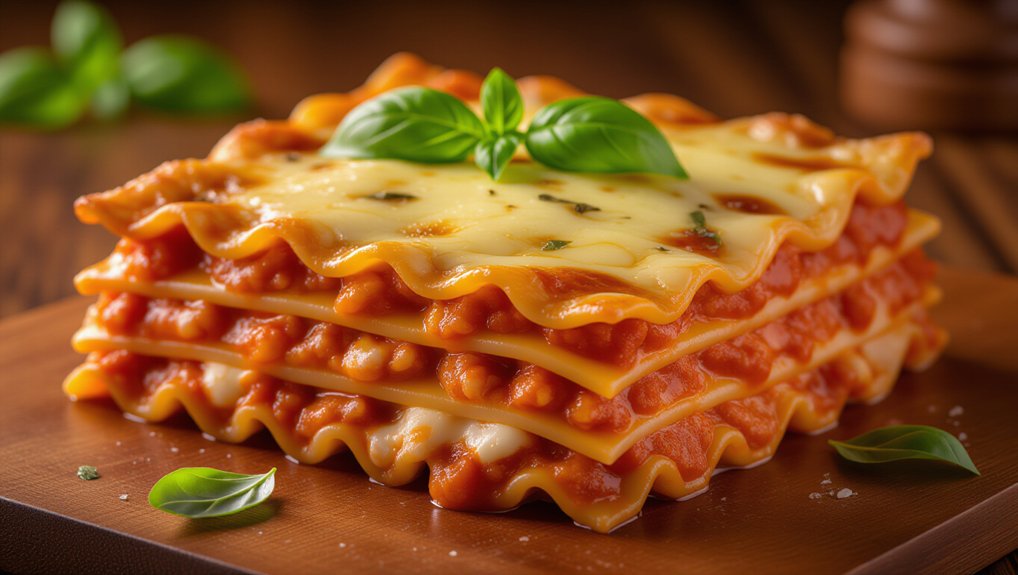
When you’re ready to layer your meat lasagna, focus on how each ingredient fits together for the best flavor.
Make sure your oven’s set to the right temperature to achieve that perfect, bubbly finish.
Finally, don’t forget to garnish with fresh basil for a pop of color and freshness!
Ingredient Assembly Steps
Start by laying down a foundation of rich meat sauce at the bottom of your baking dish. This’ll keep your noodles from sticking.
Next, layer your ingredients thoughtfully to create that delicious depth of flavor. Here’s how to do it:
- Noodles: Place your lasagna noodles flat, ensuring they slightly overlap for full coverage.
- Cheese Mixture: Spread a generous layer of your ricotta and mozzarella blend over the noodles, adding creaminess.
- More Sauce: Top it off with another layer of meat sauce to keep everything moist and flavorful.
Repeat these steps until all your ingredients are used up, finishing with a layer of meat sauce and a sprinkle of cheese on top.
This’ll create a beautiful, bubbling masterpiece!
Oven Temperature Setting
Once your layers are perfectly assembled, it’s time to focus on the oven temperature setting for baking your lasagna. Preheating your oven is crucial to achieving that golden, bubbling perfection.
Here’s what you need to know:
- Set the temperature to 375°F (190°C): This allows the lasagna to cook evenly without burning the top.
- Bake covered for the first 30 minutes: Use aluminum foil to keep moisture in, ensuring the noodles cook properly.
- Uncover and bake for an additional 15-20 minutes: This step helps develop that delicious, crispy top layer.
With the right temperature and timing, you’ll have a lasagna that’s not just tasty but visually stunning too!
Get ready to dig in!
Garnish With Fresh Basil
Garnishing your meat lasagna with fresh basil elevates both its flavor and presentation. A sprinkle of vibrant green basil not only looks appealing but also adds a burst of freshness that complements the rich meat and cheese layers.
Here’s how to make the most of it:
- Choose fresh leaves: Pick basil leaves that are bright and fragrant; they’ll enhance the dish’s aroma.
- Tear, don’t chop: Tearing the leaves by hand releases more oils and flavor, creating a more aromatic experience.
- Add before serving: Sprinkle the basil just before serving to maintain its vibrant color and freshness.
With these simple tips, your lasagna will look and taste like it came straight from an Italian kitchen! Enjoy the compliments!
Ingredient List and Measurements
Delicious Meat Lasagna
A hearty and flavorful lasagna, perfect for gatherings or family dinners.
Ingredients
- 9 lasagna noodles
- 1 pound ground beef
- 1 pound Italian sausage
- 2 cans crushed tomatoes
- 2 cloves minced garlic
- 1 onion, diced
- 15 ounces ricotta cheese
- 1 egg
- 3 cups shredded mozzarella cheese
- 1 cup grated Parmesan cheese
- Salt and pepper to taste
- Your favorite spices
Instructions
- Preheat your oven to 375°F (190°C).
- Cook the lasagna noodles according to package instructions; drain and set aside.
- In a skillet, brown the ground beef and Italian sausage over medium heat. Drain excess fat.
- Add crushed tomatoes, garlic, and onion to the skillet. Simmer for 20 minutes.
- In a bowl, mix ricotta cheese, egg, salt, and pepper.
- In a baking dish, layer 1/3 of the meat sauce, followed by 1/3 of the noodles, and 1/3 of the ricotta mixture. Repeat layers, finishing with meat sauce and mozzarella cheese on top.
- Sprinkle Parmesan cheese over the top layer.
- Cover with foil and bake for 25 minutes. Remove foil and bake for an additional 20 minutes until cheese is bubbly and golden.
- Let it cool for 10 minutes before serving.
Use Fresh Herbs Generously
Using fresh herbs in your meat lasagna can elevate its flavor to a whole new level.
Here’s what you need to keep in mind:
- Choosing the Right Herbs: Basil, oregano, and thyme are fantastic choices.
- Fresh vs. Dried Herbs: Fresh herbs pack more punch, but dried can work in a pinch.
- Herb Pairing Suggestions: Mix and match for a balanced taste that complements your meat.
Choosing the Right Herbs
When crafting a delicious meat lasagna, choosing the right herbs can elevate your dish to new heights. Fresh basil and oregano are classics that bring a vibrant flavor, making your lasagna sing. You’ll want to chop them finely to release their oils and aroma.
If you’re feeling adventurous, don’t hesitate to add a touch of thyme or rosemary for an earthy twist. These herbs complement the richness of the meat and cheese beautifully.
Fresh vs. Dried Herbs
While both fresh and dried herbs have their place in cooking, fresh herbs can truly elevate your meat lasagna. Their vibrant flavors and aromas add a brightness that dried herbs simply can’t match. When you use fresh basil, oregano, or parsley, you’ll notice the difference right away.
Toss them into your sauce or sprinkle them on top just before serving for an extra burst of flavor.
Don’t shy away from being generous—fresh herbs enhance the dish and make it feel more homemade. Plus, they bring a lovely visual appeal that dried herbs lack.
Herb Pairing Suggestions
To create a truly flavorful meat lasagna, consider pairing fresh herbs that complement each other beautifully. Basil and oregano are classic choices; their robust flavors work wonders together.
You can also try adding thyme for an earthy note or rosemary for a piney aroma. Don’t forget about parsley—its freshness brightens the dish.
Use these herbs generously in your sauce and layers, but remember to chop them finely to release their oils and flavors.
If you’re feeling adventurous, a touch of fresh sage can add depth. Just be careful not to overpower the other ingredients.
Ultimately, the right herb combination will elevate your lasagna, making it a crowd-pleaser at any gathering. Enjoy experimenting with your favorites!
Caloric Breakdown per Serving
A typical serving of meat lasagna packs around 400 to 500 calories, depending on the ingredients and portion size. The main contributors to the calorie count include the pasta, meat, cheese, and sauce. Here’s a quick breakdown of the caloric content you might expect per serving:
| Ingredient | Calories (Approx.) | Percentage of Total |
|---|---|---|
| Pasta | 150 | 30% |
| Ground Meat | 200 | 40% |
| Cheese | 100 | 20% |
| Sauce | 50 | 10% |
Knowing this breakdown helps you make informed choices, especially if you’re trying to adjust the recipe for dietary needs or preferences. Enjoying your lasagna is all about balance!
Overcooking the Noodles
Overcooking the noodles can ruin your lasagna experience, turning what should be a delightful dish into a soggy mess.
To get it right, you want your pasta to be al dente, which means it’s cooked but still firm. Here are some tips to keep your noodles perfect:
- Watch the clock: Follow the package instructions closely, and set a timer to avoid distraction.
- Taste test: Don’t hesitate to taste a noodle a minute or two before the suggested cooking time; you want it slightly firm.
- Rinse and cool: After cooking, quickly rinse the noodles in cold water to stop the cooking process and prevent sticking.
Herbed Ricotta Swaps
If you’re looking to shake up your lasagna, consider some herbed ricotta swaps.
Roasted vegetables can add a delicious layer, while zucchini noodles offer a lighter, gluten-free alternative.
Both options keep the dish exciting and flavorful!
Roasted Vegetable Layering Option
While traditional meat layers are a staple in lasagna, incorporating roasted vegetables can elevate your dish and add a burst of flavor. Swapping in roasted veggies not only enhances the taste but also boosts nutrition.
Consider these delicious options for your layers:
- Zucchini: Adds a mild sweetness and a lovely texture.
- Bell Peppers: Bring color and a hint of crunch to each bite.
- Mushrooms: Offer an earthy flavor that complements the ricotta.
To create a balanced lasagna, mix these roasted vegetables with your herbed ricotta. This combo adds depth and richness, making each slice a delightful surprise.
You’ll love how these layers transform your classic recipe into something extraordinary!
Zucchini Noodle Alternative
For a lighter twist on traditional lasagna, try using zucchini noodles instead of pasta. They add a fresh flavor and cut down on carbs.
Plus, when paired with herbed ricotta, you’ll achieve a creamy texture that complements the dish beautifully. Here’s how to enhance your ricotta layer:
- Mix in fresh herbs: Basil, oregano, and parsley brighten up the filling.
- Add a pinch of lemon zest: This brings a refreshing zing that balances the richness.
- Incorporate garlic powder: For an extra depth of flavor, garlic powder works wonders without overpowering.
Using zucchini noodles not only makes your lasagna healthier but also adds a unique twist that everyone will love.
Enjoy your delicious creation!
Common Ingredient Substitutions
When making meat lasagna, you might need to switch things up to fit your dietary needs.
Fortunately, there are plenty of dairy-free alternatives, gluten-free pasta options, and meat substitutes you can consider.
Let’s explore how these substitutions can keep your lasagna delicious and satisfying.
Dairy-Free Alternatives Available
If you’re looking to make a delicious meat lasagna without dairy, you’re in luck; there are plenty of tasty alternatives to traditional ingredients.
For ricotta, try using tofu blended with nutritional yeast and a splash of lemon juice for that creamy texture. Cashew cream is a fantastic substitute for béchamel; just blend soaked cashews with water until smooth.
Instead of mozzarella, consider using vegan cheese made from nuts or soy, which melts beautifully. For a cheesy flavor, sprinkle some nutritional yeast on top.
Don’t forget to check your pasta; many brands offer dairy-free options.
With these substitutions, you can enjoy a rich and satisfying meat lasagna that fits your dietary needs without sacrificing taste!
Gluten-Free Pasta Options
While traditional lasagna often features wheat-based pasta, you can easily create a gluten-free version that’s just as satisfying. Start by choosing gluten-free pasta sheets, which are widely available in grocery stores. Look for options made from rice, corn, or quinoa.
These alternatives cook similarly to regular pasta and hold up well with layers of sauce and cheese.
If you’re feeling adventurous, consider using thinly sliced vegetables like zucchini or eggplant as your pasta. This not only keeps it gluten-free but adds extra flavor and nutrition.
Just remember to salt and drain the veggies to remove excess moisture. With these gluten-free pasta options, you’ll enjoy a delicious lasagna without compromising on taste or texture.
Meat Substitutes To Consider
For those looking to switch things up or accommodate dietary preferences, there are plenty of meat substitutes that can elevate your lasagna without sacrificing flavor.
Ground turkey or chicken can provide a leaner alternative while still delivering a satisfying taste.
If you’re aiming for a plant-based option, try lentils or crumbled tempeh; they add a hearty texture and soak up the sauce beautifully.
Mushrooms are another great choice, offering umami richness that mimics meat.
Additionally, you can use store-bought meatless crumbles for convenience.
Just make sure to season your substitutes well, as they often need a flavor boost.
No matter what you choose, you’ll create a delicious lasagna that everyone can enjoy!
Serve With Garlic Bread
Garlic bread is the perfect companion for your meat lasagna, elevating the meal to a whole new level. Its crispy, buttery texture pairs beautifully with the rich flavors of the lasagna, creating a delightful contrast.
You can easily make it by spreading a mixture of butter, minced garlic, and herbs on slices of French or Italian bread. Pop it in the oven until golden brown, and you’ll have an aromatic side that everyone will love.
As you serve your lasagna, don’t forget to include a few pieces of garlic bread on the plate. It’s not just a side; it’s a delicious way to soak up every last bit of that savory sauce.
Your meal will be unforgettable!
Frequently Asked Questions
Can I Make Lasagna Ahead of Time and Freeze It?
Yes, you can make lasagna ahead of time and freeze it. Just assemble it, cover tightly, and freeze. When you’re ready to eat, thaw and bake it for a delicious meal anytime!
What Type of Meat Is Best for Classic Lasagna?
Ground beef is best for classic lasagna, but you can also mix in ground pork for extra flavor. Using a combination gives your dish depth, while leaner meats like turkey can lighten it up.
How Long Should I Let the Lasagna Rest Before Serving?
You should let the lasagna rest for about 15 to 20 minutes before serving. This allows the layers to set, making it easier to slice and enhancing the flavors. Enjoy your delicious creation!
Can I Use Whole Wheat Noodles Instead of Regular Ones?
Yes, you can absolutely use whole wheat noodles instead of regular ones. They’ll add a nuttier flavor and extra fiber. Just make sure to adjust cooking times slightly, as whole wheat can cook faster. Enjoy!
What’s the Best Way to Store Leftover Lasagna?
To store leftover lasagna, let it cool completely, then cover it tightly with plastic wrap or aluminum foil. You can refrigerate it for up to four days or freeze it for up to three months.
Conclusion
Now that you know how to make classic meat lasagna, you’re ready to impress your family and friends with a delicious, homemade dish. Remember to layer your ingredients thoughtfully and use fresh herbs for that extra flavor. Don’t forget to serve it with garlic bread for the perfect meal. With these tips and techniques, you’ll create a lasagna that’s not just hearty but also comforting. Enjoy every bite of your delightful creation!