
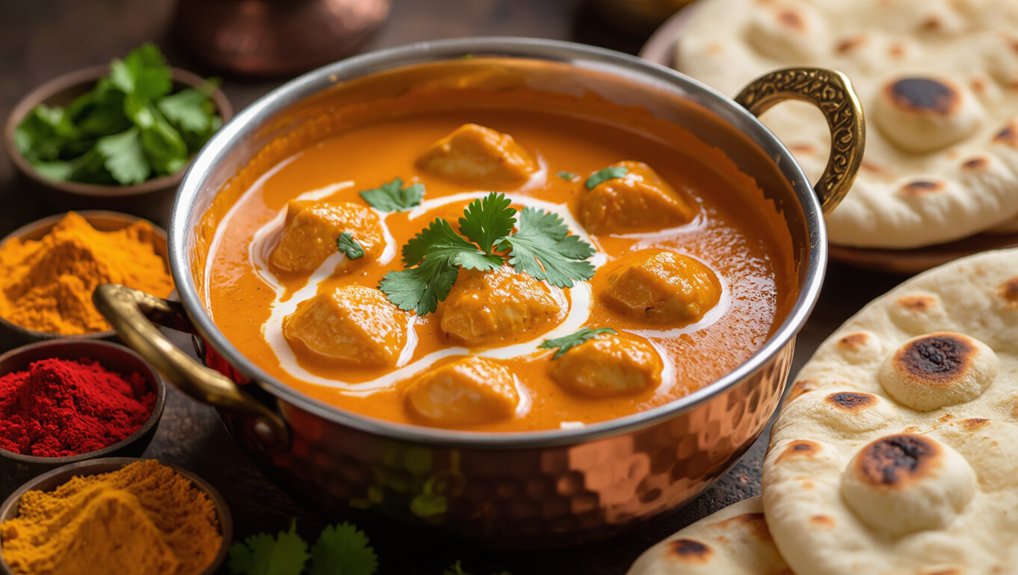
When you’re ready to make Butter Chicken (Murgh Makhani), you’ll find it’s a delightful blend of flavors and textures. You’ll start by marinating the chicken, which sets the stage for a rich, creamy sauce. But there are a few key steps and common pitfalls that can make or break your dish. Understanding these can elevate your cooking game significantly. Let’s explore exactly how to achieve that perfect balance.
What Is Murgh Makhani?
Murgh Makhani, commonly known as butter chicken, is a beloved dish hailing from Indian cuisine. You’ll find it features tender pieces of chicken cooked in a rich, creamy tomato sauce that’s both savory and slightly sweet.
This dish originated in Delhi during the 1950s, when chefs combined leftover chicken with a buttery sauce to create a new culinary delight. The combination of the silky texture and bold flavors makes butter chicken a favorite among many.
Served with naan or rice, it’s perfect for any occasion, whether a family dinner or a festive gathering. As you dive into this dish, you’ll discover why it holds a special place in the hearts of food lovers worldwide.
Essential Spices Blend
To create that rich flavor in your butter chicken, you need the right blend of spices.
These essential ingredients elevate your dish and bring everything together. Here’s what you’ll want to focus on:
- Chicken
- Cream
- Tomatoes
- Spices
- Nuts for extra crunch
Chicken, Cream, Tomatoes, Spices
When crafting the perfect butter chicken, the harmony of chicken, cream, tomatoes, and an essential blend of spices is crucial. Start with tender, marinated chicken, letting it absorb flavors. The cream adds richness, while tomatoes provide a tangy base.
For the essential spice blend, make sure you include:
- Garam masala for warmth
- Turmeric for color
- Cumin for earthiness
- Coriander for brightness
- Red chili powder for heat
These spices elevate your dish, bringing depth and authenticity. Combine them with the chicken, cream, and tomatoes, and you’ll create a sauce that’s creamy, vibrant, and irresistible.
Don’t rush; let everything simmer together, allowing the flavors to meld beautifully. Enjoy the process and the delicious outcome!
Nuts for Extra Crunch
While you’ve perfected the creamy sauce, adding nuts can elevate your butter chicken to another level. They not only provide a satisfying crunch but also enhance the dish’s flavor complexity.
Here’s how to incorporate nuts effectively:
- Cashews: Soak and blend them for a creamy texture.
- Almonds: Toast them lightly for a nutty aroma.
- Pistachios: Sprinkle them on top for a vibrant color contrast.
- Walnuts: Chop finely for a rich, earthy taste.
- Peanuts: Use crushed peanuts for a crunchy finish.
Mix these nuts into your sauce or use them as a garnish. The added texture will make your butter chicken unforgettable, delighting your guests with every bite.
Enjoy the extra crunch!
Cooking Instructions Overview
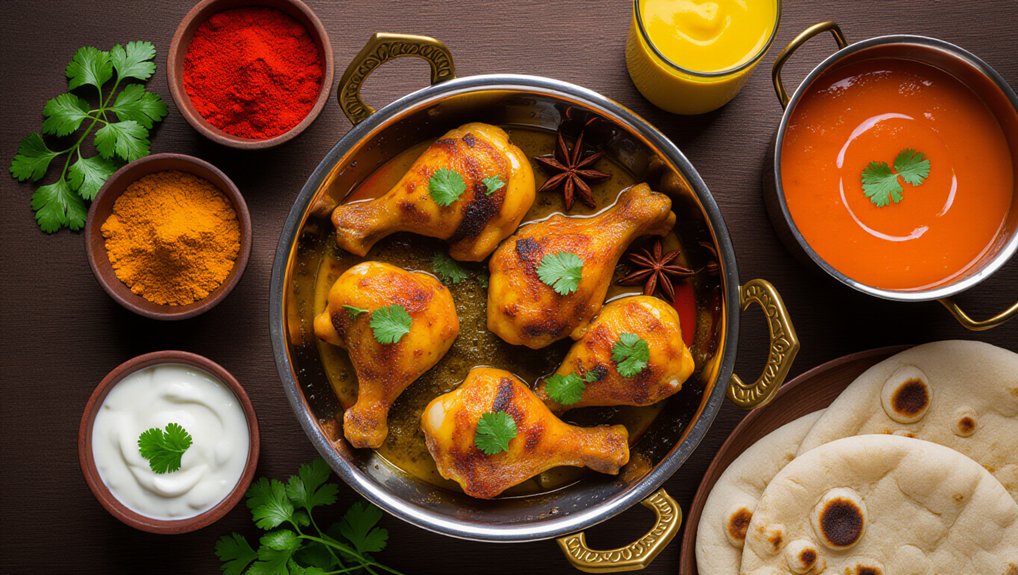
Now that you’ve got your spices ready, it’s time to jump into the cooking process.
Start by marinating the chicken in yogurt to tenderize it, then sauté the onions until they’re golden brown.
Finally, don’t forget to garnish your dish with fresh cilantro for that perfect finishing touch.
Marinate Chicken With Yogurt
To marinate chicken with yogurt, combine the yogurt with spices like garam masala, turmeric, and chili powder in a bowl. This mixture not only flavors the chicken but also tenderizes it, making your butter chicken even more delicious.
Coat the chicken pieces thoroughly with the yogurt-spice mix, ensuring every piece is well covered. Let it sit for at least 30 minutes, but an hour or two is even better for deeper flavor.
Here are the key benefits of marinating:
- Enhances flavor penetration
- Tenderizes the meat
- Adds moisture
- Balances spices
- Improves overall texture
Once marinated, you’re ready to move on to the next steps in creating your mouthwatering butter chicken. Enjoy the rich flavors that develop!
Sauté Onions Until Golden Brown
Heat a pan over medium heat and add oil or ghee, ready to sauté the onions until they turn golden brown. This step’s crucial for building flavor in your butter chicken. Keep an eye on them and stir occasionally to ensure even cooking.
- Use medium heat to avoid burning.
- Aim for a rich, caramelized color.
- Cook for about 8-10 minutes.
- Don’t rush; patience enhances the flavor.
- Add a pinch of salt to help them soften.
Once they’re golden and fragrant, you’ll know you’ve set a solid base for your dish. This caramelization brings out the natural sweetness of the onions, making your butter chicken even more delicious.
Garnish With Fresh Cilantro
Garnishing your butter chicken with fresh cilantro adds a burst of color and flavor that elevates the dish. It not only enhances the presentation but also complements the rich spices of the sauce.
Here’s how to make the most of your cilantro garnish:
- Choose fresh cilantro: Look for bright green, vibrant leaves without wilting.
- Rinse and dry: Wash the cilantro thoroughly and pat it dry to avoid excess moisture.
- Chop finely: Use a sharp knife to chop the cilantro finely for even distribution.
- Add just before serving: Sprinkle the cilantro on top right before serving to keep it fresh.
- Consider pairing with lime: A squeeze of lime juice can further brighten the flavors.
Enjoy your beautifully garnished butter chicken!
Ingredient List Summary
Delicious Butter Chicken Recipe
Whip up a mouthwatering butter chicken that will impress everyone at your table with this easy-to-follow recipe.
Ingredients
- Boneless chicken thighs
- Yogurt
- Garam masala
- Turmeric
- Cumin
- Fresh garlic
- Fresh ginger
- Tomatoes
- Cream
- Pinch of sugar
- Salt and pepper
- Fresh cilantro (for garnish)
Instructions
- Marinate chicken in yogurt and spices.
- Sauté garlic and ginger until fragrant.
- Add marinated chicken and cook until browned.
- Incorporate tomatoes and simmer for 15 minutes.
- Stir in cream and sugar, adjust seasoning.
- Garnish with fresh cilantro before serving.
Use Ghee for Richer Flavor
If you want to elevate your butter chicken, using ghee instead of regular butter is a game-changer. Not only does ghee enhance the flavor, but it also offers some health benefits.
Here are a few reasons to consider ghee in your cooking:
- Higher smoke point for better cooking
- Rich, nutty flavor profile
- Contains beneficial fats
- Lactose-free for sensitive stomachs
- Adds depth to spices and herbs
Ghee Versus Regular Butter
When it comes to making butter chicken, the choice between ghee and regular butter can significantly impact the dish’s flavor.
Ghee, with its nutty aroma and rich taste, elevates the depth of your curry, giving it that authentic Indian essence. It also has a higher smoke point than regular butter, which means you can sauté your spices without burning them. This allows the flavors to meld beautifully, enhancing the overall dish.
On the other hand, regular butter can add a creamy texture but lacks the complexity that ghee offers. If you want your butter chicken to stand out, using ghee is the way to go. It’ll provide that luxurious richness you’re aiming for in every bite.
Health Benefits Of Ghee
Ghee not only enhances the flavor of your butter chicken but also comes packed with health benefits that make it a smart choice for your cooking.
It’s rich in healthy fats, which can help improve your heart health and support weight management. Ghee also contains butyrate, a short-chain fatty acid that promotes gut health and reduces inflammation. Plus, it’s lactose-free, making it suitable for those with dairy sensitivities.
Using ghee can boost your vitamin A, D, E, and K intake, essential for maintaining overall health.
Its high smoke point means it’s stable for cooking at higher temperatures, reducing harmful compounds.
Flavor Enhancement Techniques
Using ghee elevates the flavor profile of your butter chicken significantly. This rich, clarified butter adds a depth that regular oils just can’t match.
When you sauté your spices in ghee, you’ll notice how the aromas bloom, enhancing every ingredient’s natural flavors.
Try using ghee for marinating your chicken, too; it helps infuse that creamy, buttery richness right into the meat.
Don’t skip on the finishing touch—drizzling some melted ghee over the dish just before serving can make a world of difference.
Caloric Content per Serving
Understanding the caloric content per serving of butter chicken is crucial if you’re mindful of your dietary intake. Each serving typically contains around 400-500 calories, depending on the ingredients and portion size. It’s important to consider the components that contribute to the overall caloric count, such as cream, butter, and any added sugars.
Here’s a quick breakdown of the calories from various ingredients:
| Ingredient | Calories per Serving | Serving Size |
|---|---|---|
| Chicken | 250 | 100g |
| Butter | 100 | 1 tbsp |
| Heavy Cream | 150 | 1/4 cup |
| Tomato Puree | 30 | 1/2 cup |
| Spices | 10 | 1 tsp |
Knowing these numbers helps you enjoy butter chicken while keeping an eye on your diet.
Overcooking the Chicken Pieces
While cooking butter chicken, overcooking the chicken pieces can ruin the dish’s texture and flavor. To ensure your chicken remains tender and juicy, keep these tips in mind:
- Use boneless chicken thighs for better moisture retention.
- Cook the chicken in batches to avoid overcrowding the pan.
- Monitor the internal temperature; aim for 165°F (75°C).
- Avoid simmering for too long; let the chicken absorb flavors without becoming dry.
- Allow the chicken to rest after cooking to lock in juices.
Serve With Naan or Rice
When you serve butter chicken, pairing it with naan or rice enhances the meal.
To boost the dish’s nutrition, consider adding spinach for a healthy twist.
If you want extra creaminess, mix in some paneer to take your meal to the next level.
Add Spinach for Nutrients
Adding spinach to your butter chicken not only boosts its nutritional value but also enhances its vibrant color and flavor.
This leafy green is an easy way to sneak in extra nutrients, making your meal healthier without sacrificing taste. Here’s why you should consider adding spinach:
- Rich in Iron: Supports healthy blood and energy levels.
- High in Vitamins: Packed with vitamins A, C, and K for overall wellness.
- Antioxidant Properties: Helps combat oxidative stress in the body.
- Low in Calories: Adds bulk without adding many calories, keeping the dish light.
- Fiber Boost: Aids digestion and keeps you feeling full longer.
Add Paneer for Creaminess
Incorporating paneer into your butter chicken elevates the dish with a rich creaminess that complements the spices beautifully. This addition not only enhances flavor but also brings a delightful texture.
Here’s why you should consider adding paneer:
- Creamy texture: It softens the dish, making every bite luxurious.
- Protein boost: Increases the nutritional value, perfect for a filling meal.
- Flavor absorption: Paneer soaks up the spices, enriching each piece.
- Visual appeal: The white cubes contrast nicely with the vibrant sauce.
- Versatility: You can use leftover paneer in other dishes, minimizing waste.
Serve your butter chicken with naan or rice for a complete experience, and enjoy the delicious combination of flavors!
Common Cooking Mistakes
When making butter chicken, it’s easy to make a few common mistakes that can ruin the dish.
Overcooking the chicken, skipping the marinade, and ignoring spice balance can all lead to disappointing results.
Let’s explore these pitfalls so you can perfect your recipe.
Overcooking The Chicken
While cooking butter chicken, overcooking the chicken can easily turn a delicious dish into a dry, unappetizing one. To avoid this, keep a close eye on the cooking time.
Chicken breast, for instance, cooks quickly, usually within 10-15 minutes. Use a meat thermometer to check the internal temperature; it should reach 165°F (75°C).
If you don’t have one, cut into the thickest part of the meat to ensure it’s no longer pink and the juices run clear. Remember, the chicken will continue to cook slightly even after you remove it from the heat.
Skipping The Marinade
Many home cooks underestimate the importance of marinating chicken for butter chicken. Skipping this step can lead to bland, unexciting flavors.
When you marinate, you’re infusing the chicken with spices, yogurt, and acidity, which tenderizes the meat and enhances its taste. It’s not just about adding flavor; marinating also helps keep the chicken juicy during cooking.
If you rush this process, you might end up with dry, tough pieces that don’t absorb the rich sauce properly. Take the time to let the chicken soak up those flavors for at least an hour, or even overnight if you can.
Trust me, your dish will be so much better for it, and your taste buds will thank you!
Ignoring Spice Balance
Balancing spices is crucial for achieving that authentic butter chicken flavor, yet it’s a common mistake to overlook. If you ignore this balance, your dish might end up too spicy, bland, or simply unappetizing.
Each spice plays a role—cumin adds earthiness, coriander brings brightness, and garam masala ties everything together. Don’t just dump spices in; measure them carefully.
Taste as you go, adjusting the seasonings to fit your palate. Remember, it’s easier to add more spice than to tone it down.
If you find the flavors unbalanced, try adding a bit of sugar or cream to mellow it out. A well-balanced spice profile is what elevates your butter chicken from average to extraordinary.
Serve With Mango Chutney
Serving butter chicken with mango chutney elevates the dish to a new level of flavor. The sweet and tangy notes of the chutney perfectly balance the rich, creamy sauce, enhancing each bite.
You’ll find that the bright flavors of the mango complement the spices in the butter chicken beautifully.
Simply spoon a dollop of chutney on the side of your plate or swirl it into the sauce for an extra kick. This addition not only adds complexity but also brings a refreshing contrast to the dish.
Whether you’re enjoying it with naan or rice, the combination is irresistible. So, don’t skip this step—adding mango chutney will impress your guests and make your butter chicken unforgettable!
Frequently Asked Questions
Can I Use Chicken Thighs Instead of Chicken Breast?
Yes, you can use chicken thighs instead of chicken breasts. Thighs add richer flavor and tenderness, making your dish even more delicious. Just adjust cooking time slightly since thighs take a bit longer to cook.
How Long Can Leftovers Be Stored in the Fridge?
You can store leftovers in the fridge for up to three to four days. Just make sure to keep them in an airtight container to maintain freshness and prevent any bacteria from developing. Enjoy!
Is There a Vegetarian Version of Butter Chicken?
Yes, there’s a vegetarian version of butter chicken! You can replace chicken with paneer, tofu, or vegetables. Just use the same rich sauce, spices, and cooking techniques for a delicious, meat-free alternative. Enjoy!
Can I Freeze Butter Chicken for Later Use?
Yes, you can freeze butter chicken for later use. Just let it cool completely, then transfer it to an airtight container. When you’re ready to eat, thaw it overnight in the fridge and reheat.
What Can I Substitute for Heavy Cream?
You can substitute heavy cream with coconut milk, Greek yogurt, or a mixture of milk and butter. These alternatives maintain creaminess while adding unique flavors to your dish, making it deliciously rich without heavy cream.
Conclusion
Now that you’ve mastered Butter Chicken, you can impress your friends and family with this flavorful dish. Remember to pay attention to the spices and avoid overcooking the chicken for the best results. Serve it up with warm naan or fluffy rice, and don’t forget the mango chutney for that extra kick. Enjoy your culinary journey, and savor every delicious bite of your homemade Murgh Makhani! Happy cooking!