
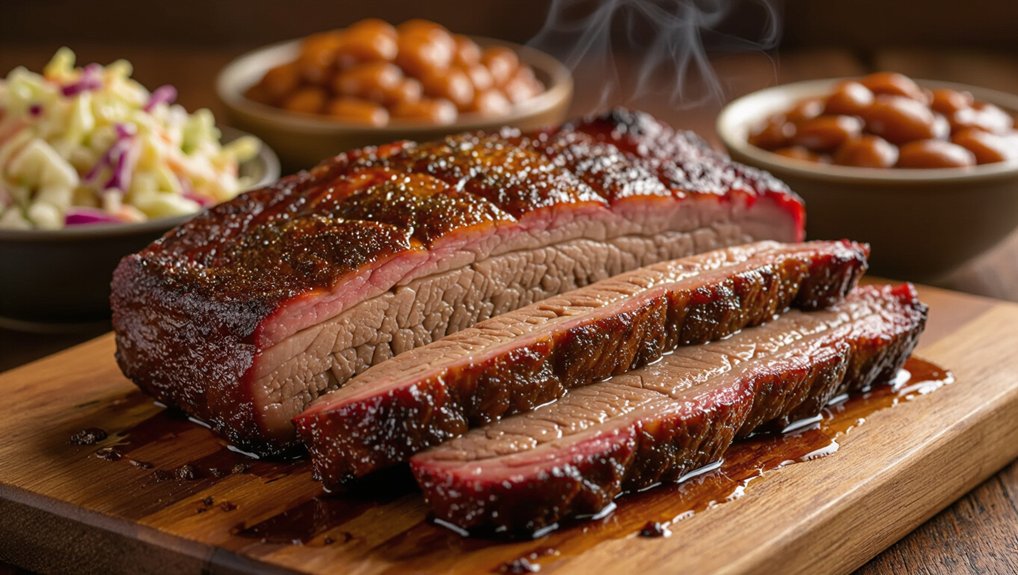
Making tender BBQ beef brisket requires a careful balance of seasoning and cooking techniques. You’ll want to start with the right cut of meat and a flavorful marinade. Cooking it low and slow is key to achieving that melt-in-your-mouth texture. But there are common pitfalls that can sabotage your efforts. Let’s explore the essential steps you need to take to ensure your brisket turns out perfectly every time.
What Is Beef Brisket?
Beef brisket is a cut of meat that comes from the lower chest of the cow, known for its rich flavor and tenderness when cooked properly.
This cut is made up of two main parts: the flat and the point. The flat is leaner and perfect for slicing, while the point has more fat, giving it a juicy texture.
When you cook brisket low and slow, the tough connective tissues break down, transforming it into a melt-in-your-mouth delight.
Many people love it for BBQ, smoking, or braising. It’s versatile enough to shine in various culinary styles, making it a favorite for gatherings and celebrations.
Understanding brisket’s characteristics helps you appreciate its potential in your next meal.
Essential Spices and Seasonings
To make your BBQ beef brisket truly unforgettable, you’ll want to focus on essential spices and seasonings.
These key flavor components enhance the meat and create a mouthwatering experience.
Here are four must-have spices to consider:
- Smoked paprika
- Garlic powder
- Brown sugar
- Black pepper
Key Flavor Components
While crafting the perfect BBQ beef brisket, the right blend of spices and seasonings can elevate the dish from ordinary to extraordinary.
To achieve that mouthwatering flavor, consider these key components:
- Smoked Paprika – Adds a rich smokiness that enhances the brisket’s natural flavors.
- Garlic Powder – Delivers a savory depth that complements the meat beautifully.
- Brown Sugar – Balances the spices with a touch of sweetness, creating a caramelized crust.
- Black Pepper – Provides a subtle heat that rounds out the overall taste.
Flavorful Marinade Enhancements
When you want to elevate your BBQ beef brisket, a well-crafted marinade can make all the difference. Incorporating essential spices and seasonings enhances flavor and tenderness, transforming your brisket into a mouthwatering masterpiece.
Here are four key ingredients to include in your marinade:
- Smoked Paprika – Adds a rich, smoky flavor that complements the meat.
- Garlic Powder – Provides an aromatic, savory kick that penetrates the brisket.
- Brown Sugar – Balances the spices with a hint of sweetness, helping to caramelize the exterior.
- Black Pepper – Offers a subtle heat and depth, perfect for seasoning.
Mix these ingredients with your favorite liquids, and let your brisket soak in the goodness for a few hours or overnight for maximum flavor.
Detailed Cooking Instructions
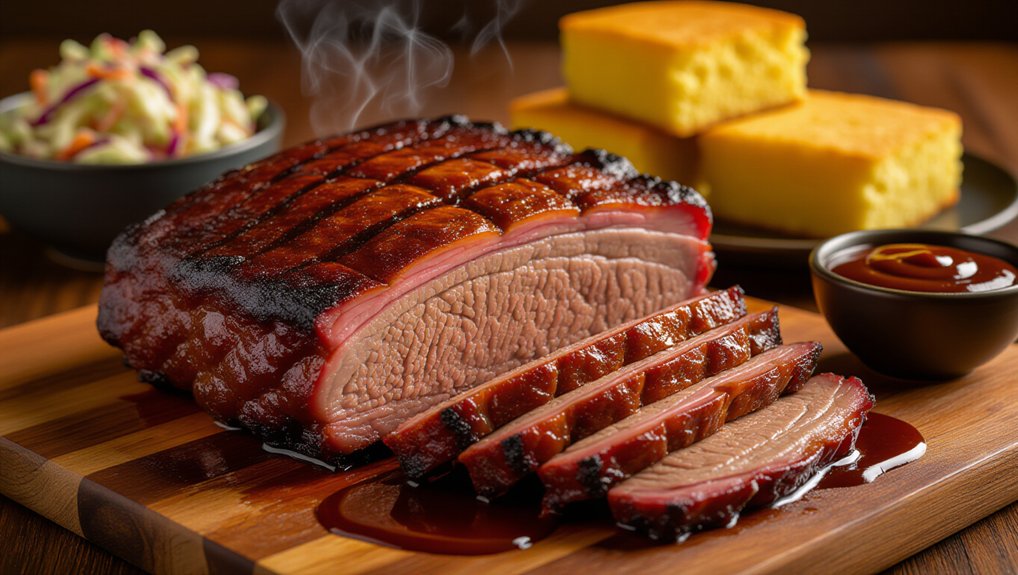
To achieve tender BBQ beef brisket, you’ll want to start by marinating the meat overnight.
Then, cook it low and slow to bring out the rich flavors and perfect texture.
Finally, don’t forget to garnish with fresh herbs for that finishing touch!
Marinate Overnight for Tenderness
Marinating your brisket overnight is crucial for achieving that melt-in-your-mouth tenderness you crave.
The right marinade not only infuses flavor but also breaks down tough fibers, making your meat juicy and succulent.
Here’s what you’ll need to do:
- Choose your marinade: Use a mix of acid (like vinegar or citrus), oil, and spices for depth.
- Coat the brisket: Rub the marinade all over the meat, ensuring it’s well-covered.
- Seal it tight: Place the brisket in a resealable plastic bag or a covered bowl; this prevents spills and locks in flavors.
- Refrigerate overnight: Let it sit for at least 12 hours, giving it ample time to absorb all that deliciousness.
Get ready for an unforgettable BBQ experience!
Low and Slow Roasting
Low and slow roasting is the secret to perfectly tender BBQ beef brisket. This method allows the meat to break down and absorb flavor without drying out. Here’s how to do it right:
- Preheat your oven to 225°F (107°C). This low temperature ensures gentle cooking.
- Place the brisket in a roasting pan, fat side up. This allows the fat to baste the meat as it cooks.
- Cover tightly with foil to trap moisture. This creates a steaming effect, keeping your brisket juicy.
- Roast for 10-12 hours, or until the internal temperature reaches at least 195°F (90°C). This long cooking time is essential for tenderness.
Follow these steps, and you’ll have a melt-in-your-mouth brisket that everyone will love!
Garnish With Fresh Herbs
While your BBQ beef brisket is resting, adding a touch of freshness with herbs elevates both the flavor and presentation.
Here’s how to garnish effectively:
- Chopped Parsley: Sprinkle it over the brisket for a vibrant green contrast.
- Fresh Cilantro: Adds a zesty kick; use it sparingly to avoid overpowering the beef.
- Chives: Finely chop and scatter these for a mild onion flavor.
- Thyme: A few sprigs not only look great but also complement the smoky flavors.
These herbs not only enhance the dish’s visual appeal but also contribute layers of flavor.
Just remember to add them just before serving to keep them fresh and vibrant.
Enjoy your beautifully garnished BBQ brisket!
Ingredients List
BBQ Beef Brisket Recipe
Create a mouthwatering BBQ beef brisket that’s perfect for any gathering!
Ingredients
- 5 to 8 pounds high-quality brisket
- Kosher salt
- Freshly ground black pepper
- Garlic powder
- Onion powder
- Smoked paprika
- Brown sugar
- Your favorite BBQ sauce
- Apple cider vinegar or beef broth
Instructions
- Preheat your smoker or grill to 225°F (107°C).
- Season the brisket generously with kosher salt, black pepper, garlic powder, onion powder, smoked paprika, and brown sugar.
- Place the brisket in the smoker or grill, fat side up, and cook for approximately 1 hour per pound.
- Every hour, spritz the brisket with apple cider vinegar or beef broth to keep it moist.
- Once the internal temperature reaches 195°F (90°C), remove the brisket and let it rest for at least 30 minutes.
- Slice against the grain and serve with your favorite BBQ sauce.
Rest Meat Before Slicing
Resting your brisket before slicing is crucial for achieving that melt-in-your-mouth tenderness.
You’ll want to let it sit to allow the juices to redistribute, which makes a big difference in flavor and texture.
Here are some key points to keep in mind:
- Importance of Resting Meat
- Optimal Resting Time
- Slicing Techniques Explained
- Benefits of a Sharp Knife
Importance Of Resting Meat
Allowing your BBQ beef brisket to rest before slicing is crucial for achieving maximum tenderness and flavor.
When you cook brisket, the muscle fibers contract and push juices toward the center. If you slice it immediately, those juices escape, leaving you with dry meat.
Resting gives the fibers time to relax, allowing the juices to redistribute throughout the brisket. This means every bite will be juicy and packed with flavor.
Additionally, resting helps the meat’s temperature stabilize, so you won’t end up with a hot exterior and a cold center.
By taking this essential step, you’ll enhance your brisket’s overall quality, making every slice a delicious experience.
Don’t skip this important part—you’ll be glad you didn’t!
Optimal Resting Time
After letting your BBQ beef brisket rest, knowing the optimal time for that process is key to achieving the best results.
Ideally, you should let it rest for about one hour. This allows the juices to redistribute throughout the meat, ensuring every bite is moist and flavorful. If you cut too soon, those precious juices will spill out, leaving you with dry brisket.
Wrap your brisket in foil or butcher paper to keep it warm during this time.
If you’re serving a crowd, you can even rest it for up to two hours without losing too much heat. Just remember, patience pays off, and that hour of waiting will elevate your BBQ experience to a whole new level!
Slicing Techniques Explained
Perfectly slicing your BBQ beef brisket can make all the difference in your presentation and taste. After letting your brisket rest, grab a sharp knife and prepare to slice against the grain. This technique helps break down the meat fibers, resulting in tender bites.
Start by locating the grain, which typically runs in one direction. Make your first cut at one end, applying even pressure to avoid tearing. Aim for about a quarter-inch thickness for ideal portions.
If you’ve got a point and flat section, separate those for varied textures. Remember, don’t rush! Allowing the brisket to rest ensures the juices redistribute, enhancing flavor and moisture.
Enjoy your beautifully sliced brisket at your next gathering!
Caloric Content per Serving
When it comes to enjoying tender BBQ beef brisket, understanding the caloric content per serving can help you make informed choices. A typical serving of brisket contains around 300 to 400 calories, depending on preparation methods and portion sizes. Here’s a quick breakdown to help you gauge what you’re consuming:
| Serving Size | Calories | Key Nutrients |
|---|---|---|
| 3 oz | 300 | Protein, Iron |
| 4 oz | 400 | Protein, Zinc |
| 5 oz | 500 | Protein, Vitamin B12 |
| 6 oz | 600 | Protein, Selenium |
Keep in mind that sauces and sides can add extra calories, so it’s good to be aware of those too! Enjoy your brisket while keeping your dietary goals in check!
Skipping the Resting Period
While it might be tempting to slice into your brisket right after it comes off the grill, skipping the resting period can seriously compromise its tenderness and flavor.
Allowing your brisket to rest is crucial for redistributing juices, ensuring every bite is juicy and satisfying. Here’s why you shouldn’t skip it:
- Juice Redistribution: Resting lets the juices settle, preventing them from spilling out when you slice.
- Improved Texture: The meat fibers relax, making each slice more tender.
- Enhanced Flavor: Resting allows flavors to meld, resulting in a richer taste.
- Easier Slicing: Cold meat is firmer, making it simpler to cut into perfect slices.
Topped With Caramelized Onions
When you top your brisket with caramelized onions, you’re adding a sweet and savory layer that enhances the flavor.
Smoking the meat with applewood chips gives it a rich, fruity taste, while a coffee rub adds depth and complexity.
Together, these elements create a mouthwatering dish that’s hard to resist.
Smoked With Applewood Chips
Smoking your brisket with applewood chips elevates its flavor profile, adding a subtle sweetness that perfectly complements the meat.
The gentle smoke from the applewood infuses the brisket, making each bite a delightful experience. To get the most out of your smoking session, follow these tips:
- Soak the Chips: Soak applewood chips in water for at least 30 minutes to enhance smoke production.
- Use a Smoker Box: Place the soaked chips in a smoker box or wrap them in foil to prevent flare-ups.
- Maintain Temperature: Keep your smoker at a steady 225°F for optimal cooking.
- Monitor Smoke: Look for thin, blue smoke; thick white smoke can create a bitter flavor.
Enjoy the perfect blend of sweet and savory!
Spiced With Coffee Rub
To elevate your BBQ beef brisket, a coffee rub offers a bold and aromatic twist that enhances the meat’s natural flavors. This unique blend not only tenderizes but also adds depth.
Here’s how to create your coffee rub:
- Ground Coffee: Use a coarse grind for the best texture.
- Brown Sugar: Balances the bitterness of coffee and caramelizes beautifully.
- Smoked Paprika: Adds a hint of smokiness that complements the brisket.
- Garlic Powder: Infuses a savory note that rounds out the flavors.
After applying the rub, let the brisket rest for a few hours or overnight.
Topping it off with caramelized onions adds sweetness and richness, making your BBQ brisket unforgettable.
Enjoy the delightful blend of flavors!
Common Cooking Mistakes
When cooking brisket, it’s easy to make mistakes that can ruin your dish.
Overcooking, skipping seasoning, and ignoring rest time can all lead to tough, bland meat.
Let’s look at these common pitfalls and how to avoid them for tender, flavorful results.
Overcooking The Brisket
Overcooking the brisket can turn your flavorful cut of meat into a dry, chewy disappointment. To avoid this, keep an eye on the cooking temperature and time.
Brisket benefits from low and slow cooking, but if you let it go too long, the moisture evaporates, leaving you with a tough texture. Use a meat thermometer to check for doneness; you’re aiming for around 195°F to 205°F for optimal tenderness.
Also, remember that carryover cooking can continue to raise the temperature even after you’ve taken it off the heat. Letting it rest for at least 30 minutes before slicing helps retain moisture.
Avoid the temptation to rush; patience is key for that melt-in-your-mouth brisket you crave.
Skipping The Seasoning
A tender brisket isn’t just about cooking it right; the seasoning plays a vital role in enhancing flavor. Skipping the seasoning is a common mistake that can leave your brisket bland and unappealing.
Don’t underestimate the power of a good rub. A well-balanced mix of salt, pepper, garlic powder, and other spices can elevate your meat to new heights. Apply the seasoning generously, ensuring it penetrates the surface. This not only adds flavor but also helps to form a delicious crust during cooking.
Ignoring Rest Time
While it might be tempting to slice into your brisket right after it comes off the grill, ignoring rest time can ruin all your hard work.
When you give your brisket a chance to rest, the juices redistribute throughout the meat, ensuring every bite is moist and flavorful. If you cut too soon, those precious juices will spill out, leaving you with dry slices.
Aim for at least an hour of resting time, wrapped loosely in foil to keep it warm. This simple step can elevate your BBQ game.
Savor the Smoky Flavor
To truly savor the smoky flavor of BBQ beef brisket, you need to embrace the art of slow cooking. Start by choosing quality meat with good marbling; this fat renders beautifully, enhancing the flavor.
Use a smoker or a grill set up for indirect heat, and choose your wood wisely—hickory or mesquite works wonders. Maintain a low temperature, around 225°F, to allow the brisket to absorb that smoky goodness over several hours.
Wrap it in butcher paper or foil during the cooking process to lock in moisture. As it cooks, resist the urge to peek too often.
When it’s done, let it rest to let those flavors meld. Then slice, serve, and relish each smoky bite.
Frequently Asked Questions
Can I Use a Different Cut of Meat for Brisket Recipes?
Yes, you can use different cuts like chuck roast or short ribs in brisket recipes. Just adjust your cooking time and method to ensure tenderness. Each cut offers unique flavors and textures to enjoy.
How Long Does Leftover Brisket Last in the Fridge?
Leftover brisket lasts about three to four days in the fridge. Make sure you store it in an airtight container to keep it fresh. If you want it longer, consider freezing it for up to three months.
What Type of Wood Is Best for Smoking Brisket?
Hickory and oak are great choices for smoking brisket, as they impart a rich, smoky flavor. If you prefer something milder, try fruitwoods like apple or cherry for a sweeter, more delicate taste.
Can I Freeze Cooked Brisket for Later Use?
Yes, you can freeze cooked brisket for later use. Just slice it, wrap it tightly in plastic wrap or foil, and store it in an airtight container. It’ll stay tasty for up to three months!
What Sides Pair Well With BBQ Brisket?
Coleslaw, cornbread, and baked beans pair perfectly with BBQ brisket. You’ll also love pickles, mac and cheese, or potato salad to complement the rich flavors. Don’t forget some tangy barbecue sauce for extra zing!
Conclusion
Now that you know how to make tender BBQ beef brisket, it’s time to fire up that smoker and impress your friends and family! Remember, patience is key—let the brisket cook low and slow for that melt-in-your-mouth texture. Don’t forget to rest it before slicing for maximum juiciness. Serve it alongside your favorite BBQ sides, and enjoy that smoky flavor. You’ve got this—happy cooking!