
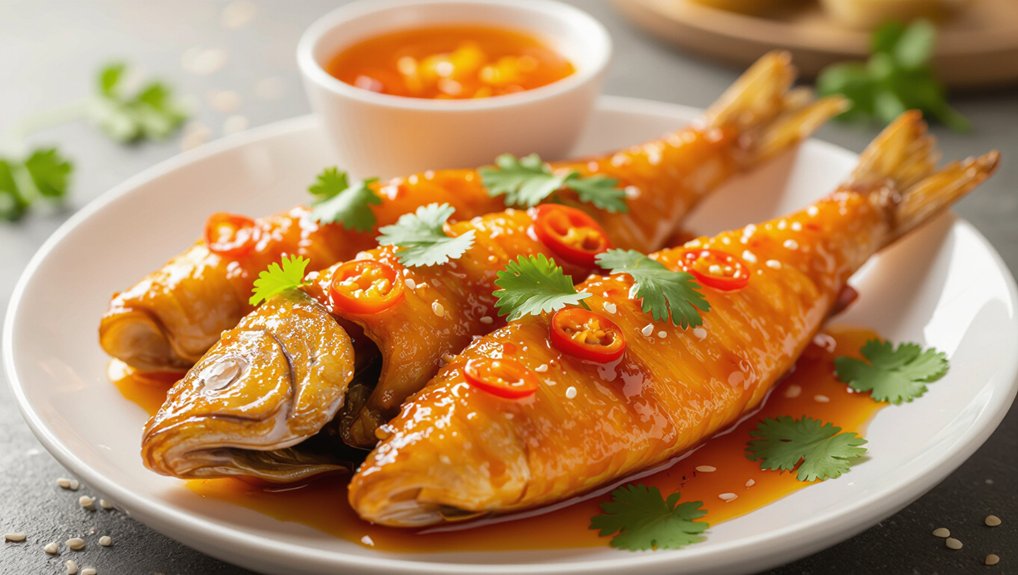
When you think about making Sweet & Sour Fried Fish, you might wonder how to achieve that perfect balance of flavors and textures. Choosing the right fish is crucial, and the marinating process sets the stage for a delicious meal. You’ll want to consider how to create a crispy coating and a flavorful sauce that complements the fish. Once you’ve got those basics down, the real fun begins. Let’s explore the essential steps to elevate your dish.
What Is Sweet and Sour?
Sweet and sour is a flavor profile that balances contrasting tastes, creating a vibrant culinary experience. You’ll often find it in dishes that combine sugar or other sweeteners with acidic ingredients like vinegar or citrus.
This delightful combination enhances the natural flavors of the main ingredients, making each bite exciting. The sweetness can come from various sources, like honey, pineapple, or brown sugar, while the sourness typically arises from ingredients like lime or tamarind.
When you taste sweet and sour, you’ll notice how the flavors dance on your palate, stimulating your senses. This profile isn’t just limited to sauces; it can be found in marinades, dressings, and even desserts, inviting you to explore a world of diverse culinary possibilities.
Essential Fish Selection
Choosing the right fish is crucial for your sweet and sour fried fish. You’ll want to pick types that complement the dish and enhance the flavors.
Here are some options to consider:
- Mild white fish like tilapia or cod
- Firm fish such as snapper or halibut
- Flavor enhancers like ginger or garlic
Key Fish Types
When selecting fish for your sweet and sour dish, the type you choose can make all the difference in flavor and texture. Here are three key fish types that work beautifully:
- Tilapia: This mild fish has a delicate texture, absorbing flavors well while providing a light bite.
- Cod: With its firm, flaky flesh, cod holds up nicely during frying and pairs wonderfully with sweet and sour sauces.
- Catfish: Known for its rich flavor, catfish adds a unique twist to your dish, complementing the tangy sauce perfectly.
Choosing any of these will enhance your sweet and sour fried fish experience, ensuring each bite is delicious.
Don’t overlook these options when planning your meal!
Flavor Enhancers
To elevate your sweet and sour fried fish, consider the flavor enhancers that can truly transform your dish.
These elements not only boost the taste but also complement the fish perfectly. Here are three key enhancers you should think about:
- Fresh Herbs: Cilantro or basil adds a bright, aromatic kick that balances the sweetness and sourness.
- Citrus Zest: Lemon or lime zest brings an extra layer of freshness, cutting through the richness of the fried fish.
- Spices: A touch of paprika or cayenne can introduce a subtle heat, enhancing the overall flavor profile.
Incorporating these enhancers will take your dish from good to unforgettable, ensuring every bite is packed with delightful flavors.
Detailed Cooking Instructions
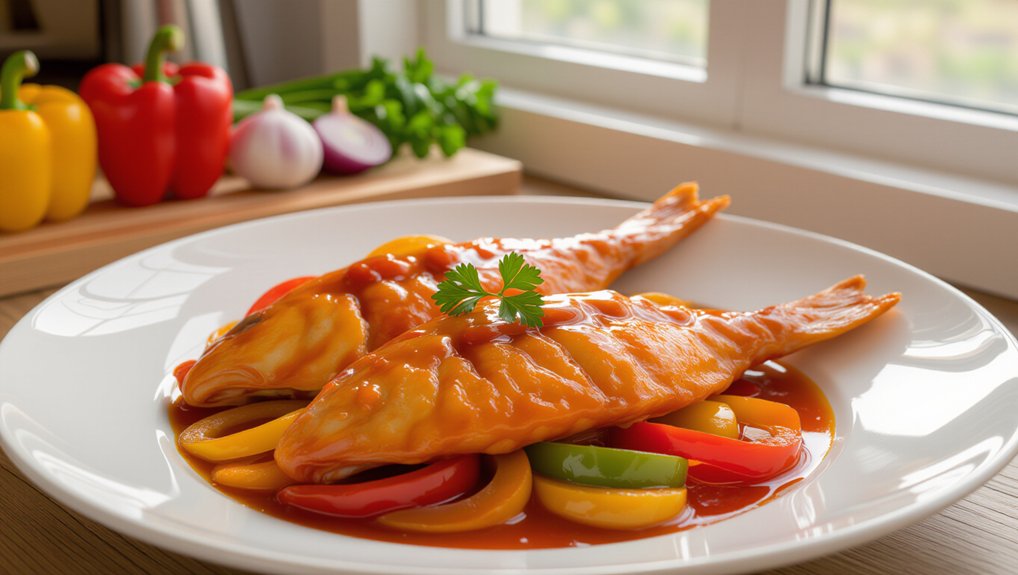
Now that you’ve picked the perfect fish, it’s time to get cooking.
Start by marinating the fish to soak in those delicious flavors, then fry it until it’s golden brown.
Finally, don’t forget to garnish with fresh herbs for that extra touch!
Marinating Fish for Flavor
Marinating fish not only enhances its flavor but also helps to tenderize the meat, making each bite more enjoyable.
To get the most out of your marinade, follow these simple steps:
- Choose your marinade: Use a mix of soy sauce, vinegar, and honey for that perfect sweet and sour balance.
- Let it soak: Place the fish in the marinade and refrigerate for at least 30 minutes, allowing the flavors to penetrate.
- Don’t overdo it: Avoid marinating for too long, as this can break down the fish’s texture and make it mushy.
Once your fish has marinated, it’s ready to be cooked to perfection.
Enjoy the burst of flavors in every bite!
Fry Until Golden Brown
Heat a generous amount of oil in a frying pan over medium-high heat.
Once the oil’s hot, carefully add your marinated fish pieces, ensuring not to overcrowd the pan. Fry them until they turn golden brown, which usually takes about 3-4 minutes per side.
Keep an eye on the temperature to avoid burning.
- Flip the fish gently to maintain its shape.
- Use a slotted spatula to check for doneness; the fish should flake easily.
- Drain the fried fish on paper towels to absorb excess oil.
Once they’re beautifully golden, remove the fish from the pan and let them rest briefly.
This step ensures you get that perfect crispy texture for your sweet and sour sauce later!
Garnish With Fresh Herbs
After frying your fish to perfection, it’s time to elevate the dish with a fresh herb garnish. Fresh herbs not only add color but also enhance the flavor profile of your sweet and sour fried fish.
Here’s how to do it:
- Choose your herbs: Fresh cilantro, parsley, or green onions work beautifully.
- Chop finely: Use a sharp knife to chop the herbs into small pieces for a burst of flavor.
- Sprinkle generously: Scatter the chopped herbs over your fried fish just before serving.
This simple addition will brighten your dish and impress your guests.
Ingredient List
Sweet and Sour Fried Fish
Indulge in the perfect balance of flavors with this delightful sweet and sour fried fish recipe, featuring crispy fish fillets and a tangy sauce.
Ingredients:
- Fresh fish fillets (tilapia or cod)
- All-purpose flour
- Salt and pepper
- Sugar
- Vinegar
- Ketchup
- Soy sauce
- Garlic
- Ginger
- Bell peppers
- Onions
- Cornstarch
Instructions:
- Prepare the fish by seasoning with salt and pepper, then coat in flour.
- In a pan, heat oil and fry the fish until golden brown. Set aside.
- In another pan, sauté garlic and ginger, then add bell peppers and onions.
- In a bowl, mix sugar, vinegar, ketchup, soy sauce, and cornstarch to create the sauce.
- Pour the sauce over the sautéed vegetables and cook until thickened.
- Combine the fried fish with the sauce and serve hot.
Use High Smoke Point Oil
When frying fish, using oil with a high smoke point is crucial for achieving that perfect crispiness.
Here are a few key points to consider:
- Smoke Point Explained
- Best Oil Choices
- Health Considerations
Choosing the right oil not only enhances flavor but also ensures a healthier cooking process.
Smoke Point Explained
Understanding smoke point is crucial for frying fish perfectly, as it determines the temperature at which oil begins to break down and smoke.
When you heat oil beyond its smoke point, it not only affects the oil’s flavor but can also release harmful compounds. This can ruin your dish and create an unpleasant smell in your kitchen.
For frying fish, you want oil that can handle higher temperatures without breaking down, so you can achieve that crispy exterior while keeping the inside moist.
Best Oil Choices
Choosing the right oil is essential for achieving perfectly fried fish, especially if you want that crispy texture without any burnt flavors.
Opt for oils with a high smoke point, like canola, peanut, or sunflower oil. These oils can withstand the high temperatures needed for frying without breaking down and imparting off-flavors.
Avoid low smoke point oils, such as olive oil, as they can burn easily and ruin your dish.
When selecting your oil, consider its flavor profile, too. Neutral oils like canola won’t interfere with the sweet and sour sauce, while peanut oil adds a subtle nuttiness.
Always heat your oil properly before adding the fish to ensure an even cook and that perfect crunch you’re aiming for.
Health Considerations
While frying fish, it’s crucial to consider the health implications of the oil you use. Opt for oils with a high smoke point, like canola, avocado, or peanut oil. These oils can withstand higher temperatures without breaking down, which helps maintain their nutritional quality and flavor.
Using oils that reach their smoke point can release harmful compounds and unhealthy free radicals, impacting your meal’s overall healthiness.
Additionally, high smoke point oils tend to be less saturated, making them a better choice for frying.
Caloric Content per Serving
When you dive into a serving of sweet and sour fried fish, you can expect around 300 to 400 calories, depending on the specific recipe and portion size. Let’s break it down a bit further to understand where those calories come from:
| Component | Calories per Serving |
|---|---|
| Fried Fish | 200-250 |
| Sweet & Sour Sauce | 50-100 |
| Oil for Frying | 30-50 |
| Side (Rice/Vegetables) | 100-150 |
These numbers can vary based on the type of fish you use, the amount of sauce, and any sides you choose to include. Being mindful of your portions can help you enjoy this delicious dish while keeping your caloric intake in check.
Overcrowding the Frying Pan
Overcrowding the frying pan can ruin your sweet and sour fried fish. When you add too many pieces at once, the temperature drops, and your fish won’t fry evenly. You’ll end up with soggy fillets instead of that crispy texture you crave.
Here’s what happens when you overcrowd:
- The fish steams instead of fries, making it less flavorful.
- The oil can splatter, creating a messy kitchen and potential burns.
- It takes longer to cook, leading to uneven doneness.
To achieve that perfect crunch, fry in batches. Give each piece enough space to cook properly, ensuring a delicious, golden finish.
Tropical Fruit Salsa Topping
To elevate your sweet and sour fried fish, try adding a tropical fruit salsa topping.
A blend of mango and avocado creates a creamy, flavorful contrast, while a splash of citrus zest brings a refreshing zing.
This combination not only enhances the dish but also adds a vibrant touch to your plate.
Mango and Avocado Blend
Elevate your sweet and sour fried fish by adding a vibrant Mango and Avocado Blend, which brings a refreshing tropical twist to your dish. This blend not only enhances the flavors but also adds a pop of color.
Here’s how to make it:
- Dice ripe mango and avocado for a creamy texture.
- Add finely chopped red onion and cilantro for a burst of flavor.
- Squeeze fresh lime juice to tie it all together.
Mix these ingredients gently, allowing the avocado to stay intact for that perfect bite.
Spoon the blend generously on top of your fried fish, and watch your meal transform into a tropical delight. This topping is sure to impress your guests and elevate your dining experience!
Citrus Zest Infusion
While enhancing your sweet and sour fried fish, a Citrus Zest Infusion can add a lively and refreshing touch. This topping not only elevates the dish but also brings a burst of flavor that complements the fish perfectly.
Here’s how to create your own zesty infusion:
- Zest of lime and orange: Grate the peels to release those vibrant oils.
- Fresh cilantro: Chop it finely for an aromatic kick.
- A hint of jalapeño: Add a touch of heat for balance.
Mix these ingredients together and let them sit for a few minutes to meld.
Spoon this zesty salsa over your fried fish, and enjoy the vibrant flavors that brighten each bite. It’s a simple yet delicious way to enhance your meal!
Common Cooking Mistakes
When you’re frying fish, it’s easy to make a few common mistakes that can ruin your dish.
Overcooking can lead to dryness, while an improper batter consistency can affect the crunch.
Don’t forget to let your fish marinate; skipping this step can leave your flavors flat.
Overcooking the Fish
Overcooking the fish can quickly turn your culinary masterpiece into a dry disappointment. To avoid this, keep a close eye on the cooking time.
Fish cooks faster than you might think, often in just a few minutes per side. Use a timer to help you stay on track and check for doneness early.
Look for that lovely flakiness and a translucent center; that’s your sweet spot. If it starts to look dull and opaque, you’ve likely overcooked it.
Remember, the fish will continue to cook slightly after you take it off the heat, so it’s better to err on the side of caution.
Perfectly cooked fish is juicy and tender, enhancing your sweet and sour sauce beautifully.
Improper Batter Consistency
Getting the batter consistency just right is crucial for achieving that perfect crunch on your fried fish. If your batter’s too thick, it can create a heavy coating that masks the fish’s flavor.
On the other hand, if it’s too thin, it won’t stick properly, leading to soggy results. Aim for a thick, velvety texture that easily clings to the fish without dripping.
To test, dip a piece of fish into the batter; it should coat evenly but not slide off. Adjust with flour or liquid as needed, ensuring it’s consistent throughout.
Skipping Marinade Time
Marinating your fish is a crucial step that shouldn’t be overlooked, as it infuses flavor and tenderizes the meat.
If you skip this important process, you risk ending up with bland, dry fish that lacks the depth you’re aiming for in your sweet and sour dish.
Ideally, you should marinate your fish for at least 30 minutes, allowing the ingredients to work their magic.
Use a mix of soy sauce, vinegar, and spices to create that perfect balance of sweet and tangy.
Rushing through this step might save you time, but it’ll compromise your final result.
Perfect Pairing With Rice
While you savor the tangy flavors of sweet and sour fried fish, pairing it with rice elevates the dish to a new level.
Whether you choose fluffy jasmine rice or sticky sushi rice, the neutral taste complements the bold sauce perfectly. You can also try brown rice for a nuttier flavor and added health benefits.
To enhance your meal, consider adding a sprinkle of sesame seeds or chopped green onions on top of the rice. This not only adds texture but also a burst of freshness.
Don’t forget to serve extra sauce on the side for dipping.
With this simple pairing, you’ll create a harmonious balance on your plate, making every bite deliciously satisfying. Enjoy your meal!
Frequently Asked Questions
Can I Use Frozen Fish for This Recipe?
Yes, you can use frozen fish for this recipe. Just make sure to thaw it completely before cooking. This’ll help ensure even cooking and better absorption of flavors in your sweet and sour dish. Enjoy!
What Can I Substitute for Vinegar in the Sauce?
You can substitute lemon juice or lime juice for vinegar in the sauce. If you want a sweeter option, try using apple cider or rice vinegar, adjusting the sweetness to taste as needed.
How Can I Make the Dish Spicier?
You can add chopped chili peppers, a dash of hot sauce, or sprinkle red pepper flakes into the sauce. Taste as you go, adjusting until you reach the spice level you enjoy.
Is There a Gluten-Free Option for the Batter?
Yes, you can use gluten-free flour, like rice flour or a gluten-free all-purpose blend, for the batter. It’ll still give you that crispy texture while keeping your dish safe for gluten-sensitive guests. Enjoy!
How Long Can Leftovers Be Stored in the Fridge?
You can store leftovers in the fridge for up to three days. Make sure to keep them in an airtight container to maintain freshness. Reheat thoroughly before enjoying them again to ensure safety and taste.
Conclusion
Now that you know how to make sweet and sour fried fish, it’s time to enjoy this delicious dish! Remember to choose the right fish, master your batter, and don’t skimp on that tangy sauce. Pair it with rice for a complete meal, and feel free to get creative with toppings like tropical fruit salsa. With a little practice, you’ll impress everyone at the dinner table. Happy cooking!